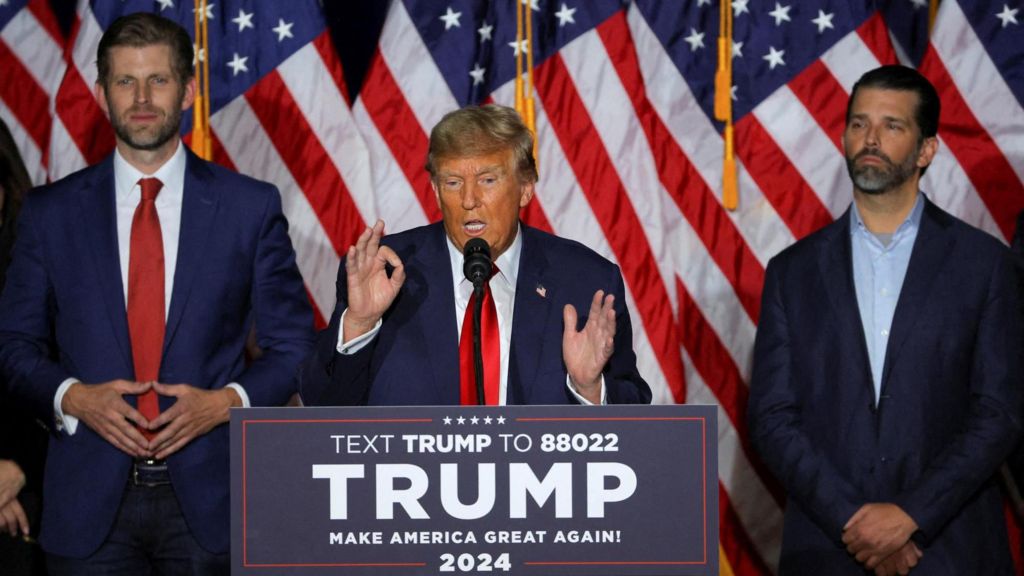
Former President Donald Trump and his sons Donald Trump Jr. and Eric Trump have initiated a massive $10 billion civil lawsuit against the U.S. federal government, alleging systemic failures in protecting their confidential tax information. The legal action, filed in Miami federal court, targets both the Internal Revenue Service and Treasury Department for their purported negligence in preventing the unauthorized disclosure of sensitive financial documents.
The lawsuit centers on the actions of former IRS contractor Charles “Chaz” Littlejohn, currently serving a five-year prison sentence after admitting to leaking Trump’s tax data to major media outlets. According to the filing, government agencies breached their statutory duty to safeguard taxpayer information, resulting in significant reputational damage and public embarrassment for the Trump family and their business organization.
The complaint details how Littlejohn, motivated by political opposition to Trump, weaponized his access to unmasked taxpayer data to advance his personal agenda. Court documents reveal the contractor considered Trump ‘dangerous’ and a ‘threat to democracy,’ justifying his actions as necessary despite legal boundaries.
This legal battle revives scrutiny of Trump’s longstanding resistance to tax transparency. During both his 2016 and 2020 presidential campaigns, Trump broke with decades of tradition by refusing to voluntarily release his returns, citing ongoing audits. The New York Times’ September 2020 exposé based on leaked documents revealed Trump paid minimal federal income taxes—just $750 in the year he won the presidency—and no taxes at all in ten of the previous fifteen years.
The Trump Organization claims the leaks caused substantial financial harm and unfairly tarnished their business reputation. Notably, Trump eventually released his tax documents voluntarily in 2022, two years after the initial media disclosure. The lawsuit emphasizes the government’s failure to implement mandatory security precautions despite handling exceptionally sensitive information about a sitting president.