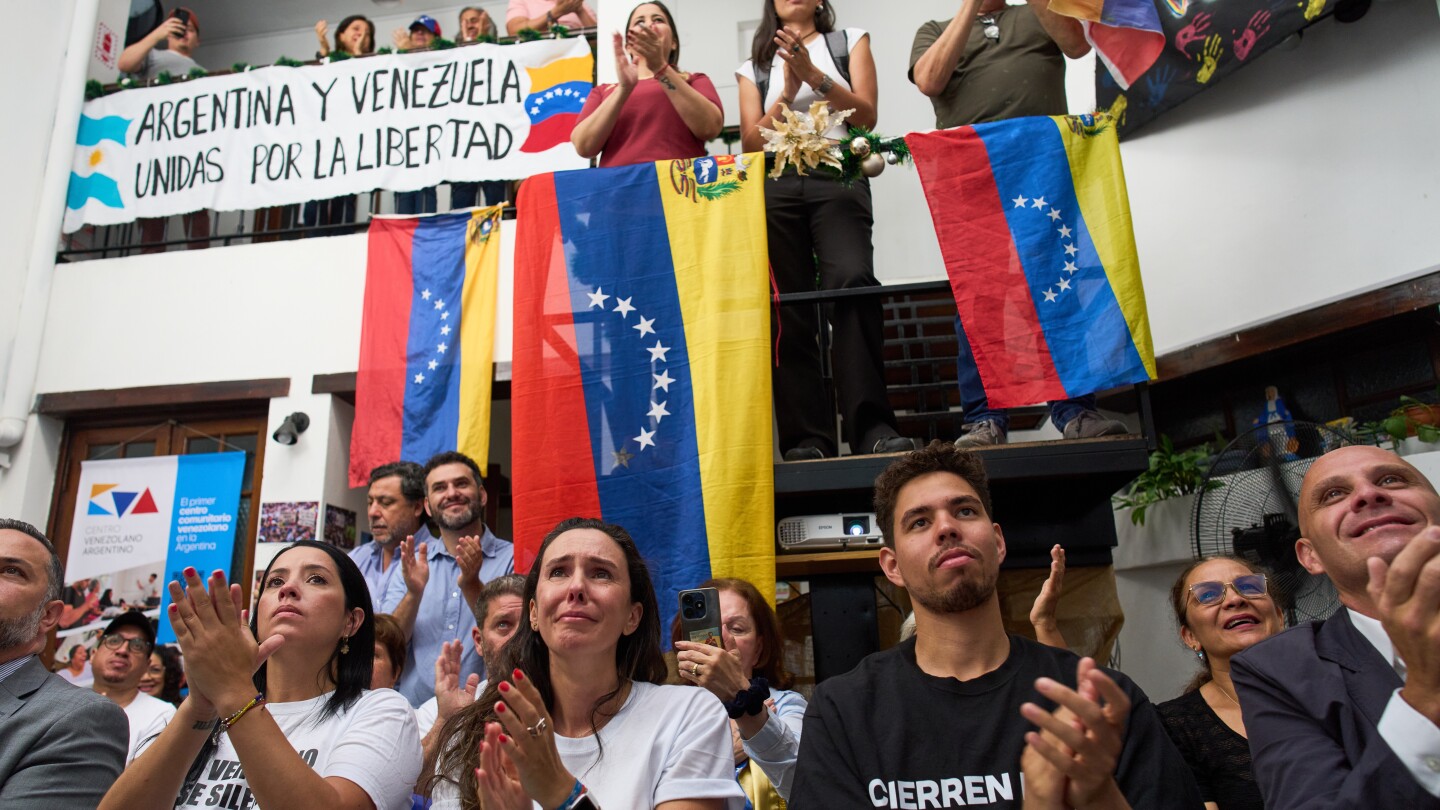
OSLO, Norway – The Nobel Peace Prize ceremony honoring Venezuelan opposition leader María Corina Machado transformed into both a celebration of democratic principles and a stark condemnation of the Maduro regime’s human rights record. While Machado’s daughter accepted the award on her behalf in Oslo, the absence of the laureate herself underscored the ongoing political tensions in Venezuela.
Ana Corina Sosa delivered her mother’s prepared remarks to an international audience, stating: “She wants to live in a free Venezuela, and she will never give up on that purpose. We all know she will return to Venezuela very soon.” The statement came as Machado made her first public appearance since January 9, when she was briefly detained following anti-government protests in Caracas.
The award ceremony featured extensive documentation of human rights abuses under President Nicolás Maduro’s administration. Jørgen Watne Frydnes, chair of the Norwegian Nobel committee, detailed instances of torture including electric shocks to genitals, suffocation techniques using plastic bags, and systematic sexualized violence against detainees. He explicitly called on Maduro to “accept the election result and step down”—referencing the controversial 2024 presidential election that extended his term despite evidence of electoral irregularities.
Back in Venezuela, reactions to Machado’s international recognition revealed deep political divisions. Some citizens, like office worker Josefina Páez, supported her decision: “That woman has made many sacrifices to fight for democracy. It’s time she reunites with her family and continues fighting from abroad.” Others expressed skepticism, with shopkeeper José Hurtado labeling Machado a “traitor” for her alignment with U.S. policies toward Venezuela.
The geopolitical context surrounding the ceremony remains tense, with the United States maintaining military operations in the Caribbean that have resulted in Venezuelan casualties. Meanwhile, Machado’s political successor, Edmundo González, attended the ceremony after seeking asylum in Spain following an arrest warrant issued by Venezuelan authorities. His son-in-law remains among hundreds imprisoned for what human rights organizations classify as political reasons.
United Nations-backed investigators and Venezuelan NGOs have extensively documented the government’s repression tactics throughout Maduro’s presidency. The opposition now faces logistical challenges regarding how and when both Machado and González might safely return to Venezuela, as their continued exile represents both a symbolic and practical challenge to Maduro’s authority.