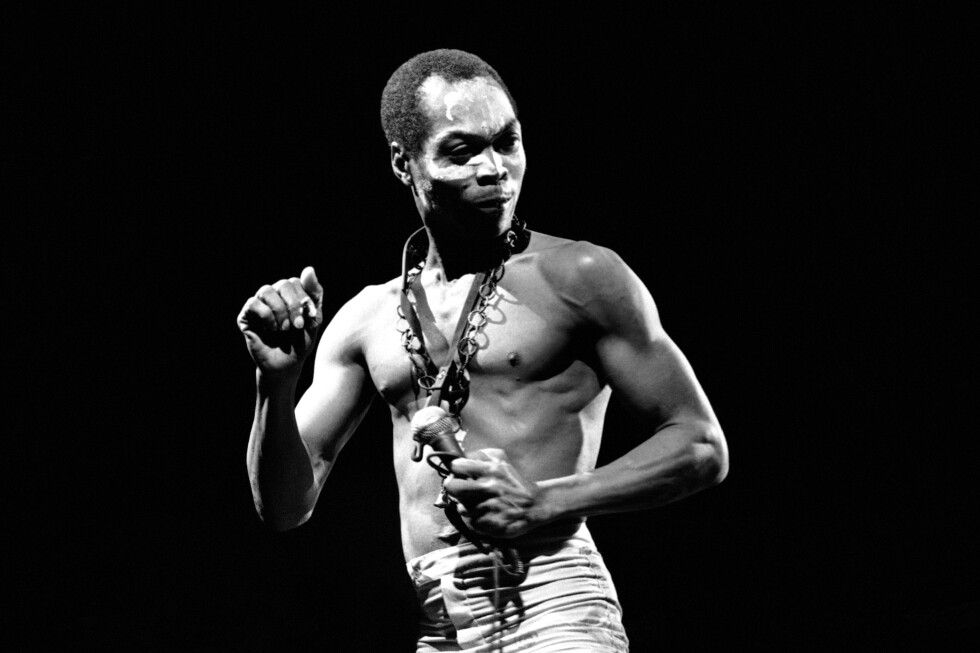
Half a century after its 1976 release, Fela Kuti’s iconic protest album *Zombie* still stands as one of the most fearless acts of political defiance in African musical history, a work that not only reshaped global music but also laid bare the deep inequalities and authoritarian abuses that continue to plague Nigeria decades after the end of military rule.
To understand the stakes of *Zombie*, one must look back at the turbulent context that birthed it. Nigeria had won independence from British colonial rule in 1960, buoyed by the discovery of massive oil reserves that promised widespread prosperity for the resource-rich West African nation. Just six years later, the first of a long string of military coups ousted the civilian government, followed by a brutal civil war that claimed at least three million lives. By 1976, the military had held unelected power for a full decade, with successive juntas embedding authoritarian control into every layer of public life — including deploying soldiers to secondary schools across the country to enforce state-mandated discipline under then-ruler Olusegun Obasanjo.
For Yunusa Yau, a 16-year-old student in northwestern Nigeria at the time, growing anger at soldiers’ heavy-handed abuse of power on campus led him and his classmates to embrace Fela’s searing new track as their anthem. Decades later, Yau — now a 66-year-old political activist based in Abuja — told the Associated Press that Fela had already become a beacon of resistance for young Nigerians tired of authoritarian overreach. “In a way, we saw him as a symbol of our own nascent attempt to protect our limited horizon of freedom,” Yau said, noting the song quickly became a protest against both unaccountable soldiers and the unpopular school officials complicit with military rule.
Fela Anikulapo Kuti, born under colonial rule in 1938, is widely regarded as Nigeria’s greatest modern artist, with a 40-year career that stretched from the late 1950s until his death in 1997. Earlier this year, he earned a posthumous Lifetime Achievement Award at the Grammy Awards in recognition of his lasting cultural impact. He co-created the iconic Afrobeat genre alongside legendary drummer Tony Allen, blending polyrhythmic traditional West African percussion with Black American jazz and funk to create a signature sound entirely his own. But far more than a musical innovator, Fela built his legacy as a relentless chronicler of everyday life under military rule, which dominated Nigeria from the 1966 coup until the return of civilian democracy in 1999.
*Zombie* was unlike any of Fela’s previous political work. Released as a 25-minute two-track album, the title track cut straight to the core of military authoritarianism, with lyrics that mocked the unthinking obedience of soldiers to unelected rulers: “Zombie no go turn, unless you tell ’em to turn (Zombie) / Zombie no go think, unless you tell ’em to think.” Layered over Fela’s driving polyrhythms, the track mimicked a military parade, complete with chanted commands to march, salute and fire. The B-side, “Mister Follow Follow,” expanded the critique to call out widespread blind obedience to authority and the status quo across Nigerian society.
Lemi Ghariokwu, the artist who designed the *Zombie* album cover and collaborated with Fela for decades, called the record Fela’s definitive work. “It was one of his boldest moments on record,” Ghariokwu told the AP. “He was very much vexed by the actions of the military government. When he was composing the song, we asked him if it was going to be a direct attack song, and he said yes.”
Interestingly, the zombie archetype that Fela used to devastating political effect originates from traditional West and Central African mythology, where it describes a figure stripped of free will, controlled by external forces. The imagery would later be popularized globally by Michael Jackson in his iconic 1982 *Thriller* music video, but Fela was the first to weaponize it for mass political protest.
Fela’s unflinching attack on the junta drew brutal, immediate retaliation. The military government dispatched 1,000 soldiers to Fela’s self-declared independent Lagos compound, which the artist had claimed was outside Nigerian state control. Troops burned the compound to the ground, badly injured Fela, and left his mother — Funmi Ransome-Kuti, a prominent Nigerian activist in her own right — with fatal injuries. The album was banned from all state-run radio, and ordinary Nigerians were arrested for defying the junta by playing *Zombie* in public venues, at parties or on personal speakers.
Critics note Fela’s foresight in calling out the long-term damage of military rule has proven entirely accurate. When the military seized power in 1966, junta leaders justified their coup by ousting a civilian government they accused of corruption and mismanaging Nigeria’s oil wealth. Decades after the end of military rule, that same failure of shared prosperity persists: official data from the Nigeria Bureau of Statistics shows 63% of Nigerians currently live in multidimensional poverty, lacking access to basic amenities, with sky-high youth unemployment. The country also faces a sprawling, ongoing security crisis, with militant and criminal groups carrying out widespread killings and kidnappings across large swathes of the country. Just this year, six people including soldiers and police officers were charged with plotting a coup against democratically elected President Bola Tinubu, a reminder of the military’s enduring oversized influence on Nigerian public life.
“Fela was actually ahead of his time, because he seemed to have foreseen the kind of rot and decay that the military class would leave Nigeria in,” said Dami Ajayi, a prominent Nigerian music critic. “Fela was already saying to everyone that these guys who are here are going to ruin your country; you cannot allow a zombie to be in charge of everything around you.”
Fifty years after its release, *Zombie*’s impact remains unmatched in Nigerian popular culture. While other Nigerian artists across reggae, fuji, pop and other genres have criticized government overreach, none have matched the open, uncompromising confrontation Fela pulled off with *Zombie*. Today, mainstream commercial success in Nigeria’s large music industry rarely makes space for overt political protest, even as the grievances Fela sang about remain largely unaddressed.
Ayomide Tayo, a Nigerian music and pop culture critic, said Fela’s bravery has yet to be replicated by modern artists. “The consequences of that record are well-documented, and I don’t think anybody is that brave to critically criticize the government like that,” Tayo said. “The epic scale at which Fela did it has not been replicated.”