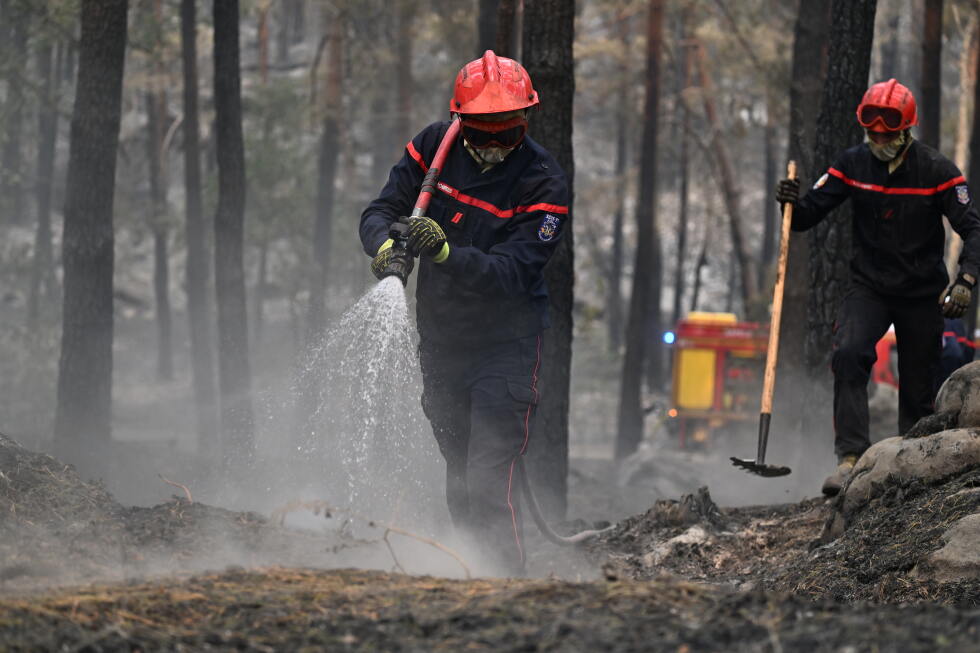
As Europe grapples with unprecedented rapid warming that has pushed continental temperatures twice as high as the global average since 1980, two major wildfire emergencies unfolded across France and Spain this week, displacing thousands of residents and consuming vast swathes of forest and agricultural land.
Near the French capital of Paris, hundreds of firefighters have worked around the clock since Tuesday to contain two separate blazes burning through the iconic Fontainebleau forest, located in the commune of Noisy-sur-École just south of Paris. Local authorities confirmed that the fires have already scorched nearly 2,000 hectares (around 4,900 acres) of forest and triggered mandatory evacuation orders for more than 1,000 nearby residents. What makes this fire particularly unusual compared to larger blazes currently burning across southern France is its proximity to the heavily populated Paris metropolitan area, a rare threat that has forced emergency responders to adopt extraordinary tactics.
Gregory Allione, the regional fire chief for the Île-de-France region, announced that water-dumping aircraft have been deployed to slow the spread of the flames, marking the first time such heavy aerial firefighting equipment has ever been used to combat a wildfire within the Paris region. On Tuesday, aircraft repeatedly made low passes over the Seine River to scoop up large volumes of water before returning to douse the burning treeline. Smoke from the fire shrouded the forest canopy and hung heavily over the region throughout the day as crews worked to bring the blaze under full control. As of Tuesday, no fatalities or fire-related injuries have been reported. French Interior Minister Laurent Nunez told BFM TV Tuesday that two people have been taken into custody in connection with the Fontainebleau blazes, with two additional suspects arrested for unrelated wildfires breaking out elsewhere across the country. Nunez did not release further details about the suspects or the circumstances of their arrests.
France’s ongoing extreme heat event, the third major national heat wave recorded in 2024, has begun to cool, and the country’s national weather service announced it will lift all national heat wave red alert warnings starting Wednesday. However, the shift in weather has brought new risks, with thunderstorm warnings now active across multiple French regions.
Nearly 1,000 kilometers south in southern Spain, authorities are still working to identify victims of another deadly wildfire that tore through a remote expatriate community four days ago. Judicial authorities confirmed Monday evening that they have positively identified 10 of the 13 people killed in the Los Gallardos fire using DNA and biological evidence. All confirmed fatalities are adults, the majority of whom are foreign nationals: five are British citizens (including one woman who died of her injuries in a hospital), three are Belgian citizens, one is a French woman, and one is a Spanish national. Ten additional people remain unaccounted for in the wake of the blaze.
The Los Gallardos wildfire has burned across roughly 70 square kilometers (27 square miles) of mixed forest and agricultural land, an area larger than the entire borough of Manhattan in New York City. Like France, Spain is currently in the grip of a record-breaking extreme heat event, which combined with sustained high winds and months of below-average rainfall has created perfect tinder conditions that allow small, accidental ignitions to spread into large, uncontrollable blazes.
The string of major wildfires across Western Europe this heat season aligns with long-term climate data from the European Union’s Copernicus Climate Change Service, which confirms Europe is warming faster than any other continent on Earth. The ongoing climate trend has turned annual extreme heat and large-scale wildfire events into the new normal for the region, forcing emergency management agencies across the continent to adapt to increasingly frequent and severe fire risks.