The US Open, one of tennis’ four prestigious Grand Slam tournaments, is facing a growing debate centered on a major shift to expand its audience reach: doubling the number of accredited influencers and content creators for this year’s New York event. The move, designed to introduce tennis to younger, digitally native audiences, has ignited discussion over how to grow the sport without compromising its long-held, unwritten etiquette rules that govern both player and fan behavior.
Tennis has always relied on a foundation of quiet decorum during active play, a core norm that sets it apart from many other professional sports. For spectators, the expectation is simple: avoid disrupting players mid-point, a rule that reflects respect for the intensity and focus required to compete at the highest level. This year, the US Open’s decision to grant press-level accreditation to roughly 100 digital creators – twice the number invited in 2025 – as part of its broader push to turn the event into a fan-focused “tennis Disneyland” has tested that norm.
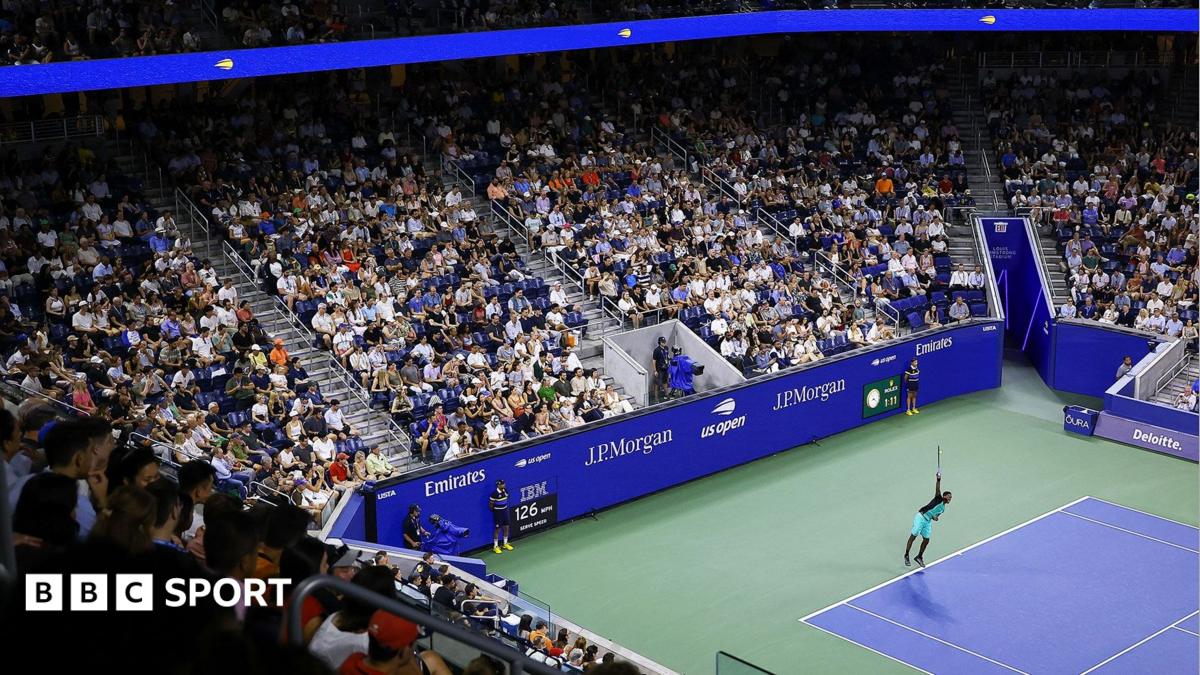
Tension boiled over during two-time US Open champion Naomi Osaka’s opening round match on the main court at Arthur Ashe Stadium, the world’s largest tennis venue with a capacity of more than 23,000. A group of content creators set up a portable ring light for a photoshoot in their hospitality suite while Osaka was in the middle of serving, prompting an official reprimand from the chair umpire. A viral video captured the same group talking loudly while filming content during active play, forcing the umpire to publicly call for them to stop. When Osaka returned to the court for her second-round match Thursday, the umpire was forced to repeat calls for crowd silence multiple times – a frequency Osaka said she had never experienced before.
“I tell people I normally just focus on the match and the court, but there was a moment where there was people shouting and you could hear it quite clearly,” Osaka told reporters after the match. “I think it bothered my opponent, too.”
The four-time Grand Slam champion echoed a common middle ground held by many players, acknowledging that influencer outreach can help grow the sport, but calling for stricter management of fan and creator behavior. “It could be a good thing for people to make the sport of tennis popular to their specific audience, but I think it has to be managed a lot better, especially in the situation like my first-round match,” she said. “Overall, I think there are huge positives. You want people to continue to grow the sport. I just think it has to be in a way that everyone knows the rules and the etiquette.”
That sentiment was echoed by American world No. 3 Jessica Pegula, who described some disruptive behavior as outright “disrespectful.” “I can appreciate the influencers coming and showcasing the US Open experience,” Pegula said. “But I do think that it’s tough when you see videos when they’re taking pictures and using the selfie lights. People are down there trying to perform. It’s their career and their job. It seems a bit disrespectful. I think it’s become a little too much this year.”
Coco Gauff, the world No. 4 who has become one of the sport’s biggest young stars, framed the expectation as a simple matter of following event norms. “I definitely think it’s cool to have a new demographic and I definitely think it helps grow the sport,” Gauff said. “But if you’re being invited to a red carpet, you wouldn’t show up in jeans. I think it’s just follow the etiquette of the sport. That’s all.”
Not all players have pushed back on the expanded influencer policy, however. Many veteran competitors have embraced the push to expand tennis’ reach, arguing that growing the fan base outweighs growing pains. Men’s seventh seed Daniil Medvedev, who has had a complicated relationship with New York crowds in the past, said he supports the US Tennis Association’s (USTA) new approach. “I think the more we try to raise awareness about tennis, the better it is, the more popular the sport is,” Medvedev said. “The more the sport grows, the better it is. I trust USTA with what they are doing. I think [there is] a lot more upside than downside, so go for it.”
American 11th seed Frances Tiafoe echoed that optimism, praising the US Open for welcoming a diverse mix of attendees. “I think the Open is great because you get all types of people that want to come and watch tennis,” he said. “All different walks of life, different types of people, different type of occupations. Personally, I love that. I have no problem with anybody doing anything, coming to watch the tennis.”
The expanded influencer accreditation is just one part of a years-long series of overhauls the US Open has rolled out to rebrand itself as a more accessible, fan-friendly event. In 2024, the tournament introduced free fan movement, allowing spectators to take their seats at any time rather than waiting for changeovers. The following year, it expanded the tournament to 15 days, adding a “Fan Week” before the main singles draw that features revamped mixed doubles competition and exhibition matches with retired and current stars. Tournament chief executive Craig Tiley has publicly framed these changes as part of a goal to create “the tennis Disneyland” that draws casual and hardcore fans alike.
Speaking ahead of the tournament, Tiley defended the creator credential program as a necessary adaptation to modern media consumption. “We need to find ways of reaching new audiences, reaching people in a way that they connect with media today,” he said. “The creation of the creator credential has been a key part of that because it’s enabled us to talk to people in a way that they’re listening. That’s been a big focus.”
In the wake of the high-profile disruption during Osaka’s opening match, tournament organizers have already stepped up efforts to reinforce etiquette rules. Digital screens across the Arthur Ashe Stadium complex now display frequent reminders asking attendees to “refrain from any activity that could disrupt the game, including noise levels, flash photography and ring lights.”
In a formal statement, the USTA reiterated its commitment to balancing growth and respect for competition. “The USTA is always striving to grow tennis in this country and bring new audiences into the sport,” the organization said. “We want all of our fans and guests to have an incredible time when they attend, but we also need to ensure they do not interfere with the action and competition on the court. We are continually looking for ways to ensure fans in the stands know what is permitted and what is prohibited.”