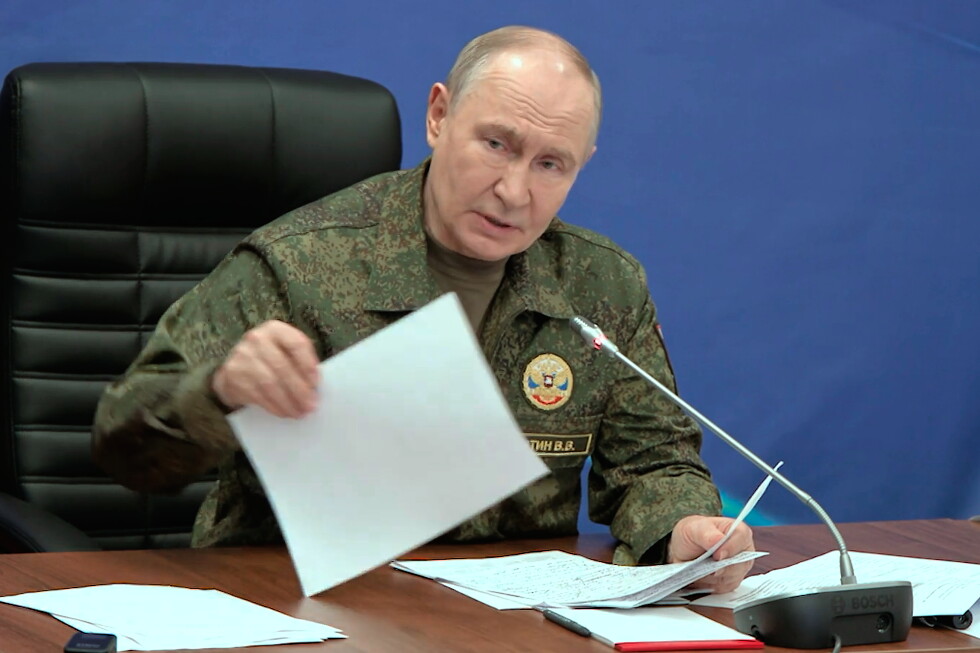
In the early hours of Sunday, Moscow-appointed authorities in Crimea announced that one civilian has been killed and two others wounded — one critically — in a Ukrainian strike on the northern part of the Russian-occupied peninsula, a development that comes as both Ukrainian and Russian leaders held separate landmark peace negotiations with former U.S. President Donald Trump, as the drawn-out Ukraine war enters its fifth year.
Regional Governor Sergei Aksyonov, installed by Moscow after its 2014 annexation of the peninsula, shared details of the attack on his Telegram channel but declined to release further specifics about the target or the nature of the strike.
Over recent weeks, Ukrainian military forces have ramped up long-range strikes against critical infrastructure sites across Crimea, part of Kyiv’s new battlefield strategy to cut off and isolate the strategically vital peninsula that Russia has held since its illegal 2014 seizure. Western defense analysts and officials note that Ukraine’s expanding long-range strike capabilities have demonstrated Kyiv’s ability to inflict significant, costly damage on Russian military and logistical assets, while putting new political pressure on the Kremlin at a moment when Russia’s own frontline advances have stalled almost entirely.
The latest strike in Crimea unfolded shortly after both Ukrainian President Volodymyr Zelenskyy and Russian President Vladimir Putin held separate phone calls with Trump focused on prospects for ending the ongoing conflict.
In a post on the social platform X, Zelenskyy confirmed that his conversation with Trump opened with congratulations to the United States on the 250th anniversary of its independence, before the two leaders moved to a detailed discussion of frontline conditions and peace prospects. “There is a real prospect of ending this war, and America’s determination will be crucial,” Zelenskyy wrote Saturday evening. “We agreed to continue the conversation in person during the NATO summit in Ankara.”
The Kremlin confirmed that Putin’s roughly 90-minute call with Trump, the fourth such conversation between the two leaders this year, also included congratulations from Putin to Trump and the American people for the U.S. independence anniversary, and described the discussion of the Ukraine conflict as “constructive.”
Kremlin foreign policy advisor Yuri Ushakov told reporters that Trump reaffirmed his “readiness to help achieve a quick cessation of hostilities and search for peaceful solutions to settle the crisis” in Ukraine. Ushakov added that Trump’s designated envoys, Steve Witkoff and Jared Kushner, will continue mediation efforts and remain prepared to travel to Moscow for direct talks.
Ushakov also outlined Putin’s stated position during the call: the Russian leader once again stressed Moscow’s preference for a diplomatic resolution to the conflict, but only on the condition that Russia’s publicly stated core territorial and political positions are incorporated into any final agreement.
Putin used the call to repeat his accusation that Kyiv and its Western European allies are “betting on prolonging, and even escalating the conflict,” Ushakov said, arguing that the European “party of war” operates from a flawed understanding of both the overall conflict dynamic and conditions along the front line.
Contradicting assessments from Western analysts that Russian advances are stalled, Ushakov said Putin shared what he called the “real situation on the battlefield,” claiming that Russian armed forces are “confidently advancing, liberating one settlement after another.” Putin specifically highlighted the claimed capture of Kostyantynivka, a key Ukrainian fortified stronghold in the Donetsk region, framing the seizure as a critical step toward capturing the entire Donbas area. Ukrainian officials have rejected Russia’s claim that Kostyantynivka has fallen, issuing a direct denial of the assertion.