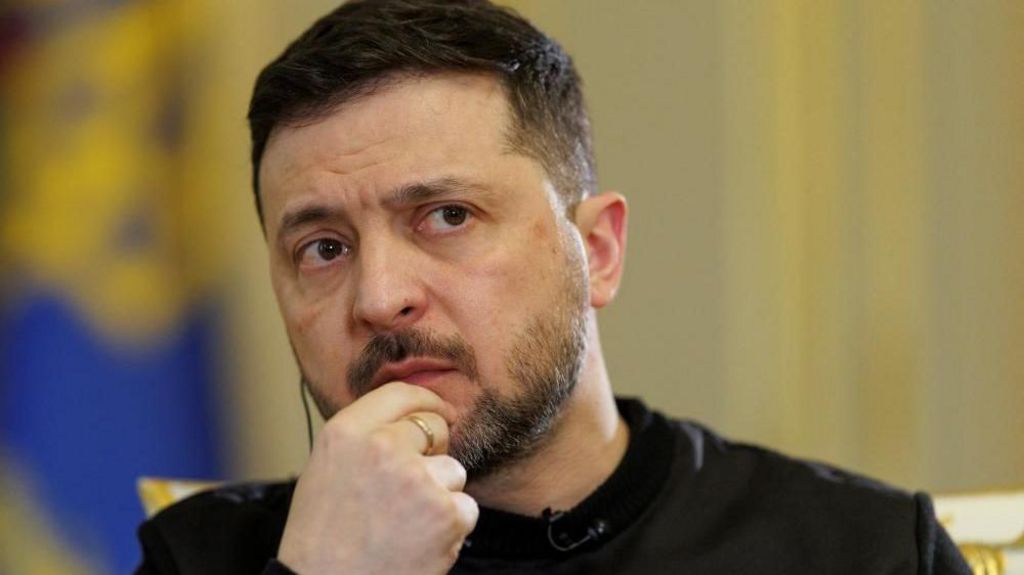
Ukrainian President Volodymyr Zelensky has revealed that international partners have privately urged Kyiv to reduce its targeted strikes on Russian energy infrastructure amid growing global fuel concerns. In a WhatsApp voice message to journalists, Zelensky stated these appeals would only be honored if Moscow reciprocally ceased attacks on Ukraine’s energy facilities.
The president framed Ukraine’s ongoing campaign against Russian oil terminals and refineries as proportional retaliation, emphasizing that ‘if Russia is ready not to strike Ukraine’s energy, then we’ll respond by not attacking theirs.’ This declaration follows Ukraine’s successful long-range drone operations against critical Russian energy assets, including the significant Ust-Luga export terminal near St. Petersburg, which reportedly lost 60% of its operational capacity.
While Zelensky didn’t identify specific nations requesting de-escalation, global energy dependencies reveal potential stakeholders. According to CREA research, China and India collectively purchased 85% of Russia’s crude oil exports in February, while the European Union remains the primary consumer of Russian gas (34%) and liquefied natural gas (49%).
The global energy landscape has grown increasingly volatile following Iran’s effective closure of the Strait of Hormuz and subsequent U.S. sanctions adjustments on Russian oil. These developments have driven price surges that simultaneously fund Russia’s war economy while threatening Ukraine’s military capabilities.
During his recent diplomatic tour of Saudi Arabia, UAE, Qatar, and Jordan, Zelensky offered Ukraine’s drone technology expertise in exchange for enhanced air defense support. He also highlighted Ukraine’s successful grain corridor experience as potential leverage for resolving Hormuz shipping disruptions.
Meanwhile, Ukraine’s energy infrastructure suffers catastrophic damage from Russian attacks, with over one million citizens experiencing winter power and heating outages. The nation now depends heavily on fuel imports through Poland, Greece, Lithuania, and Turkey after Hungarian supplies were suspended amid pipeline dispute allegations.