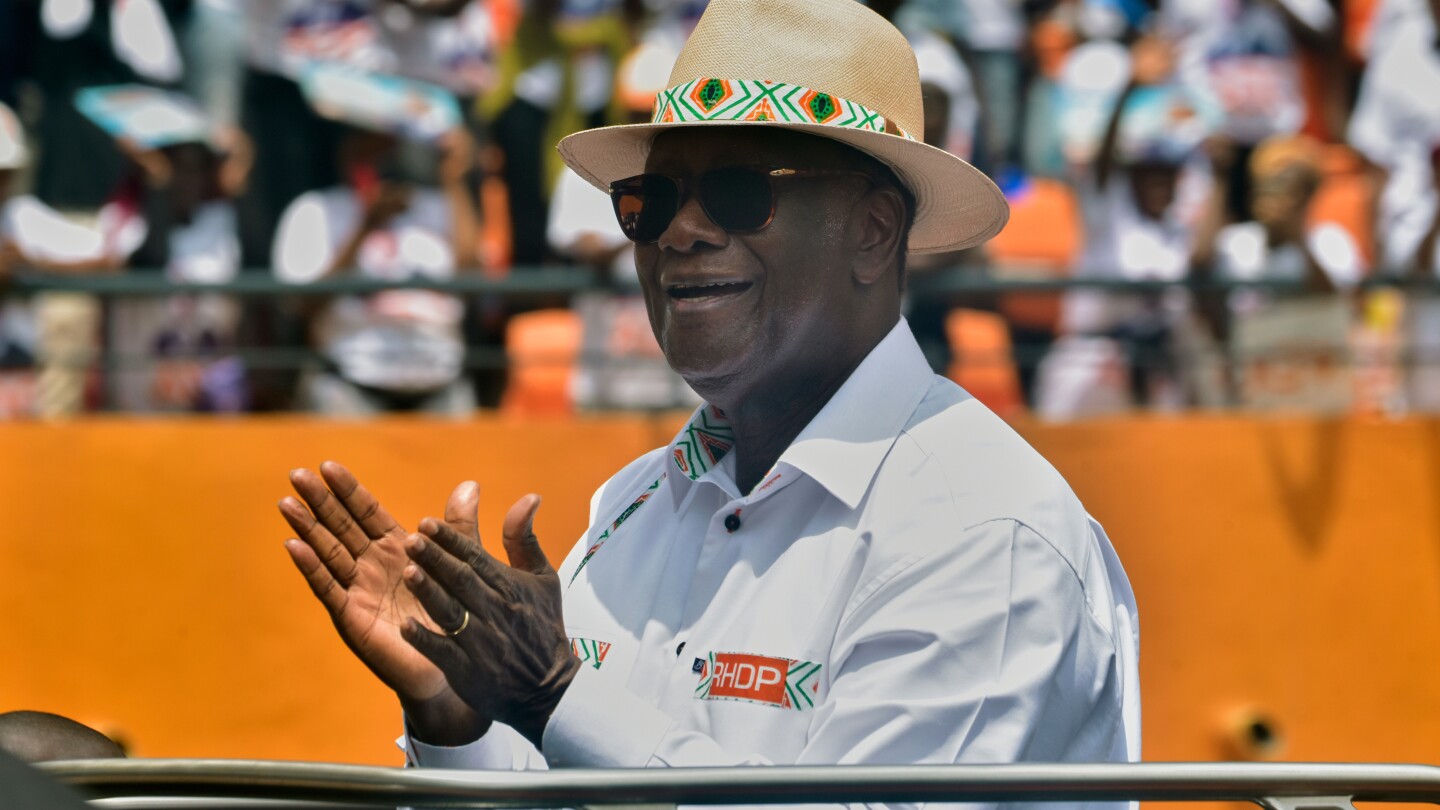
In the bustling capital of Abidjan, Ivory Coast, 33-year-old slam poet Placide Konan is using his art to voice frustration over President Alassane Ouattara’s controversial bid for a fourth term in Saturday’s election. Despite Ivory Coast’s status as West Africa’s economic powerhouse and the world’s largest cocoa producer, the country grapples with stark inequality and a 37.5% poverty rate. Over 75% of the population is under 35, and many, like Konan, struggle to make ends meet. “You have to be very lucky, or a bit of a magician, to live comfortably,” he remarked, highlighting the economic challenges in a city still reveling in its role as host of the 2024 Africa Cup of Nations. Analysts predict an easy victory for the 83-year-old Ouattara, whose rule began in 2011. However, the election is marred by controversy, with key opposition leaders, including former Credit Suisse CEO Tidjane Thiam, disqualified on legal grounds. Thiam, who renounced his French nationality in March, dismissed the decision as foul play. Ouattara faces a weakened opposition field, including former commerce minister Jean-Louis Billon and ex-first lady Simone Gbagbo. The election reflects a broader trend in Africa, where long-serving leaders often clash with a youthful populace. Concerns over violence loom large, with 8.7 million registered voters and heightened security measures in place. Protests against the disqualifications have been met with arrests and restrictions on public gatherings, resulting in at least three deaths. Critics accuse the government of exploiting legal loopholes to stifle opposition, undermining stability in a region already facing significant challenges. Ouattara, who assumed power after a deadly 2010-2011 political crisis, defends his fourth-term bid by citing the country’s “unprecedented security, economic, and monetary” challenges. He has pledged to support youth entrepreneurship and independence, yet critics argue that his administration has failed to translate economic growth into sufficient job opportunities for young people. Meanwhile, security concerns persist, particularly in the north, where Ivory Coast faces pressure from armed groups spilling over from conflict-ridden Mali and Burkina Faso. Despite having one of the region’s most sophisticated militaries, the country remains vulnerable to regional instability. As Ivory Coast heads to the polls, the election underscores the deep divisions and challenges facing the nation.