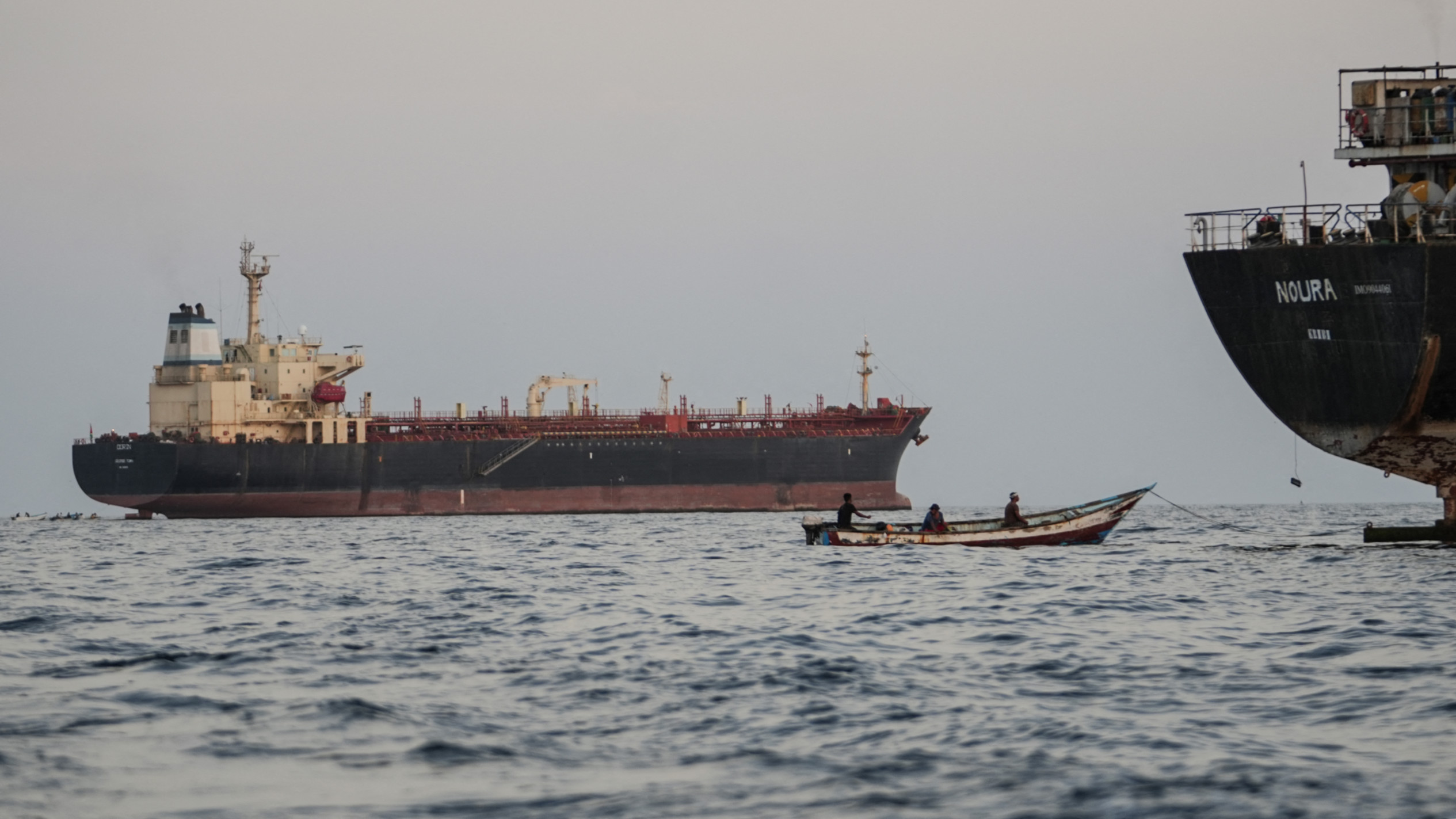
Over recent months, escalating Houthi (officially known as Ansar Allah) operations targeting Saudi oil infrastructure and expanding control over Red Sea shipping lanes have reshaped long-standing regional power dynamics, presenting Tehran with both unprecedented strategic advantages and unforeseen operational risks. The September capture of the critical Yemeni port of Mokha from Saudi-backed government forces placed Saudi Arabia’s alternative oil export route via the Bab al-Mandab Strait under direct threat, a development that initially aligned closely with Iranian strategic goals: creating upward pressure on global oil prices, pushing U.S. President Donald Trump’s administration to push for an end to Yemen’s protracted war, and linking potential Bab al-Mandab shipping disruptions to existing tensions in the Strait of Hormuz to amplify regional leverage.
Tensions between Riyadh and the Houthi movement have been steadily simmering for months. Unconfirmed Reuters sources reported that in July, Tehran dispatched a flight carrying 10 to 21 senior Islamic Revolutionary Guard Corps (IRGC) personnel, including high-ranking commanders, to Yemen to push back against the long-running Saudi-led blockade of the country. The move triggered a flurry of back-channel diplomatic outreach: a Saudi ambassador with a specialized security background, who had been posted to Iran, met with Iranian officials to de-escalate rising hostilities, per sources speaking to Middle East Eye. Iranian Foreign Minister Abbas Araghchi signaled he was prepared to travel to Saudi Arabia at Riyadh’s request, though the trip never materialized. Riyadh’s core demand was for Tehran to use its influence to convince the Houthis to halt cross-border attacks and maritime threats, while Iran countered by calling for the full lifting of the Saudi blockade on Yemen and offered to mediate talks between the warring Yemeni factions. Pakistani officials also joined the diplomatic push, making repeated trips to Tehran and placing direct phone calls to Araghchi to urge Iranian intervention to secure Houthi de-escalation.
Yet senior Iranian insiders stress that Riyadh and Islamabad operate under a critical misperception: the Houthis are not a simple Iranian proxy. Unlike Lebanon’s Hezbollah, which many regional analysts frame as a direct extension of Iranian strategic interests, the Houthi movement prioritizes its own domestic political and military objectives. As one senior Iranian source close to the establishment noted, if the Houthis took direct marching orders from Tehran, they would have already blocked all vessels traversing the Bab al-Mandab Strait, including U.S.-flagged ships, rather than only targeting vessels linked to Saudi interests. The source confirmed that multiple Saudi requests for Iranian help brokering a multi-week ceasefire fell flat, as the Houthis rejected the terms outright.
The scale of Houthi operational escalation became impossible to ignore on October 11, following two successive attacks on Riyadh’s primary airport that killed 13 civilians. Araghchi immediately held a phone call with his Saudi counterpart, reaffirming Tehran’s willingness to facilitate direct talks between Riyadh and Ansar Allah to negotiate a comprehensive political resolution to Yemen’s years-long conflict.
A Saudi affairs analyst writing for a reformist Iranian media outlet emphasized that the 2022 ceasefire that largely paused active combat across Yemen never resolved the conflict’s underlying root causes, merely pushing tensions to the margins to reemerge at the first sign of broader regional escalation. The expert noted that security in the Bab al-Mandab Strait has become inextricably intertwined with stability in the Strait of Hormuz, evolving the Yemen conflict from a localized civil war, to a regional Arabian Peninsula standoff, to a potential full-blown international confrontation. He added that Riyadh’s stubborn commitment to a military-first approach in Yemen stems not just from immediate security fears, but from deeply held concerns about Saudi national prestige and historical credibility as a dominant power in the Arabian Peninsula, making Riyadh unwilling to pursue flexible diplomacy, formally recognize the Houthi movement, or accept a Shia-led government on its southern border.
As Houthi forces made rapid territorial gains along the Red Sea coast and surrounding the Bab al-Mandab Strait, threatening to cripple Saudi oil export flows, Riyadh extended diplomatic outreach to Beijing last month. Iranian sources confirmed to Reuters that Chinese officials privately urged Tehran to rein in Houthi operations to prevent further disruption to the vital energy shipping routes that underpin China’s economic stability.
A conservative analyst with close ties to Iran’s central power structures framed recent Houthi strikes deep inside Saudi territory – including repeated assaults on Riyadh’s King Khalid International Airport and Asir province’s Abha International Airport – as a deliberate break from conventional retaliatory norms. The October 10 attack on King Khalid Airport killed 12 people and wounded more than 300, followed by a second strike the next day that killed one more person and injured nearly a dozen others. The analyst explained that the Houthis are intentionally establishing new battlefield rules of engagement defined by the slogans “Riyadh for Sanaa”, “airport for airport”, “oil for oil”, and “blockade for blockade”. “Riyadh for Sanaa is far more than a political catchphrase,” he noted. “It signals a deliberate redefinition of attack and retaliation, making clear that Yemeni territory will no longer be the only battleground, and continuing the war will carry direct, painful consequences for Saudi Arabia itself.”
For all the short-term strategic benefits the Houthi advances deliver to Tehran, a leading Iranian reformist academic warned that Iran risks squandering its long-term regional influence as global and regional actors move to build a new coordinated security architecture spanning the Bab al-Mandab Strait, Red Sea, and Gulf of Aden. In July, Saudi Arabia and 13 other nations announced the formation of a dedicated maritime military coalition to safeguard freedom of navigation across the three key waterways, an initiative that the academic argues extends far beyond immediate counter-Houthi operations. What began as a narrow campaign to protect commercial shipping from Houthi raids is on track to evolve into a permanent, broad-based regional maritime security framework centered on the Bab al-Mandab Strait, bringing together nations with otherwise competing strategic interests around a shared stake in unimpeded trade flows. This shift carries profound implications for global commerce and the long-standing regional balance of power, the scholar noted, warning that Tehran’s current focus on short-term tactical gains risks making it blind to the larger transformation unfolding around it. The new maritime security order could gradually erode Iran’s strategic reach and curtail its influence over one of the world’s most economically vital maritime corridors.
Even IRGC-affiliated Tasnim News Agency has highlighted the high stakes of the moment, arguing that the outcome of any potential U.S.-Iran confrontation and the future of stability in the Strait of Hormuz will directly shape the trajectory of the Yemen conflict, the balance of power around the Bab al-Mandab, and the security of Saudi Red Sea oil exports. Combined Houthi restrictions on Red Sea shipping and potential disruptions in the Strait of Hormuz already place unprecedented pressure on Saudi energy exports, Tasnim noted, quoting an Iranian expert who warned that weakening the Houthis or cutting off their access to the Red Sea coastline would be deeply damaging to Iranian national interests, granting the U.S. and its allies far greater operational freedom to take action against Tehran. The outlet urged Iranian policymakers to ramp up diplomatic support for the Houthis, noting that Iran cannot expect its regional allies to stand in its defense if it fails to fully support them in their own conflicts.