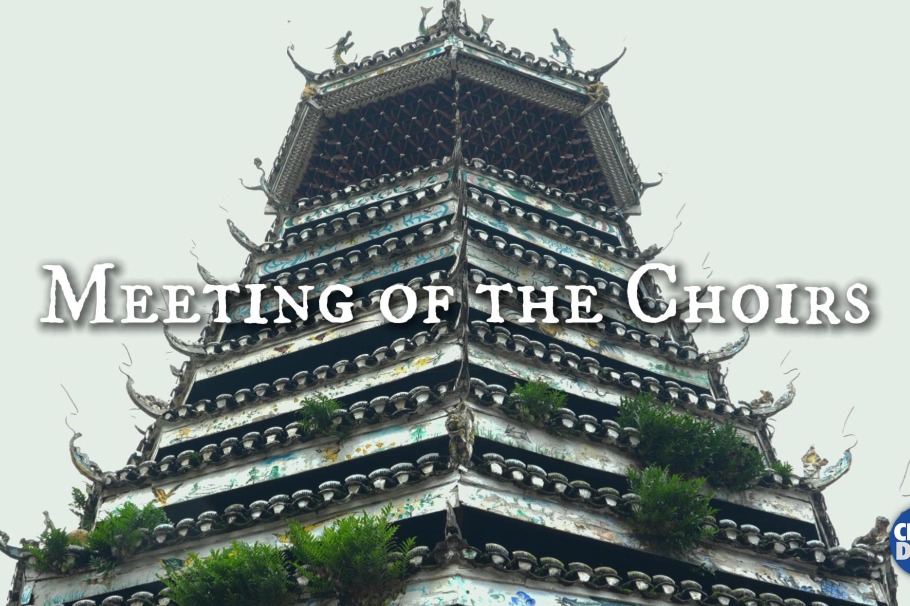
Against the backdrop of ancient wooden stilted buildings and the quiet hum of rural life in Zhaoxing Dong Village, a one-of-a-kind cross-cultural musical exchange unfolded recently, bringing together one of the world’s most famous collegiate a cappella groups and a centuries-old Chinese ethnic folk tradition. The Whiffenpoofs of Yale University, the oldest independent collegiate a cappella ensemble in the United States, traveled deep into southwestern China’s Guizhou province to share their craft with local Dong ethnic artists, creating a memorable dialogue between two distinct a cappella musical heritages.
When the opening notes of Broadway’s classic tune *Anything Goes* drifted across the village’s rice terraces and ancient alleyways, the ensemble performance was met with a warm, harmonious response from the Dong folk singers, who delivered a haunting rendition of the Dong Grand Song — the region’s iconic unaccompanied polyphonic folk singing that has been inscribed as a UNESCO Intangible Cultural Heritage.
The collaborative performance moved to the village’s iconic drum tower, the centuries-old central gathering space for Dong communities, where both groups joined together to perform beloved pieces including the well-known Chinese folk song *Jasmine Flower* and the classic Irish folk ballad *Down by the Salley Gardens*. The impromptu collaboration drew hundreds of villagers and tourists, who gathered around the open-air space to experience the unusual blend of Western and Chinese musical expression.
Unlike many musical traditions that rely on written notation and formal transmission, the Dong Grand Song has been passed down through oral tradition across generations. This practice grew out of the Dong community’s historical lack of a written language, making song the primary vessel for preserving ancestral wisdom, documenting daily life, and passing down collective cultural memory. Today, this living heritage continues to thrive, drawing visitors and cultural enthusiasts from across the globe to experience its unique polyphonic harmonies.
For members of the Yale ensemble, the exchange offered a rare, eye-opening opportunity to connect with a living traditional culture in a deeply personal way. Lucas Oland, a choir member who has spent most of his life singing, noted that even with language barriers preventing full understanding of the lyrics in the Dong folk pieces, the emotional resonance of the music crossed all divides. “Even if I wasn’t able to understand too much of what they were saying, the language and the music really resonated with all of us. We were able to see how talented these people are, and we are so lucky to be greeted by such a great performance,” Oland said. The encounter highlighted how shared passion for music can bridge vast cultural divides and create meaningful connections between people from opposite sides of the world.