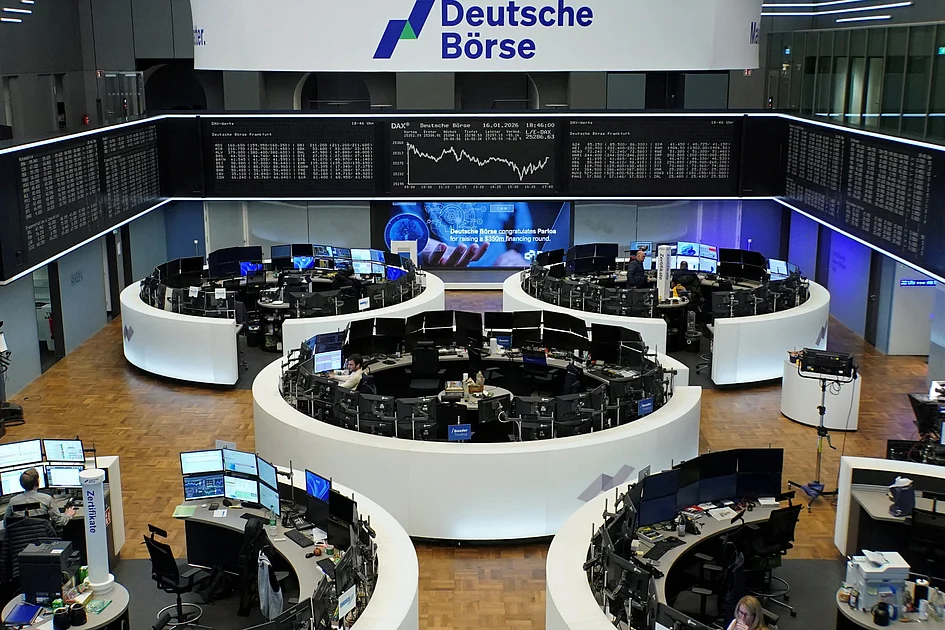
Global financial markets are bracing for significant turbulence following President Donald Trump’s unexpected declaration of punitive tariffs against eight European nations. The unprecedented trade measure, linked to the United States’ pursuit of acquiring Greenland, marks a dramatic escalation in transatlantic trade tensions.
Effective February 1st, the administration will impose an immediate 10% tariff increase on imports from Denmark, Norway, Sweden, France, Germany, the Netherlands, Finland, and Britain. These levies are scheduled to escalate to 25% by June 1st should diplomatic negotiations fail to produce a resolution regarding Greenland’s status.
The collective European response emerged swiftly, with affected nations issuing a unified statement reaffirming their support for Greenland’s territorial integrity. Irish Taoiseach Leo Varadkar indicated the European Union stands prepared to implement retaliatory measures should the U.S. proceed with its tariff implementation.
Financial analysts express concern that this development shatters the recent period of trade stability. Berenberg Chief Economist Holger Schmieding noted, ‘Optimism that tariff tensions had subsided for the foreseeable future has been abruptly dismantled. We now confront a scenario reminiscent of last spring’s volatility.’
Market projections suggest the euro will face immediate pressure during Asian trading sessions, potentially extending its recent decline against the dollar. Meanwhile, European defense equities are anticipated to benefit from heightened geopolitical uncertainties, having already surged approximately 15% this month amid growing international tensions.
Denmark’s currency mechanism will face particular scrutiny as the krone maintains its peg to the euro amidst mounting pressure. Geopolitical strategist Tina Fordham observed, ‘The U.S.-EU trade conflict has dramatically reignited,’ highlighting the irony of this development coinciding with the EU’s signing of a new free trade agreement with Mercosur nations.
Beyond immediate market impacts, this confrontation raises fundamental questions about NATO alliance cohesion and the durability of recent trade agreements. The World Economic Forum’s latest risk assessment has elevated economic confrontation between nations to its primary concern, surpassing armed conflict for the first time.
Investors are expected to adopt a risk-averse stance, potentially boosting traditional safe-haven assets including gold, which continues trading near record highs. However, market resilience demonstrated during previous geopolitical crises suggests a tempered reaction may emerge as participants weigh the probability of implemented policies versus rhetorical threats.