ATLANTA — The global campaign against Guinea worm disease has reached a pivotal milestone, with only 10 human infections reported worldwide in 2025—the lowest figure in recorded history. The Carter Center announced this breakthrough achievement on Friday, marking significant progress toward the ultimate goal of complete eradication.
This development arrives just over a year after the passing of former U.S. President Jimmy Carter, who frequently expressed his aspiration to witness the parasite’s elimination. When the Carter Center initiated its eradication program during the mid-1980s, approximately 3.5 million people across developing nations suffered from Guinea worm infections annually.
“We continually reflect on President Carter’s enduring legacy and his unwavering commitment to achieving zero cases,” stated Adam Weiss, director of the center’s Guinea worm eradication program. “While these diseases might not dominate global headlines, they represent catastrophic burdens for affected communities. We remain dedicated to fulfilling his mission of alleviating human suffering.”
Geographically, the 2025 cases were confined to three nations: Chad and Ethiopia each reported four human infections, while South Sudan documented two. Notably, Angola, Cameroon, Central African Republic, and Mali maintained zero human cases for the second consecutive year—a testament to sustained intervention efforts.
However, animal infections present ongoing challenges. Although Chad reported a 47% reduction in animal cases (down to 147 from previous highs), Cameroon documented 445 infections, Angola 70, Mali 17, South Sudan 3, and Ethiopia 1. This animal reservoir complicates eradication timelines, as infected animals can reintroduce the parasite into water sources.
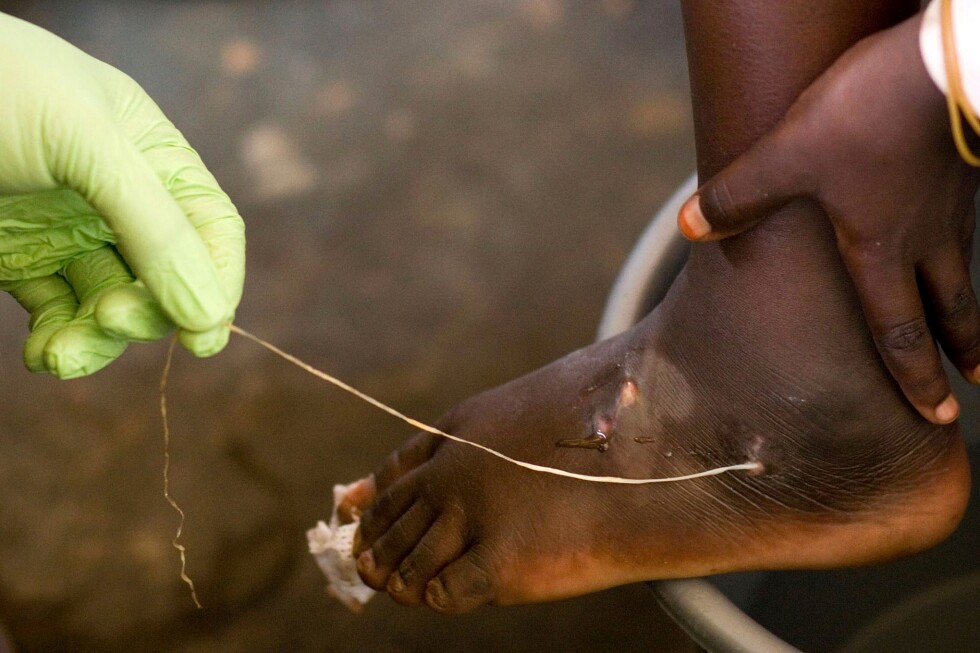
Guinea worm disease manifests when individuals consume water contaminated with larvae. The parasite matures internally, growing up to one meter in length before emerging through painful blisters. Victims often seek relief in water, inadvertently releasing new larvae and perpetuating transmission cycles. Animals similarly spread the disease when accessing water sources.
The Carter Center’s multifaceted approach—conducted alongside WHO and national health ministries—includes public education, volunteer training, and water filter distribution. With no medicinal treatment available, current management relies on pain alleviation and preventive behavioral changes.
Looking forward, researchers are developing diagnostic tests for early detection in both humans and animals. Identifying infections before symptom onset could prevent water contamination, potentially accelerating eradication.
Despite logistical challenges stemming from reduced U.S. involvement in international health initiatives, field operations continue uninterrupted. If successful, Guinea worm would become only the second human disease eradicated after smallpox, cementing President Carter’s vision of a parasite-free world.