For generations, the standard career path for top Master of Business Administration (MBA) graduates in the United States followed one of two well-worn routes: climb the corporate ladder at a major multinational, or launch a risky startup from scratch. But a growing cohort of ambitious young business school graduates is now taking a third, far less conventional path: raising hundreds of thousands of dollars in investor capital to purchase existing, established companies and install themselves as chief executive officer immediately after graduation.
This trend, known as entrepreneurship by acquisition or search-fund investing, has exploded in popularity in recent years. Data from 2023 shows that a record 94 new search funds were launched across the U.S. that year, with a total of $682 million in investor commitments poured into the model across 2022 and 2023. Specialized investment firms including Search Fund Partners, Aspect Investors and Anacapa Partners have emerged to back these young, would-be CEOs, drawn by data showing strong, stable returns: a study from the Yale School of Management describes the returns from search-fund acquisitions as “juicy by any standard,” even as critics question the wisdom of putting inexperienced 20-somethings in charge of long-standing businesses.
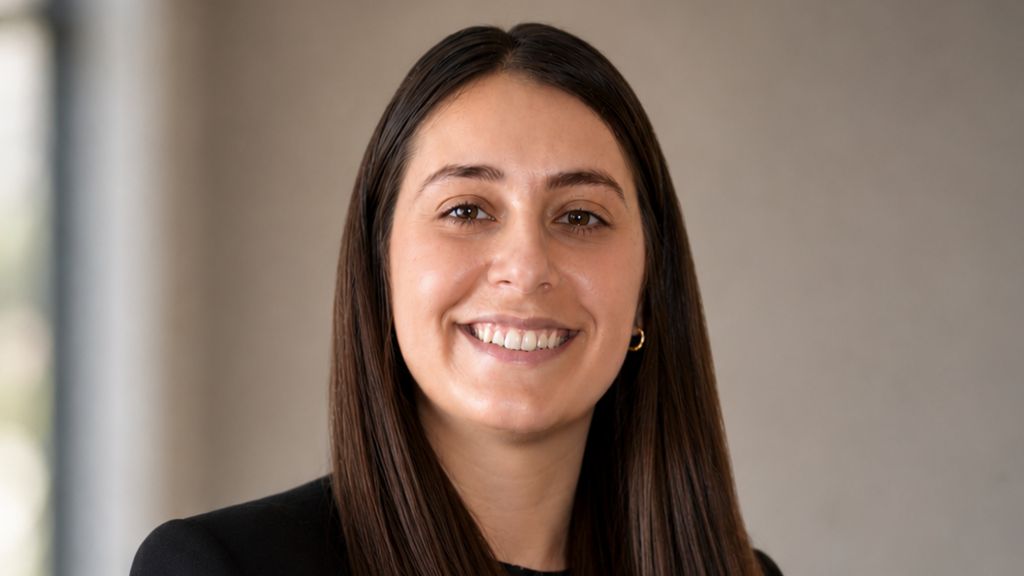
For 30-year-old Ania Aliev, the journey to the CEO’s office began in an unlikely place: a hospital bed, while she waited to be induced for the birth of her first child in late 2023. Fresh off graduating from Dartmouth College’s prestigious Tuck School of Business, the former finance professional was still finalizing her acquisition deal for Life Support Systems, a Massachusetts-based medical equipment manufacturer, even as investors urged her to pause and focus on childbirth. Three months after welcoming her son, she stepped into the role of owner and CEO.
Mindful of the common stereotype of a young, finance-trained newcomer arriving to dictate sweeping changes to long-tenured staff, Aliev intentionally adopted a slow, listening-first approach. “If you judge a book by its cover, it’s very easy to be like ‘oh, young girl, Wall Street background, coming in here and telling me what to do’… I was really conscious about that,” she explained. “I really didn’t want to come off that way to my team. My initial approach was just to observe and learn, not come in swinging with a new agenda.”
More than two years into her tenure, Aliev has delivered on her growth promise: she led the acquisition of a competing firm, a move that has doubled the size of Life Support Systems. While most staff have embraced the new direction, the transition has not been entirely seamless: some longtime employees have left, and Aliev made a small number of roles redundant for workers who were unwilling to adapt to the growth-focused culture. Meaghan Richardson, a long-tenured team member at the company, acknowledges the adjustment was challenging, but frames the change as positive: “It can be a little bit challenging sometimes for those of us who have been here a long time… but it’s been really great since she’s come in because she’s just turned a lot of stuff around, which is really exciting.”
For every success story like Aliev’s, however, the model carries significant risk, as 39-year-old Scott Duncan can attest. A Harvard Business School MBA, Duncan launched his own search fund in 2018 and ultimately acquired F&M Tool and Die, a Massachusetts-based industrial parts manufacturer that looked like a perfect fit on paper, aligning with his prior engineering experience. At 31, he stepped into the CEO role, but struggles began almost immediately.
Within months, key skilled employees left the company – including one who launched a low-cost competitor and poached a major client – and remaining staff pushed back against proposed changes. Duncan quickly realized the business had been built entirely around the personality and leadership of the previous owner, and it was nearly impossible for an outsider to take the reins. What followed was seven years of mounting challenges: the Covid-19 pandemic, rising competition from cheaper Chinese imports, and even a major flood that damaged the company workshop. Duncan describes the slow, grinding struggle as “death by a thousand cuts.”
In February 2024, Duncan had no choice but to shut down the business permanently. He broke the news to his assembled staff, and later filed for personal bankruptcy. “I was a shell of a human being,” he recalled of the period. Now working as a business consultant, Duncan does not oppose the search-fund model, but he urges extreme caution for the young MBAs who enter the space assuming they are immune to failure: “It’s really, really hard, even when things are going well.”
Leadership experts note that the success or failure of a young new CEO often hinges less on age and more on how they manage uncertainty. Jacqueline Ackerman, a leadership coach and managing partner of Chicago-based Vantage Leadership Consulting, explains that employees do not inherently resist younger leaders: “I don’t think people actually resist youth. I think they resist uncertainty. A lot of times people would associate younger leaders with a lot of change, which creates that uncertainty.”
For successful young acquirers like Aliev, the model has delivered on its core promise: a career that feels far more fulfilling than the traditional corporate finance roles many leave behind. “I knew I didn’t want to do banking… I just was so unfulfilled by it,” she says. As the number of search funds continues to hit record highs, the debate over whether this trend is a brilliant shortcut to the C-suite or reckless overconfidence will only grow louder among investors and business leaders alike.