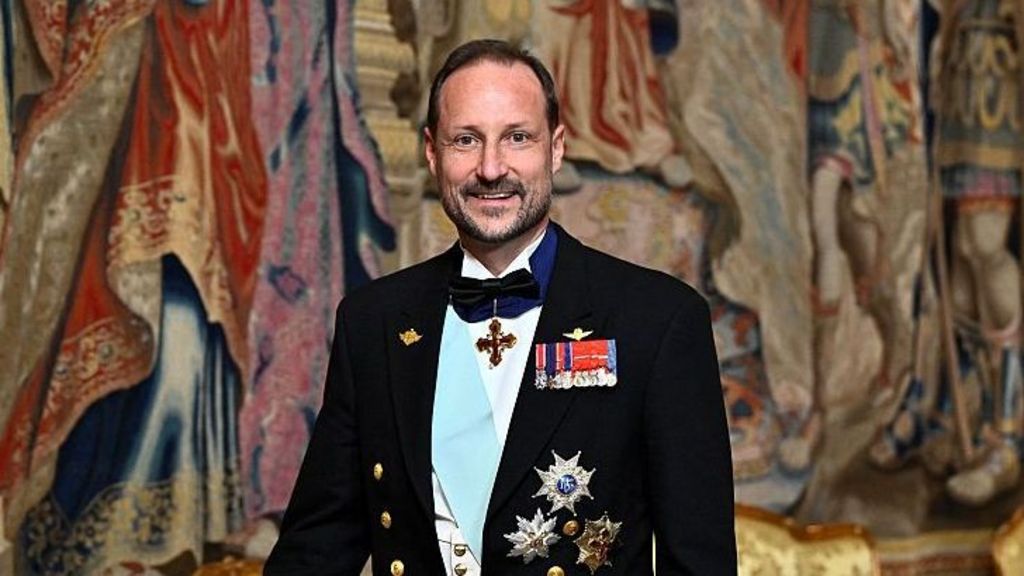
Following the passing of the beloved King Harald V, Haakon VIII has formally ascended to the Norwegian throne, launching a new chapter for the Nordic nation’s centuries-old constitutional monarchy. For many Norwegians, the transition carries enormous expectations: King Harald spent decades on the throne earning deep public adoration, reflected in consistently sky-high approval ratings and a nationwide outpouring of grief in the days leading up to his death. Haakon now steps into the role as the fourth monarch of Norway’s modern independent monarchy, which was re-established in 1905 after the country secured full separation from Sweden.
In one of his first official acts as sovereign, Haakon oversaw a special session of the Norwegian cabinet, where he confirmed his royal title and announced he would carry forward his father’s iconic motto: “Everything for Norway.” The decision aligns with longstanding expectations that Haakon would honor the legacy of his predecessors, as he spent nearly 35 years as crown prince preparing for the role. For years before Harald’s death, Haakon worked closely alongside his father, gradually taking on expanded responsibilities and serving as regent during periods of the late king’s illness and absence. In his own biography, *The King Tells*, Harald expressed unwavering confidence in his son, writing, “I am so lucky that Crown Prince Haakon is the one who will carry this forward.”
Historians and royal commentators widely agree that while Haakon will bring a different style of leadership to the monarchy, he is well-positioned to earn the same level of public respect as his father. “King Harald was incredibly charismatic, with a wonderful sense of humor that won over people across the country,” Norwegian historian Trond Norén Isaksen explained to the BBC. “Haakon is more reserved, more like his mother Queen Sonja. But in recent years, he has grown more comfortable in the public eye, opened up more, and shown his own sense of humor. He has already carried enormous responsibility for decades, as his parents aged and his wife faced ongoing health struggles.”
A direct great-great-great-grandson of Britain’s Queen Victoria, Haakon’s ascension also clears the way for a historic shift in the line of succession: his 22-year-old daughter Ingrid Alexandra is now crown princess, and is set to become Norway’s first female monarch since the 15th century. The milestone followed a 1990 constitutional revision that granted women equal right to inherit the throne, reversing the previous law that placed Haakon ahead of his older sister, Princess Märtha Louise, in the succession line.
Haakon’s own path to the throne has been shaped by non-traditional royal experiences. Born in 1973 as the youngest child of Harald and Sonja, he has spoken openly about struggling to accept his royal status during his youth. “Yes, I was a royal, but I did not want to talk about it… At school it made me anxious,” he wrote in his 2023 autobiography, recalling his time at a local state primary school in the 1980s. He became crown prince in 1991 at just 17 years old, following the death of his grandfather King Olav V.
Unusually for a European royal, Haakon was educated entirely in local public schools before pursuing a four-year career in the Royal Norwegian Navy, graduating from the Norwegian Naval Academy in 1995. He broke another tradition by declining to attend Oxford University, where his father and grandfather had studied, instead moving to California to earn a degree in political science from the University of California, Berkeley.
Shortly after returning to Norway, Haakon met Mette-Marit, a woman from a working-class background in Kristiansand, at a local music festival in 1999. The couple’s relationship sparked immediate controversy, with some public commentators drawing parallels to the 1936 abdication of Britain’s Edward VIII over his choice to marry American divorcee Wallis Simpson, warning that the union could threaten the future of the Norwegian monarchy.
While Harald had already broken royal tradition three decades earlier by marrying commoner Sonja, Mette-Marit brought a background that clashed with traditional royal expectations: she was a single mother to a four-year-old son, Marius Borg Høiby, whose father had served prison time for cocaine possession, and she had a well-documented history of participation in Oslo’s countercultural party scene. The couple’s decision to cohabitate in an Oslo apartment also drew fierce criticism from the conservative Lutheran Church of Norway, though contemporary polls showed most ordinary Norwegians did not object to the arrangement. Three days before their 2001 wedding, Mette-Marit gave an emotional public interview where she apologized for her “wild past” and condemned drug use, a gesture that marked a turning point in public opinion. She eventually won widespread public affection, becoming a popular advocate for HIV awareness and literacy initiatives, and earned broad sympathy after her 2018 diagnosis of pulmonary fibrosis.
Today, Haakon’s reign begins against an unusually turbulent backdrop for the Norwegian royal family. While the institution remains broadly popular with the public and has long been praised for its progressive, modern outlook, it has faced cascading scandals in recent years that have tested public trust. Earlier this year, Mette-Marit issued a public apology for her years-long friendship with convicted American sex offender Jeffrey Epstein, admitting she had exercised “poor judgment” and wished she had never met him. Shortly after that controversy, her son Marius was convicted of rape in a high-profile trial that revealed the attack took place on Haakon’s private estate at Skaugum; Marius is currently appealing the conviction. Two days after the trial concluded, Mette-Marit underwent a life-saving lung transplant, eight years after her initial diagnosis, and her long-term health remains uncertain.
Polling from earlier this year found that nearly half of all Norwegians believe Mette-Marit should never become queen, a challenge the new monarch will have to navigate as he settles into his role. Royal insiders and commentators disagree on how the scandals will shape Haakon’s reign, but most agree that the new king’s approach to addressing the controversies will define his legacy. “The most important thing the royal family can do is be completely open about what actually happened, and not allow public speculation to grow out of control,” said Caroline Vagle, royal correspondent for *Se og Hør* magazine. “But I also don’t think we should overestimate the impact of one or two difficult cases. What will ultimately matter is how the royal family handles them, and how Haakon and the next generation build on the trust that King Harald earned over a lifetime.”
Tove Taalesen, royal correspondent for Norwegian outlet *Nettavisen*, noted that while the current controversies present significant challenges, Haakon has spent decades preparing for the role and is more than ready to lead. “I’m sure that in the future he will be respected and loved, similar to King Haakon VII, King Olav V and also King Harald V,” Taalesen said.
As Haakon formally begins his reign, all eyes are on how the new monarch will balance honoring the long legacy of Norway’s modern monarchy with navigating the current period of public scrutiny, and how he will usher in the first female-led reign in more than 500 years when Ingrid Alexandra eventually succeeds him.