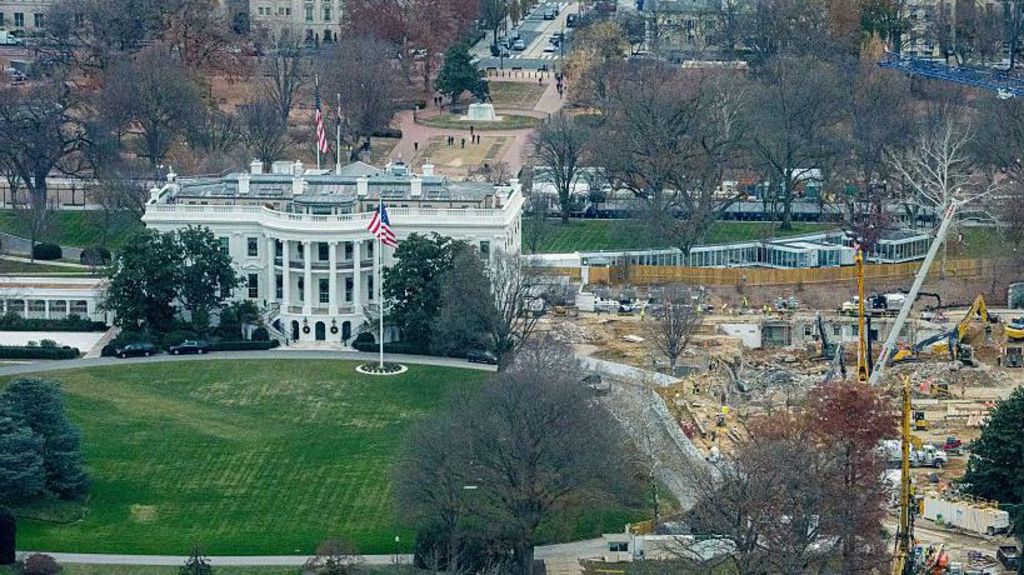
A significant legal confrontation has emerged between the White House and historic preservation advocates regarding President Donald Trump’s controversial ballroom project. The National Trust for Historic Preservation, a congressionally chartered nonprofit organization established in 1949, has initiated federal litigation to halt construction activities, alleging serious procedural violations in the administration’s approach to modifying the presidential residence.
The lawsuit, filed in Washington DC’s federal court on Friday, contends that the Trump administration illegally demolished the historic East Wing in October without obtaining mandatory reviews. The legal action represents the first major judicial challenge to the ballroom initiative, which has expanded considerably from its original conception of accommodating 500 guests to now potentially holding 1,350 attendees.
According to court documents, the White House allegedly bypassed multiple legal requirements by failing to submit plans to the National Capital Planning Commission, neglecting environmental assessments, and avoiding congressional authorization procedures. The preservation group asserts that these omissions violate constitutional provisions granting Congress authority over federal property disposition.
Carol Quillen, President of the National Trust, emphasized the symbolic importance of the White House as “the most evocative building in our country and a globally recognized symbol of our powerful American ideals.” The organization claims it felt compelled to pursue legal recourse after the administration ignored concerns raised during October consultations.
Current construction activity has transformed the White House grounds into what the lawsuit describes as “a bustling construction site, with dozens of workers driving piles, stockpiling materials, and amassing heavy machinery.” Notably, a towering crane recently erected on the property and audible nighttime construction work have drawn additional attention to the project’s intensity.
The White House has defended the undertaking as a “much needed and exquisite addition,” maintaining that President Trump possesses full legal authority to “modernize, renovate, and beautify the White House – just like all of his predecessors did.” The administration contends the project is funded exclusively by private donors.
Recent developments include the replacement of the lead architect overseeing the project, reportedly due to disagreements regarding the expansion’s scale and scope. The lawsuit seeks immediate construction suspension pending proper compliance with mandated review processes, including public commentary periods.