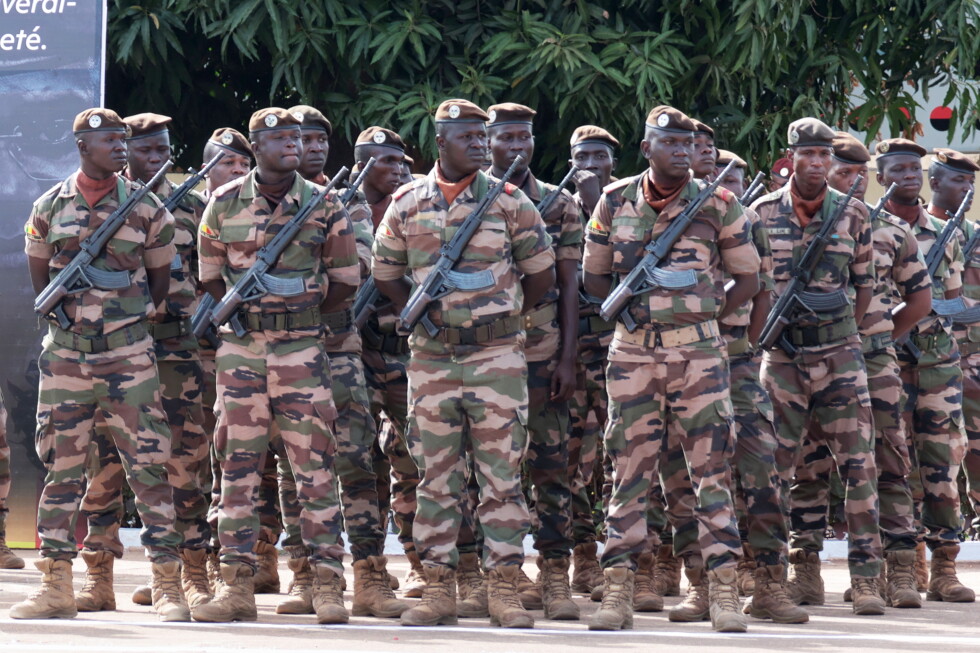
In the vast and violence-plagued Sahel region of West Africa, Mali is now confronting its most severe security breakdown in a decade, after two once-disparate armed factions — an al-Qaida-linked jihadi network and a Tuareg separatist group — formed a tactical partnership that has sharply intensified attacks on state military targets.
This unprecedented alliance between Jama’at Nusrat al-Islam wal-Muslimin (JNIM), the Sahel’s most powerful al-Qaida affiliate, and the newly formed Azawad Liberation Front (FLA), a separatist movement fighting for northern Mali’s independence, marks a dangerous new turning point in a conflict that has stretched across decades. Analysts warn the coordinated campaign has already produced some of the deadliest assaults on Malian security forces and their international allies seen in recent years.
The scale of the escalation became clear in April, when the allied groups launched large, simultaneous attacks across multiple regions of Mali — the first coordinated offensive of its size in 10 years. Earlier this month, the partnership carried out a deadly ambush on a Malian military convoy, leaving dozens of soldiers dead or captured and ratcheting up pressure on the country’s ruling military junta, which has held power since a 2020 coup.
Data from the Armed Conflict Location and Event Data (ACLED), an independent conflict monitoring organization, confirms the rapid worsening of violence. Fatalities linked to militant attacks across Mali jumped 35% in the first seven months of this year, rising to 3,435 from 2,546 recorded in the same period in 2024.
“The JNIM and FLA gain clear strategic advantage from collaborating, because each acts as a force multiplier for the other,” explained Heni Nsaibia, ACLED’s senior analyst for West Africa. Nsaibia noted both groups share a core immediate goal: defeating their common enemy, which they identify as the Malian armed forces and Russia’s Africa Corps, the Kremlin-aligned paramilitary group that now supports the junta.
FLA spokesperson Mohamed Elmaouloud Ramadane confirmed the arrangement to the Associated Press, describing the partnership as “a form of tactical coordination” focused exclusively on military operations. Ramadane added that the groups have agreed that once northern Mali achieves independence, local communities will vote to decide what form of sharia law, if any, will be implemented in the region.
To understand the current crisis, it is necessary to trace the long arc of instability in Mali. The modern conflict first ignited in 2012, when a Tuareg rebellion in northern Mali opened a power vacuum that jihadi groups quickly moved to fill, pushing the entire Sahel — a vast semi-arid belt stretching from North Africa to the Atlantic coast of West Africa — onto a path of persistent, large-scale violence. In 2020, Malian soldiers seized control of the civilian government, justifying the coup by pointing to the ongoing security failure. That power grab triggered a wave of follow-up coups across the Sahel, which the Institute for Economics and Peace now classifies as the deadliest region on Earth, accounting for more than half of all global terror-related fatalities annually.
Analysts broadly agree that military rule has failed to reverse the security decline, and has instead allowed armed groups to expand their territorial control across Mali and the wider Sahel. To contextualize the current fighting, a breakdown of the major active factions follows:
### Jama’at Nusrat al-Islam wal-Muslimin (JNIM)
Formed in 2017 from the merger of four separate al-Qaida-aligned factions operating in Mali, JNIM is widely recognized as the most powerful armed group in the Sahel and one of al-Qaida’s deadliest global affiliates. Its founding stated goal was to expel French counterterrorism forces, which were deployed to support the Malian government at the time.
Led by Iyad Ag Ghaly, a veteran Tuareg rebel and former Malian diplomat, JNIM operates across nearly all of Mali’s northern, southern, western and central regions. Last year, the group imposed a continuing blockade on fuel imports into Mali, severely disrupting supplies to the capital Bamako. It has also expanded its operations into neighboring Niger and Burkina Faso, and is pushing its influence into coastal West African states.
JNIM has forced the Malian military to spread its forces thin across vast swathes of territory, stretching the army’s operational capacity to breaking point. In recent years, the group has increasingly positioned itself as a legitimate alternative to the weak central government.
“JNIM has progressively expanded its influence, becoming an increasingly unavoidable interlocutor for some local communities and exercising de facto authority in certain areas where state institutions have only a limited presence,” said Beatrice Bianchi, an adviser for the Sahel-Sahara Security Strategies Centre.
### Azawad Liberation Front (FLA)
Founded in 2024, the FLA is the latest iteration of Tuareg separatist movements that have fought for northern Mali’s independence since the 1960s, shortly after Mali gained sovereignty from France. Separatist leaders have long argued that the central government in Bamako has systematically marginalized the northern region both politically and economically.
In 2012, a coalition of Tuareg rebel groups under the Coordination of Azawad Movements declared independence for the Azawad region, sparking a broader rebellion that aligned with the rising jihadi insurgency. A 2015 peace accord brokered by Algeria between the Malian government and rebel groups paused large-scale hostilities, but the ruling junta withdrew from the agreement in 2024 amid surging tensions, triggering a return to open conflict. In response, leaders from multiple separatist factions merged to form the FLA.
### Islamic State Sahel Province (ISSP)
The Sahel branch of the Islamic State network, ISSP was formed by defectors from al-Mourabitoun, one of the four al-Qaida groups that merged to create JNIM. The Islamic State leadership formally recognized ISSP’s allegiance in 2022. Compared to JNIM, ISSP is far less prominent across Mali, with most of its operations concentrated in the Menaka region bordering Niger.
Unlike JNIM, which works to build local acceptance alongside its military campaign, ISSP’s explicit goal is to establish a global Islamic caliphate in the region, and it relies far more heavily on violence and intimidation against civilian populations. “Both organizations are responsible for significant violence against civilians, but JNIM has generally sought to combine coercion with efforts to build local acceptance, while the Islamic State has relied more heavily on overt violence and intimidation,” Bianchi said. The two jihadi groups are also frequent rivals, violently competing for territory and clashing over competing interpretations of jihad, reflecting the long-running global rivalry between al-Qaida and the Islamic State.
### Africa Corps
The Africa Corps is a Russian paramilitary force that replaced the disbanded Wagner Group after its 2023 mutiny, and falls under the direct command of the Russian Ministry of Defense. After seizing power, the Malian junta expelled French counterterrorism forces from the country in 2022, framing the move as a defense of national sovereignty amid the worsening security crisis. The junta then abandoned its long-standing Western security partnerships to turn to Russia, first engaging the Wagner Group as a security proxy, before the Kremlin replaced Wagner with the Africa Corps. The paramilitary fights alongside Malian government forces, but has been widely accused of systematic gross human rights violations against civilian populations.
### Pro-Government Auxiliary Forces
A number of smaller ethnic militia groups also support the Malian government, though their alliances are often fluid. These include the Dozo, a faction of former hunters that has become militarized, and Tuareg self-defense groups such as the Imghad Tuareg Self-Defense Group and Allies (GATIA) and the Movement for the Salvation of Azawad (MSA), both active in the Menaka region. One prominent militia, Dan Na Ambassagou, which targets Fulani communities accused of harboring jihadis, was once backed by the government but has since been renounced by state authorities.