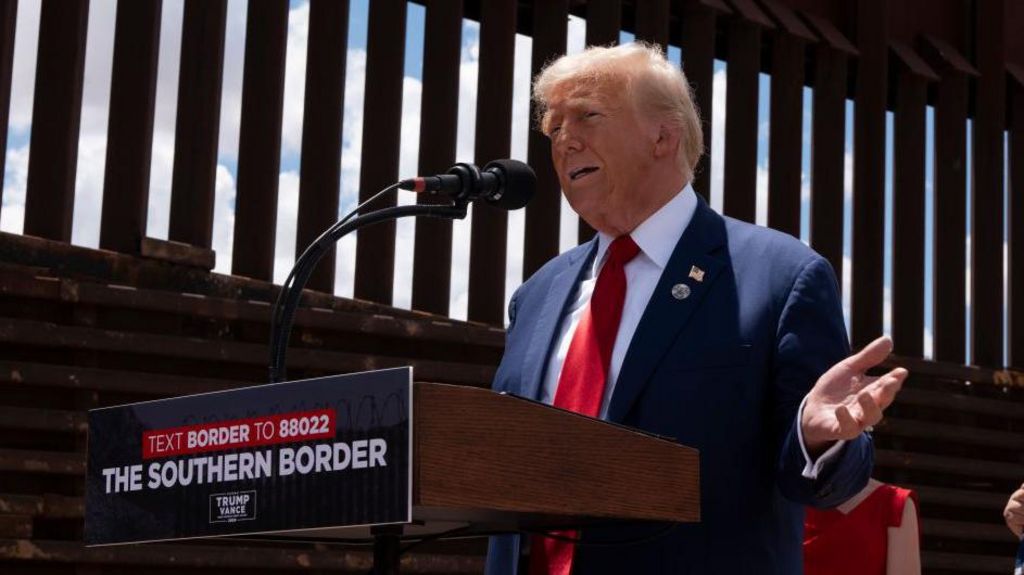
On his first day back in the White House, President Donald Trump signed an executive order declaring a national emergency at the US southern border. He directed his top officials to evaluate the potential use of the Insurrection Act of 1807, a rarely invoked 19th-century law that permits the deployment of active-duty military personnel for domestic law enforcement. Trump emphasized that he would consider invoking the Act if federal courts obstructed his plans to deploy the National Guard to protect federal buildings and enforce immigration laws. The Insurrection Act grants the president broad authority to mobilize troops in response to situations where it becomes ‘impracticable to enforce’ US law through standard judicial processes. This could include quelling civil unrest, enforcing court orders, or detaining migrants. Trump’s administration has already implemented aggressive measures at the border, including nationwide deportation sweeps and transferring alleged gang members to foreign prisons. However, these actions have faced legal challenges. Migrant apprehensions have significantly declined in recent months, yet Trump continues to frame the border situation as a critical national emergency. His consideration of the Insurrection Act follows a federal judge’s decision to block the deployment of National Guard troops to Portland, Oregon, which Trump claims is overrun by ‘domestic terrorists.’ White House deputy chief of staff Stephen Miller echoed this sentiment, describing court rulings against the administration as a ‘legal insurrection.’ Historically, the Insurrection Act has been used sparingly, most notably during the Civil War, the Ku Klux Klan’s racist violence, and the 1992 Los Angeles riots. Trump’s potential invocation of the Act raises questions about its legal implications and the broader use of military force on US soil.