The United Arab Emirates, a wealthy Gulf nation consisting of seven hereditary monarchies, controls sovereign wealth assets totaling more than $2 trillion. Driven by massive revenue streams from oil exports, as well as finance, international tourism, and gold trade, the UAE has poured hundreds of billions of dollars into cross-border investments, holding extensive stakes in sectors ranging from banking and infrastructure to hospitality across North America, Europe, and other global regions. Today, this sprawling network of Emirati investment in the United Kingdom is facing unprecedented public and political scrutiny, even as the UAE has pledged nearly $30bn in new UK investments through the 2021–2026 UAE–UK Sovereign Investment Partnership.
The most high-profile flashpoint dates to September 2024, when the English Premier League charged Manchester City Football Club – owned by UAE royal Sheikh Mansour bin Zayed Al Nayhan, the country’s vice-president – with 114 breaches of league financial rules. The charges allege the club disguised more than £830m ($1.1bn) in unreported, illicit funding over more than a decade. The club has forcefully denied all wrongdoing.
The controversy has put UK Prime Minister Keir Starmer (correction: original text referenced Andy Burnham, who served as Manchester’s mayor from 2017 to June 2024 before his current cabinet position) at the center of the political storm, given his longstanding ties to the city where Emirati capital has reshaped both one of the world’s most valuable football clubs and the broader urban economy. Controversy over Emirati investment has deepened further over the UAE’s alleged role in Sudan’s ongoing civil war, where UN investigators have accused the UAE of backing the Rapid Support Forces, a paramilitary group whose mass atrocities carry the “hallmarks of genocide”. The UAE has repeatedly denied these accusations.
UK policymakers and political leaders, including Burnham, now face a delicate balancing act: reconciling growing public anger over these allegations with the steady flow of Gulf capital that supporters, including club officials and some government figures, argue has delivered broad-based economic growth across the UK. Beyond the headlines, the overlapping controversies have laid bare just how deeply embedded Emirati investors are across nearly every sector of the UK economy, from sports and real estate to logistics, finance, technology and media.
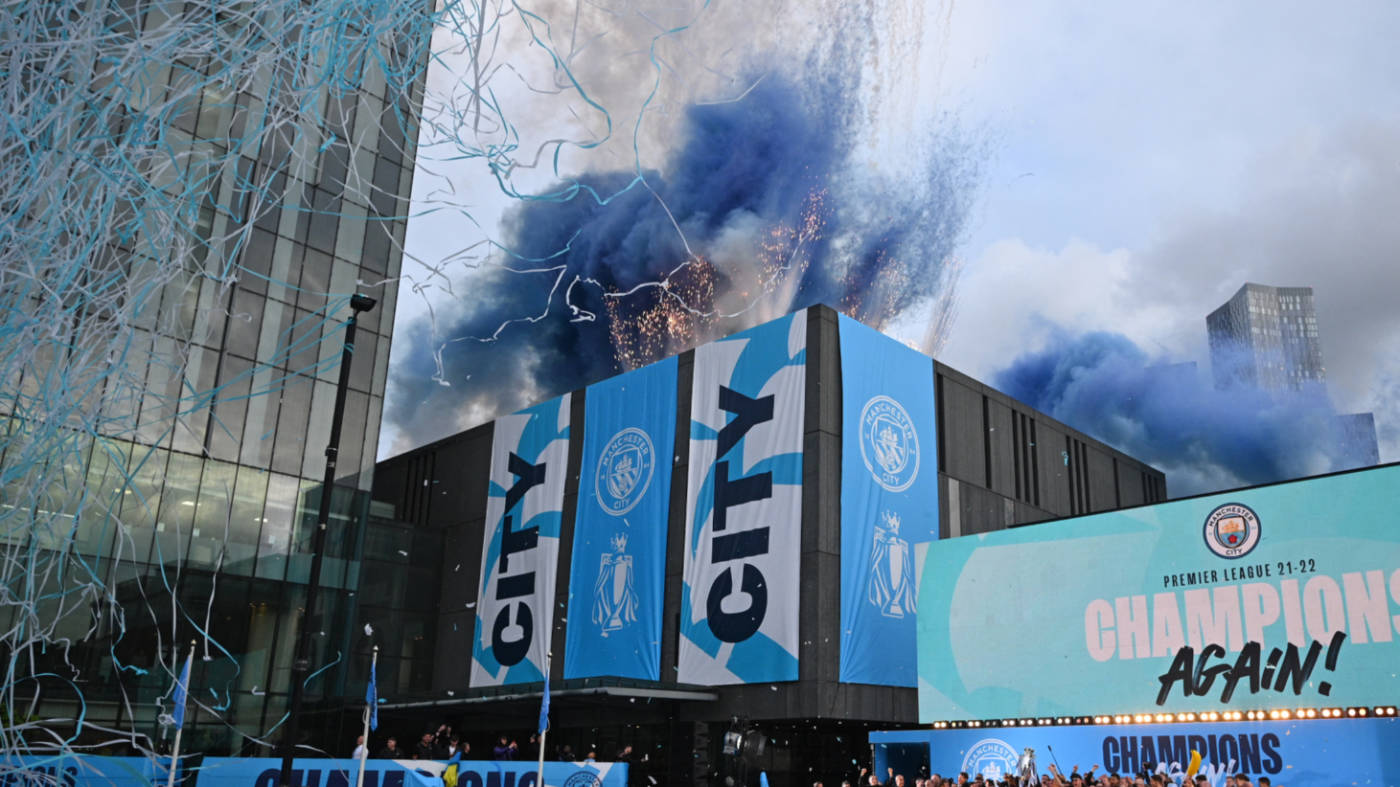
To understand the scale of this footprint, one can start with Manchester City itself. Sheikh Mansour’s private equity vehicle Abu Dhabi United Group purchased the club for £200m in 2008, when City was a middling mid-table side that had been relegated from the top flight as recently as 2001. In the 16 years since the takeover, the club has dominated English football, claiming eight Premier League titles and a UEFA Champions League trophy. Khaldoon al-Mubarak, a senior advisor to Abu Dhabi’s royal family and CEO of the emirate’s $1tn Mubadala sovereign wealth fund, serves as the club’s chairman, and its home stadium carries the name of Etihad Airways, Abu Dhabi’s state-owned national carrier.
Emirati investment in UK sports stretches far beyond Manchester City. Dubai’s state-owned Emirates Airline purchased naming rights to Arsenal’s North London home ground – now renamed the Emirates Stadium – and shirt sponsorship rights in a 2004 £100m deal, which was renewed in August 2024 through 2033 for an undisclosed record fee. Emirates has also served as the official sponsor of the FA Cup since 2015 and sponsored Lancashire Cricket Club starting in 2013. Abu Dhabi’s CYVN Holdings holds a minority stake in McLaren Racing, the Woking-based Formula One team that claimed back-to-back Teams’ Championship titles in 2024 and 2025, while CYVN purchased McLaren’s high-performance car manufacturing division outright in 2025 for an undisclosed sum. Dubai’s royal family owns Godolphin, the world’s largest thoroughbred horseracing operation, which runs the UK’s biggest stable outside Newmarket, Suffolk. Since 1985, Godolphin and associated operations have claimed the British Flat Racing Champion Owner title 31 times, including in 2024.
Beyond sports, Emirati investors have built a massive property empire across the UK, concentrated heavily in Manchester and London. In Manchester, alongside ownership of Manchester City, Abu Dhabi United Group has led major mixed-use regeneration projects, including the £1bn Manchester Life development in the historic Ancoats district, launched in 2014 as a joint venture with Manchester City Council. Through its 81% stake in the City Football Group, Abu Dhabi also holds a 47.5% stake in Co-Op Live, the UK’s largest indoor entertainment arena. In October 2024, it was revealed that Manchester City Council granted Abu Dhabi United Group right of first refusal on multiple city development projects, leading critics to label the arrangement a “sweetheart deal” that excluded competing domestic developers.
In London, the UAE’s royal family built a £5bn property portfolio under former UAE ruler Sheikh Khalifa bin Zayed bin Sultan al-Nahyan, who ruled from 2004 until his death in 2022. The portfolio includes luxury residential and commercial properties in London’s most exclusive neighborhoods, including Mayfair and Knightsbridge, many of which were acquired through opaque shell companies registered in offshore tax havens. The Emirati state also owns London’s ExCeL Exhibition Centre, the capital’s largest conference and events venue, as well as large country estates in the Scottish Highlands and Surrey. Following Sheikh Khalifa’s death, much of the portfolio was divided among his heirs, though full public disclosure of individual ownership has never been published. The UAE’s UK property acquisition spree has continued in recent years: in 2023, an Abu Dhabi government-owned real estate firm purchased London Square, the developer leading the controversial Nine Elms regeneration project in South London, for $291m, and earlier this month announced plans to build an additional 9,000 new homes on the site.
In the critical logistics and port sector, Dubai’s state-owned DP World, one of the world’s largest port operators, owns the London Gateway and Southampton container terminals, the UK’s second and third largest by cargo volume. In 2024, the UK government approved a £1bn expansion of the London Gateway site, which forms part of the UK’s post-Brexit freeport scheme – a program that grants participating operators lower tax rates and looser regulatory requirements than other parts of the UK. DP World also owns P&O Ferries, the historic UK shipping firm that was privatized in 2006 and purchased by DP World for £322m in 2019. In 2022, DP World faced widespread condemnation, including from senior UK government figures, after it abruptly sacked 800 UK-based P&O Ferries staff and replaced them with lower-paid foreign agency workers paid below the UK minimum wage. Despite the controversy, DP World continued to expand its UK logistics footprint in August 2024, purchasing six grocery distribution centers serving major UK supermarket chains Asda, Sainsbury’s and the Co-op from US logistics conglomerate GXO Logistics.
Emirati investors have also targeted the UK’s fast-growing technology and infrastructure sectors. Abu Dhabi’s Mubadala invested an undisclosed sum in data center operator Yondr in 2024, which is developing a major campus in Slough, on the outskirts of London. Masdar, the UAE’s state-owned renewable energy developer, holds stakes in multiple UK offshore wind farms, including the London Array off the coast of Kent and Dogger Bank South in the North Sea. Mubadala also holds a minority stake in CityFibre, the UK’s third largest fiber broadband network provider, a position it has held since 2021. In 2011, Abu Dhabi acquired a 9.9% stake in Thames Water, the UK’s largest water and wastewater utility, but the investment was written off as worthless in the UAE’s 2024 financial accounts amid the utility’s ongoing severe financial crisis. Abu Dhabi also owns nearly 8% of London Gatwick Airport, the UK’s second busiest passenger airport, having reduced its stake from 15% in 2018, and has long sought to acquire a stake in Heathrow, the UK’s busiest hub. In 2023, Abu Dhabi was approached as a potential investor in the Sizewell C nuclear power plant project, but the stake was ultimately allocated to France’s state-owned EDF and a Canadian pension fund. In July 2024, UAE state majority-owned telecom firm Etisalat sold its £4.4bn stake in UK telecom multinational Vodafone, after the UK government labeled Emirati ownership a potential national security risk and required the creation of a special independent committee to oversee sensitive operations. In 2024, Abu Dhabi acquired a one-third stake in Hargreaves Lansdown, the UK’s largest retail investment platform, as part of a £5.4bn takeover alongside US and European private equity partners, and Mubadala purchased an undisclosed stake in UK digital neobank Revolut as part of a $500m secondary share sale later that year.
In the finance sector, the first major Emirati investment controversy dates back to the 2008 global financial crisis, when Sheikh Mansour and Qatari investors acquired a 16% stake in Barclays bank for an estimated £4bn. The capital injection allowed Barclays to avoid the government bailout that rival UK banks were forced to accept, which came with strict regulatory conditions. In 2024, the UK’s Financial Conduct Authority fined Barclays £40m for misleading shareholders about more than £300m in secret payments to Qatari investors connected to the deal. Abu Dhabi sold its entire Barclays stake by 2013.
The UK government has actively courted Emirati investment for the high-profile Oxford-Cambridge Growth Corridor, a major development project billed as the UK’s answer to Silicon Valley. But recent reports indicate the UAE is now threatening to withdraw from the project amid fallout from the Premier League’s ruling against Manchester City.
Emirati investors even hold stakes on the UK’s domestic high streets. In 2024, Mubadala purchased a 68% stake in the UK assets of US investment firm Fortress Investment Group, which manages more than $55bn in global assets. Fortress’s UK holdings include Punch Pubs, which operates 1,400 pubs and bars across the country, art house cinema chain Curzon, discount retailer Poundstretcher, and wine merchant Majestic. In April 2024, Sheikh Tahnoon bin Zayed’s International Holding Company purchased the UK restaurant and hospitality empire of billionaire Richard Caring for £1.4bn, including the popular Ivy restaurant chain and exclusive Mayfair private members club Annabel’s.
In the media sector, Abu Dhabi launched a joint bid with US private equity firm Redbird Capital Partners in 2023 to acquire the Telegraph newspaper and the Spectator magazine, led by Sheikh Mansour. The bid sparked intense public scrutiny over concerns about foreign government censorship of UK media, and ultimately collapsed after the UK government introduced new legislation barring foreign state leaders from owning UK national media outlets. The Telegraph was ultimately sold to German media giant Axel Springer in June 2024, while the Spectator was purchased by GB News co-owner Paul Marshall in September 2024. Despite the failed bid, Abu Dhabi gained indirect access to UK and global media assets through its Fortress acquisition, as Fortress led a lender consortium that purchased Vice Media Group after the digital media firm filed for bankruptcy in 2023.