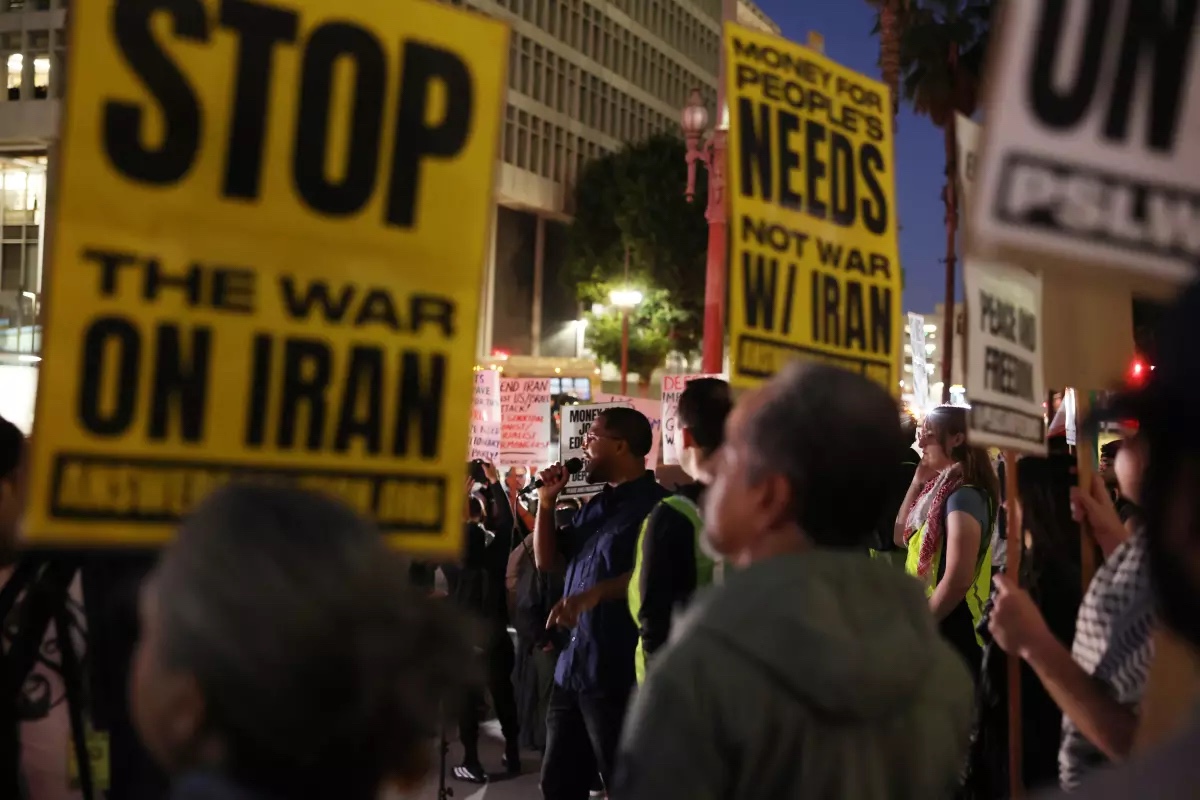
A profound national division has surfaced among Americans regarding the escalating military engagement with Iran, revealing stark contrasts along demographic and political lines. The conflict, initiated through joint US-Israel airstrikes on February 28th, has rapidly expanded regionally, testing President Donald Trump’s 2024 campaign pledge of “no new wars.
Recent polling data from Economist/YouGov conducted March 2nd indicates significant public ambivalence toward military objectives. With administration messaging oscillating between preventing nuclear proliferation, destroying missile capabilities, and advocating regime change, public consensus remains elusive. The survey reveals only 32% of Americans support using military force to overthrow Iran’s government, while 45% explicitly oppose such action.
The demographic breakdown reveals striking patterns: racial disparities show 37% white support versus merely 7% among Black respondents. Gender divides are equally pronounced with 37% of men supporting compared to 26% of women. Generational gaps are particularly dramatic—only 21% of 18-29 year-olds endorse military action while 40% of those over 65 support it. Educational attainment further influences perspectives, with 34% support among non-college graduates versus 27% among degree holders.
Political affiliation reveals the most extreme polarization. A mere 8% of Democrats support military action compared to 64% of Republicans. The MAGA constituency demonstrates the strongest war support at 75%, while liberal respondents oppose at near-total levels. Moderates occupy middle ground with 25% support and 50% opposition.
This polarization carries significant implications for the upcoming midterm elections. While the president maintains strong loyalty within his base—particularly valuable given his policy reversals—electoral mathematics favor opposition forces. With Democrats and Independents constituting approximately 60% of the electorate, and widespread concern about presidential conduct, Republicans face substantial challenges in maintaining congressional control.
Political analysts suggest that regardless of conflict outcomes, the administration’s popularity appears insufficient to prevent potential losses in both House and Senate chambers come November.