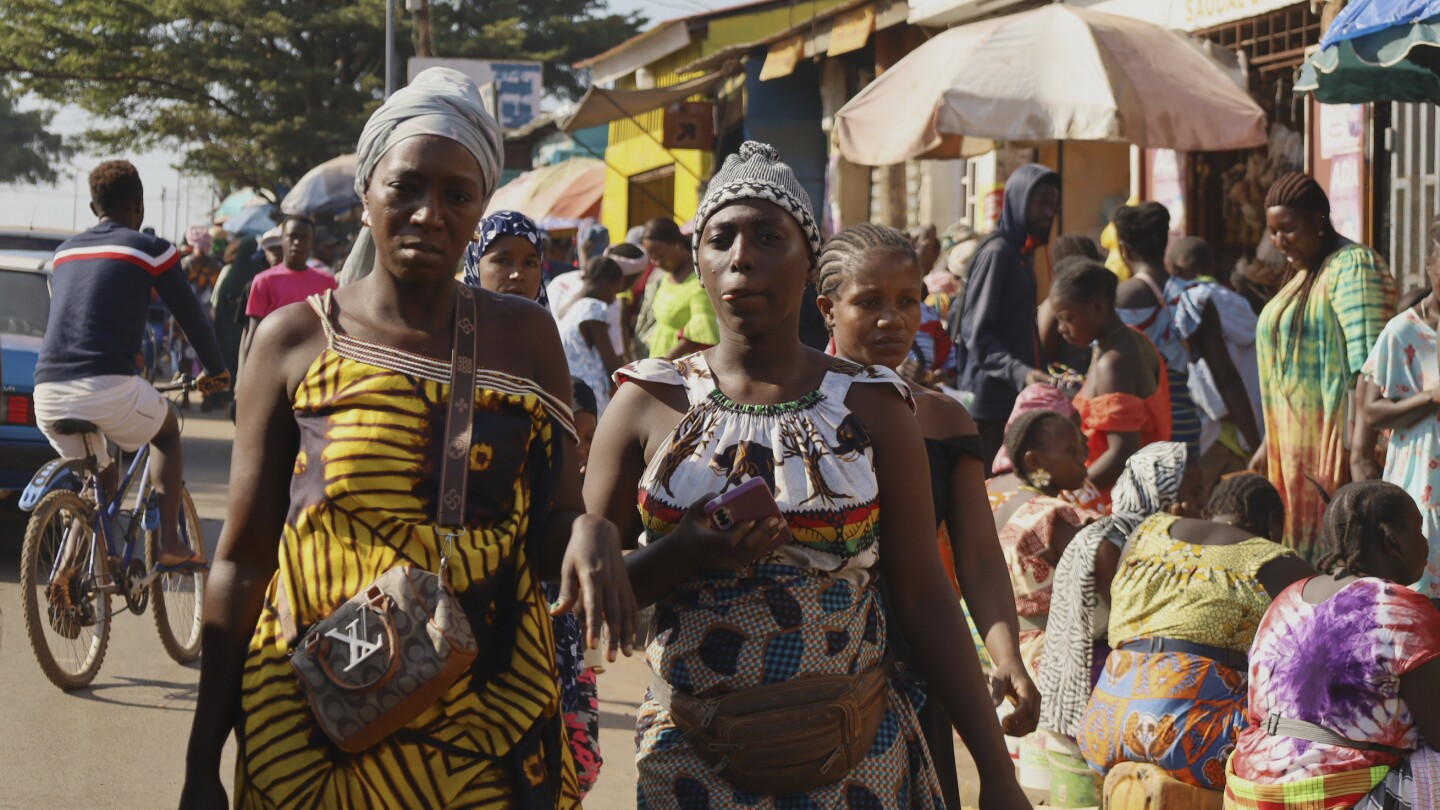
A high-level delegation from the Economic Community of West African States (ECOWAS) arrived in Guinea-Bissau’s capital Bissau on Monday to initiate critical mediation talks with military leaders who seized power in last week’s coup. The mission, headed by ECOWAS Chairman and Sierra Leonean President Julius Maada Bio, aims to negotiate the complete restoration of constitutional order following the overthrow of democratically elected institutions.
The military government, which assumed control last Wednesday amid post-electoral turmoil, has implemented stringent security measures prohibiting all demonstrations, strikes, and activities deemed threatening to national stability. In an official statement released Sunday evening, the junta additionally mandated the reopening of public institutions and ministries.
This political crisis erupted just three days after a tightly contested presidential election where both primary contenders declared victory. During the military takeover, ousted President Umaro Sissoco Embaló confirmed his deposition and arrest via telephone communication with French media before subsequently fleeing to Brazzaville, capital of the Republic of Congo.
The armed forces have installed former army chief of staff General Horta Inta-a to lead a transitional military government overseeing a projected one-year political transition. On Saturday, Inta-a appointed a new 28-member administration predominantly composed of allies from the deposed president’s circle.
In a significant development, Nigeria granted protective asylum to Guinea-Bissau opposition candidate Fernando Dias da Costa citing imminent threats to his life. Nigeria’s Minister of Foreign Affairs formally requested ECOWAS troop protection for da Costa, currently sheltering at the Nigerian embassy in Bissau.
ECOWAS had previously suspended Guinea-Bissau from its decision-making bodies pending full constitutional restoration. United Nations Secretary-General Antonio Guterres condemned the military takeover as an unacceptable violation of democratic principles, particularly following the November 23 general elections. He demanded immediate unconditional restoration of constitutional order and release of all detained officials including electoral authorities and political leaders.
Guinea-Bissau’s history remains marred by political instability since gaining independence from Portugal over five decades ago, with this representing the latest in numerous coups and attempted power seizures. The nation of 2.2 million people, among the world’s poorest, has become a notorious hub for narcotics trafficking between Latin America and Europe—a factor experts identify as exacerbating its chronic political crises.
ECOWAS, the 15-nation bloc established in 1975 as West Africa’s primary political and economic authority, continues grappling with regional democratic backsliding despite its mandate to promote stability and integration. The organization faces mounting challenges reversing military takeovers in member states where citizens increasingly protest inequitable distribution of natural resource wealth.