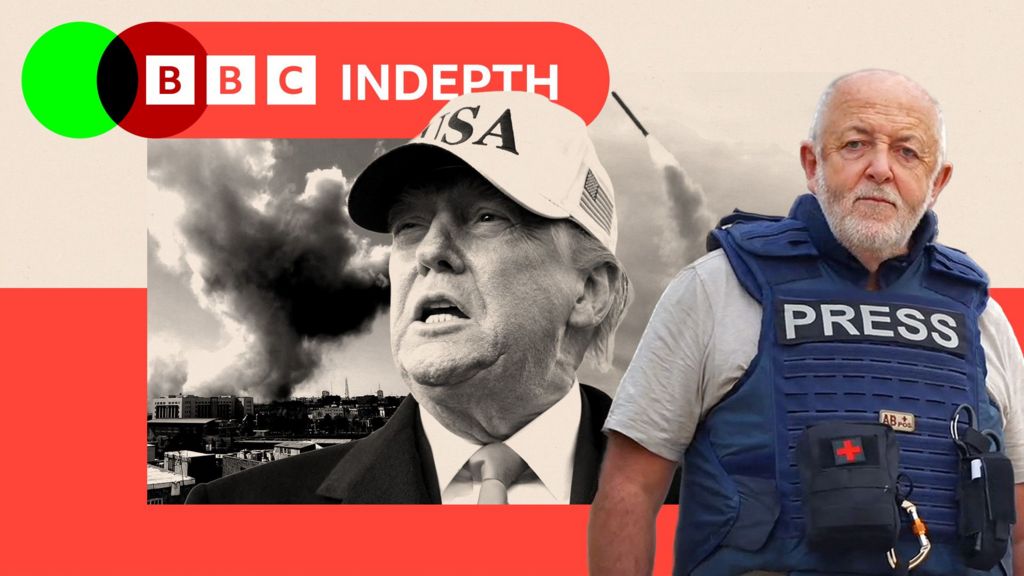
The third day of intensified hostilities between the United States, Israel, and Iran has rapidly evolved into a full-scale regional conflict. Iran’s strategic decision to target Arab nations allied with the US across the Gulf has prompted significant geopolitical shifts, including the United Kingdom reversing its stance on permitting American utilization of its military installations.
Military developments continue to unfold at a rapid pace, with US Central Command confirming the tragic loss of three F-15E Strike Eagles to Kuwaiti air defenses in an apparent friendly fire incident. This revelation underscores the chaotic nature of the escalating conflict, where additional missile launches and casualties are anticipated even as this analysis is being prepared.
President Donald Trump, delivering his initial war declaration from his Mar-a-Lago estate rather than the traditional Oval Office setting, presented an unconventional vision in casual attire. His address outlined an extensive indictment against Iran, characterizing the nation as an enduring threat since the 1979 Islamic Revolution. Trump’s victory criteria encompass the comprehensive destruction of Iran’s missile capabilities, naval forces, and regional proxy networks.
Contradicting established intelligence assessments, Trump asserted Iran was developing long-range missiles capable of reaching American territory and nearing nuclear weapons capability—claims that directly conflict with his previous statements regarding the elimination of Iran’s nuclear infrastructure.
The administration’s strategic approach involves debilitating military strikes against Tehran’s regime while explicitly encouraging civilian uprising. Trump’s direct appeal to the Iranian populace to seize governmental control represents a high-risk strategy that simultaneously creates potential deniability should the regime endure. This methodology relies exclusively on aerial bombardment without ground troop deployment, diverging from previous interventions in Iraq and Libya.
Israeli Prime Minister Benjamin Netanyahu, facing domestic political pressures following security failures during Hamas’s October 2023 offensive, has aligned with Trump’s objectives. Netanyahu envisions the complete dismantling of what he terms “the regime of terror,” a goal he has pursued for decades.
The elimination of Supreme Leader Ayatollah Ali Khamenei constitutes a significant blow to Iran’s leadership structure. However, the Islamic Republic’s institutional design—featuring redundant political and religious hierarchies—provides resilience against decapitation strategies. The regime’s survival mechanisms include the Islamic Revolutionary Guards Corps (IRGC), comprising 190,000 active personnel and 600,000 reservists, supplemented by the Basij paramilitary force with approximately 450,000 members.
Historical precedents suggest caution regarding regime change outcomes. The power vacuums following Saddam Hussein’s removal in Iraq and Muammar Gaddafi’s overthrow in Libya resulted in prolonged instability and humanitarian crises. Iran’s considerable size—nearly triple Iraq’s territory—and diverse population of over 90 million people present even greater challenges for post-conflict stabilization.
The conflict’s trajectory remains highly uncertain, with the Iranian regime demonstrating determination to endure despite massive military pressure. The ultimate consequences of this confrontation could reshape Middle Eastern geopolitics for generations, regardless of whether the current regime survives or collapses.