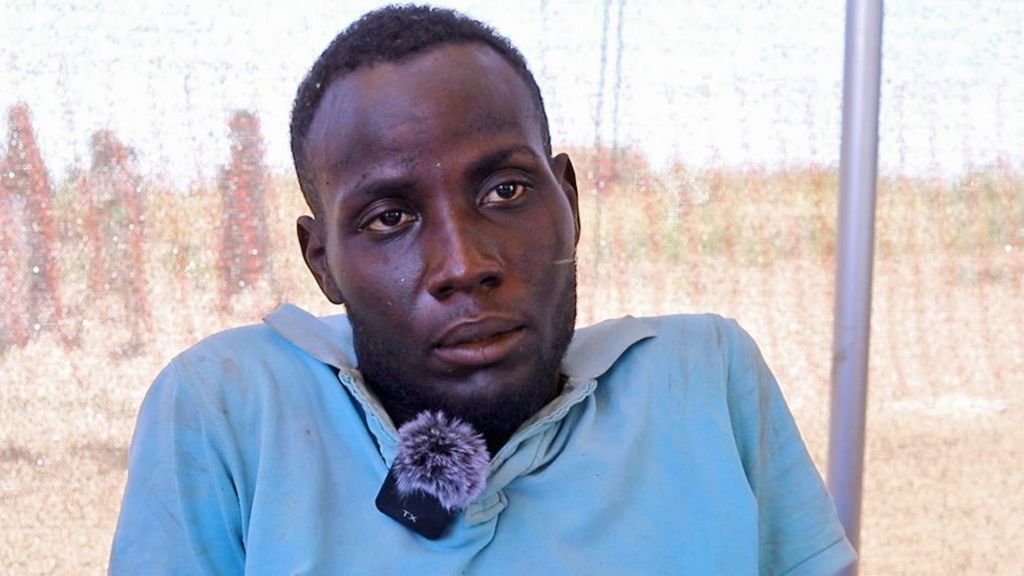
In the aftermath of the Rapid Support Forces (RSF) seizing control of el-Fasher in Sudan’s Darfur region, harrowing accounts of violence and survival have emerged. Ezzeldin Hassan Musa, a survivor now in Tawila, recounts the brutal treatment he endured at the hands of RSF fighters. Beaten with sticks and left with nothing but the clothes on his back, Ezzeldin managed to escape the city, joining thousands who have fled to relative safety. The United Nations has described the violence as ‘horrific,’ with reports of torture, executions, and widespread suffering. RSF leader Gen Mohamed Hamdan Dagalo has acknowledged ‘violations’ in el-Fasher, promising investigations, but the situation remains dire. Many of those who have reached Tawila, a town 80km from el-Fasher, are women and children, having endured days of walking without food or shelter. Ahmed Ismail Ibrahim, another survivor, recounts how four of his companions were executed by RSF fighters, while he was shot three times before escaping. Yusra Ibrahim Mohamed fled after her husband, a soldier, was killed, describing the chaos and brutality she witnessed. Medical charity Médecins Sans Frontières (MSF) is providing emergency care to the wounded, many of whom are severely malnourished and traumatized. The fall of el-Fasher marks the end of an 18-month siege, during which the city faced relentless artillery and air strikes, and a severe hunger crisis due to an RSF blockade. Despite the arrival of around 5,000 people in Tawila, concerns remain for those still trapped in the city, with experts warning of the dire conditions and the need for immediate humanitarian aid.