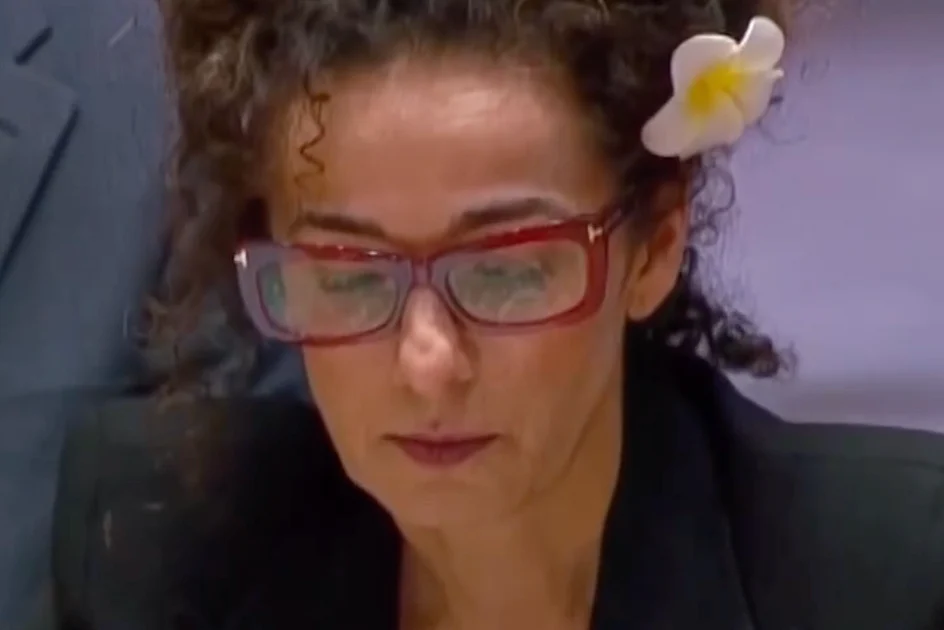
In a profoundly emotional address at the United Nations, Iranian journalist and activist Masih Alinejad delivered a heartbreaking testimony that laid bare the human cost of Iran’s ongoing civil unrest. Overcome with grief, her voice trembled as she recited the names of protesters killed during recent demonstrations, creating a powerful moment of human connection amid diplomatic formalities.
The emotional climax occurred when Alinejad recounted the death of 28-year-old Negin Ghadimi, who perished in her father’s arms after being shot by members of Iran’s Revolutionary Guards. ‘I feel guilty that I don’t name the rest,’ Alinejad stated, her composure breaking. ‘The list of names goes on and on. They knew they would face guns and bullets, but they wanted justice.’
Beyond the emotional appeal, Alinejad delivered a scathing condemnation of Iran’s clerical leadership, drawing direct comparisons to the terrorist organization Daesh (ISIS). She challenged the international community to move beyond symbolic gestures and empty condemnations. ‘The Iranian people are asking the world to help through actions, not back-to-back meetings,’ she asserted. ‘The Islamic Republic behaves like Daesh, and the Islamic Republic must be treated like Daesh. This is how you can save lives.’
This powerful address comes amid what human rights organizations describe as the deadliest wave of dissent in Iran in years. According to the US-based HRANA rights group, the death toll from recent protests has reached 2,571 individuals, including 2,403 verified protester deaths, 147 government-affiliated casualties, 12 minors, and 9 non-protesting civilians. Iranian authorities have acknowledged approximately 2,000 fatalities—their first official death toll recognition after more than two weeks of nationwide unrest.
The current protests, initially sparked by dire economic conditions, have evolved into the most significant internal challenge to Iran’s leadership in at least three years. This domestic turmoil coincides with intensified international pressure following Israeli and US military actions against Iranian targets last year, creating a complex geopolitical landscape that amplifies the significance of Alinejad’s emotional appeal for concrete international intervention.