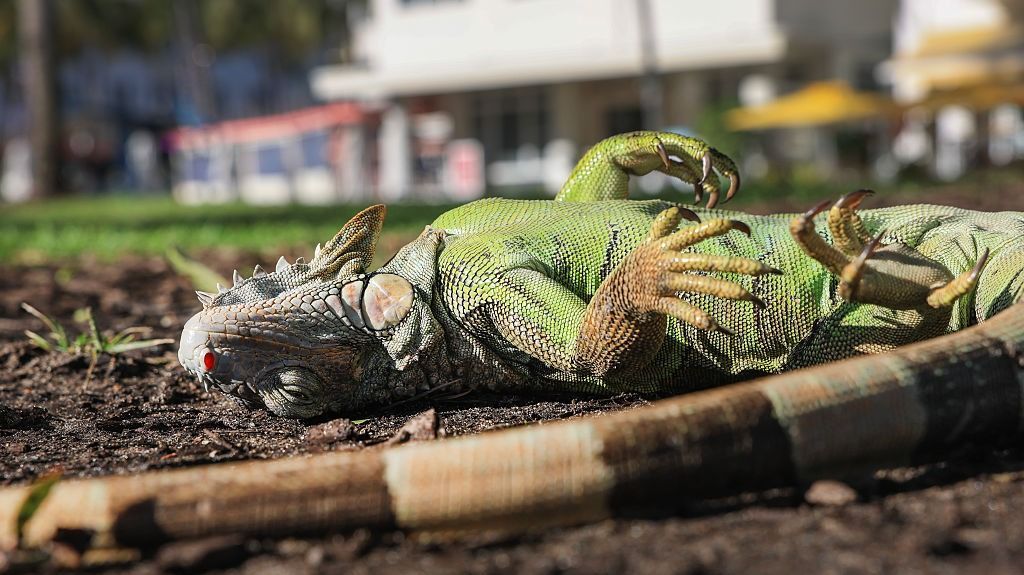
An unusual meteorological event is unfolding across Florida as a sudden temperature plunge induces a biological phenomenon known as ‘cold stunning’ in the state’s invasive iguana population. The National Weather Service Miami-South Florida confirmed temperatures dipped into the 30s and 40s (°F), triggering a reptilian paralysis that causes the cold-blooded creatures to lose their grip on tree branches.
While the spectacle of lizards dropping from trees has captivated residents, the Florida Fish and Wildlife Conservation Commission (FWC) issued a nuanced advisory. The agency clarified that these immobilized iguanas are not deceased but in a temporary state of suspended animation due to their inability to regulate body temperature. Officials cautioned against bringing the paralyzed reptiles into homes, noting they can rapidly regain mobility and potentially become aggressive when warmed.
This event highlights the ecological impact of non-native species in subtropical environments. Green iguanas, native to Central and South America, have established significant populations in South Florida. While cold spells temporarily control their numbers, survivors often retreat into burrows that damage infrastructure through erosion and collapsing sidewalks. The FWC maintains that unlicensed capture and transport of iguanas remains prohibited despite their invasive status, though landowners may humanely remove them from their properties year-round.