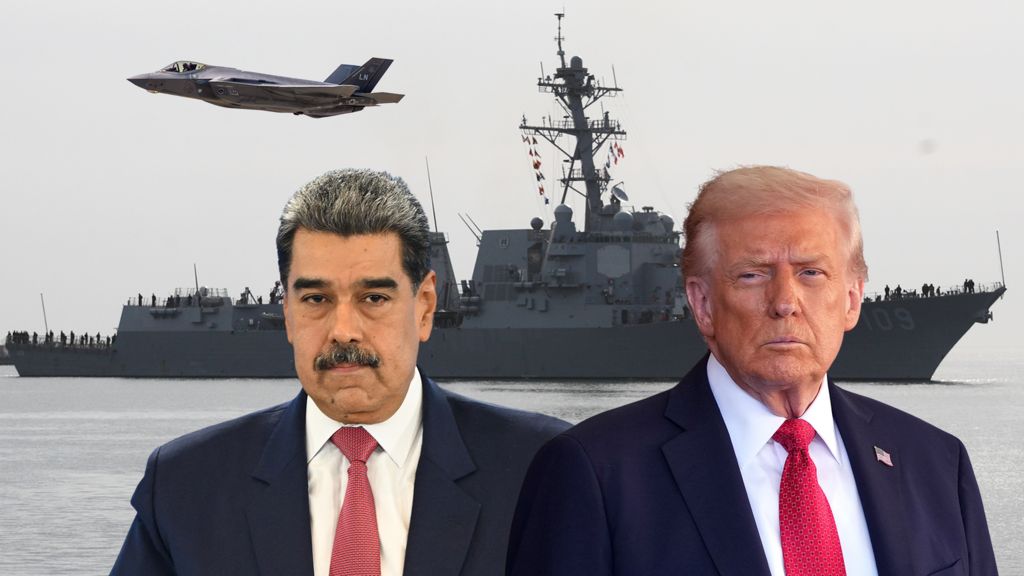
The United States has significantly escalated its military presence in the Caribbean over the past two months, deploying warships, fighter jets, bombers, marines, drones, and spy planes in what is described as the largest military buildup in the region in decades. This deployment, which includes long-range B-52 bombers conducting ‘bomber attack demonstrations’ off Venezuela’s coast, has raised tensions and drawn widespread condemnation. The US claims its actions target ‘narcotics’ and ‘narco-terrorists’ on small Venezuelan vessels, though it has provided no evidence to support these allegations. Critics argue the operation is less about drug trafficking and more about intimidating Venezuelan President Nicolás Maduro and his inner circle, with the ultimate goal of regime change. Dr. Christopher Sabatini of Chatham House suggests the buildup is a strategic show of strength designed to ‘strike fear’ and prompt defections within Maduro’s ranks. The US has also authorized CIA operations in Venezuela, further fueling speculation about covert efforts to destabilize the government. Despite a $50 million bounty for Maduro’s arrest, no significant defections have occurred, with analysts noting that Venezuela’s elites are unlikely to be swayed by financial incentives alone. The US military’s presence, including guided missile destroyers and amphibious assault ships, has been closely monitored using satellite imagery and social media. While the Trump administration frames this as a war on drugs, experts question the legality and true intent of the strikes, pointing out that Venezuela is not a major cocaine producer. The situation remains volatile, with the US military buildup serving as both a deterrent and a potential prelude to more aggressive actions.
Warships, fighter jets and the CIA – what is Trump’s endgame in Venezuela?