In a dramatic escalation of foreign policy, President Trump has announced the United States will directly administer Venezuela following the successful capture of President Nicolás Maduro and his wife during a nighttime military operation in Caracas. The unprecedented move marks a significant departure from Trump’s previous non-interventionist rhetoric and positions America as the temporary governing authority of the South American nation.
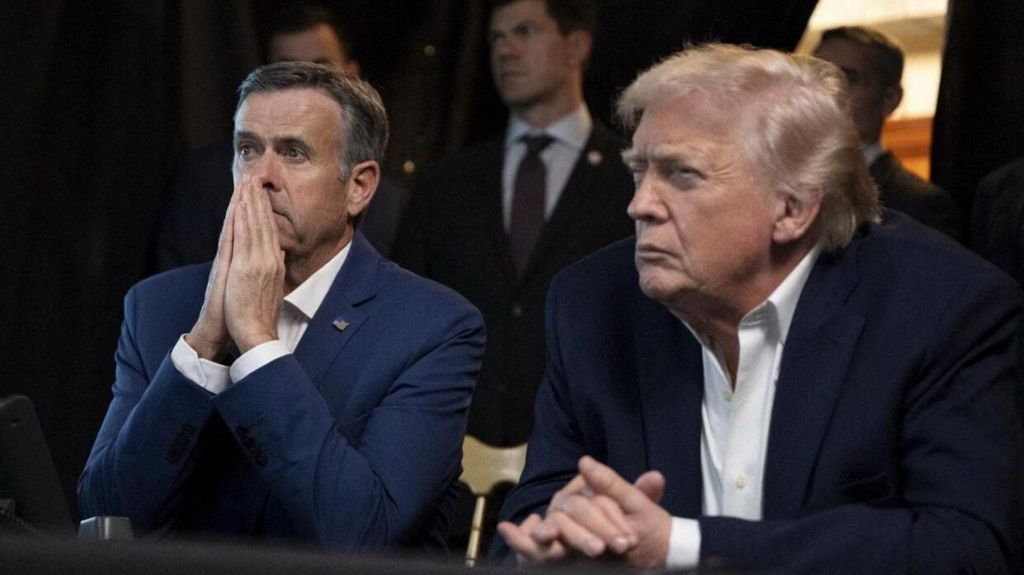
Flanked by CIA Director John Ratcliffe at his Mar-a-Lago resort, Trump revealed that Secretary of State Marco Rubio and Secretary of Defence Pete Hegseth would lead a collaborative effort with Venezuelan representatives to oversee the country’s transition. “We are going to run the country until such time as we can do a safe, proper and judicious transition,” the president declared during a Saturday morning press conference.
This bold intervention represents a stark contradiction to Trump’s campaign promises against “forever wars” and his frequent criticisms of nation-building endeavors. The administration now faces the formidable challenge of reconstructing a nation plagued by economic collapse and decades of political instability, while simultaneously justifying the legal basis for Maduro’s capture on weapons and cocaine trafficking charges.
Trump expressed unwavering confidence in the mission’s success, citing his administration’s “perfect track record of winning.” He outlined plans to engage American energy corporations in rebuilding Venezuela’s deteriorated industrial infrastructure, framing the effort as mutually beneficial for both nations. When questioned about potential military deployment, Trump remained noncommittal, noting “We’re not afraid of boots on the ground…we had boots on the ground last night.
The operation has ignited intense domestic and international debate. Congressional Republicans largely supported the action, with House Speaker Mike Johnson describing it as “decisive and justified” against a “criminal regime.” However, dissenting voices within Trump’s own party, including Congresswoman Marjorie Taylor Greene, condemned the intervention as a betrayal of his non-interventionist platform.
Internationally, China’s foreign ministry issued a statement expressing shock and condemning what it characterized as a reckless attack on sovereign territory. The move raises concerns about potential geopolitical ramifications, particularly regarding how other global powers might justify their own military actions based on this precedent.
Trump rebranded the nineteenth-century Monroe Doctrine as the “Donroe Doctrine,” asserting that the operation demonstrates “American dominance in the Western Hemisphere will never be questioned again.” He framed the intervention as advancing “America First” priorities by ensuring regional security and securing stable oil resources, while designating the Western Hemisphere as America’s “home region.”
As the administration assumes responsibility for governing Venezuela, questions remain about the practical implementation of this unprecedented undertaking and its long-term implications for international relations and global power dynamics.