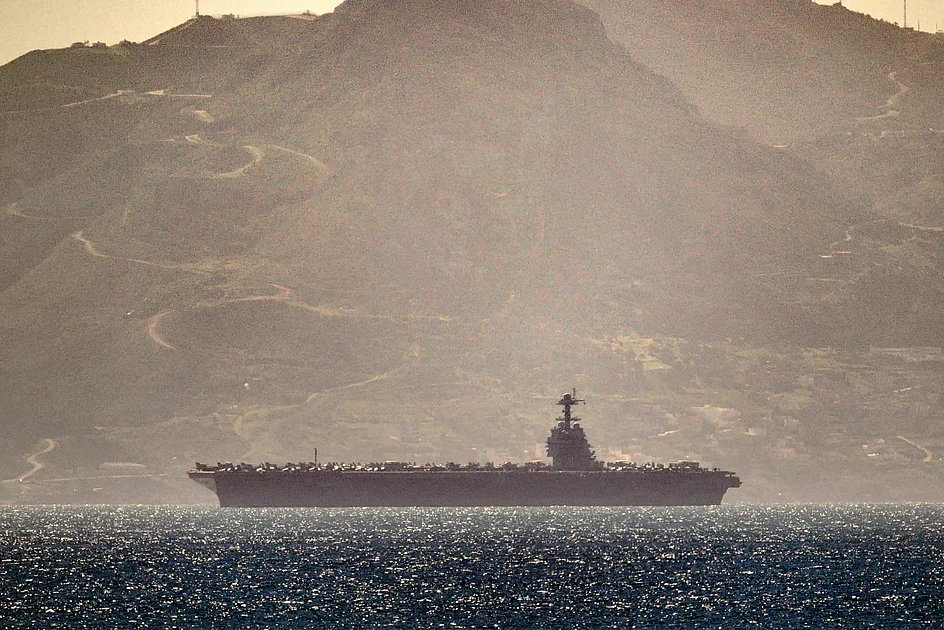
The USS Gerald R. Ford, the United States’ newest and most advanced aircraft carrier, has entered the Mediterranean Sea through the Strait of Gibraltar as of Friday. This strategic deployment significantly enhances American military presence in a region experiencing substantial force buildup ahead of potential operations against Iran.
Accompanied by three destroyer escorts, the nuclear-powered carrier brings the total number of US warships in the Middle East to 17 vessels once fully positioned. The Ford’s arrival marks the second carrier deployment to the region, joining the USS Abraham Lincoln and its accompanying guided-missile destroyers that arrived in January.
This deployment follows the Pentagon’s February 13th announcement redirecting the carrier from Caribbean operations to the Middle East. President Donald Trump had previously indicated he would consider sending additional carrier support if diplomatic efforts with Iran remained unresolved.
The Gerald R. Ford represents the pinnacle of naval technology, capable of carrying over 75 military aircraft including F/A-18 Super Hornets and E-2 Hawkeye early warning aircraft. The vessel features advanced radar systems for superior air traffic control and navigation capabilities. Its supporting fleet includes the Ticonderoga-class cruiser USS Normandy and Arleigh Burke-class destroyers USS Thomas Hudner, USS Ramage, USS Carney, and USS Roosevelt—all equipped for comprehensive surface-to-air, surface-to-surface, and anti-submarine warfare operations.
According to operational records, the carrier has been continuously at sea since June 2025, having been abruptly redirected from planned European operations to the Caribbean in November before its current Middle Eastern assignment. While typical carrier deployments last nine months, extensions frequently occur during periods of heightened military activity.
US Central Command confirmed the strike group’s deployment is intended to ‘promote regional security and stability’ amid escalating tensions. The military buildup follows Iran’s intensified crackdown on mass protests earlier this year, though President Trump has since stepped back from direct military action while maintaining that all options remain available.