As a self-imposed 48-hour deadline for a negotiated peace with Iran ticks down, former U.S. President Donald Trump has issued a stark warning that “all hell will break loose” across the country if no agreement is reached, with the broader 10-day ultimatum for Iran to fully reopen the Strait of Hormuz also approaching.
The escalating threat landed amid a sharp surge in cross-border strikes across the Middle East over the Easter weekend, which left critical energy infrastructure in Gulf Cooperation Council (GCC) states and civilian sites across Iran — including universities, research facilities and areas near nuclear infrastructure — heavily damaged.
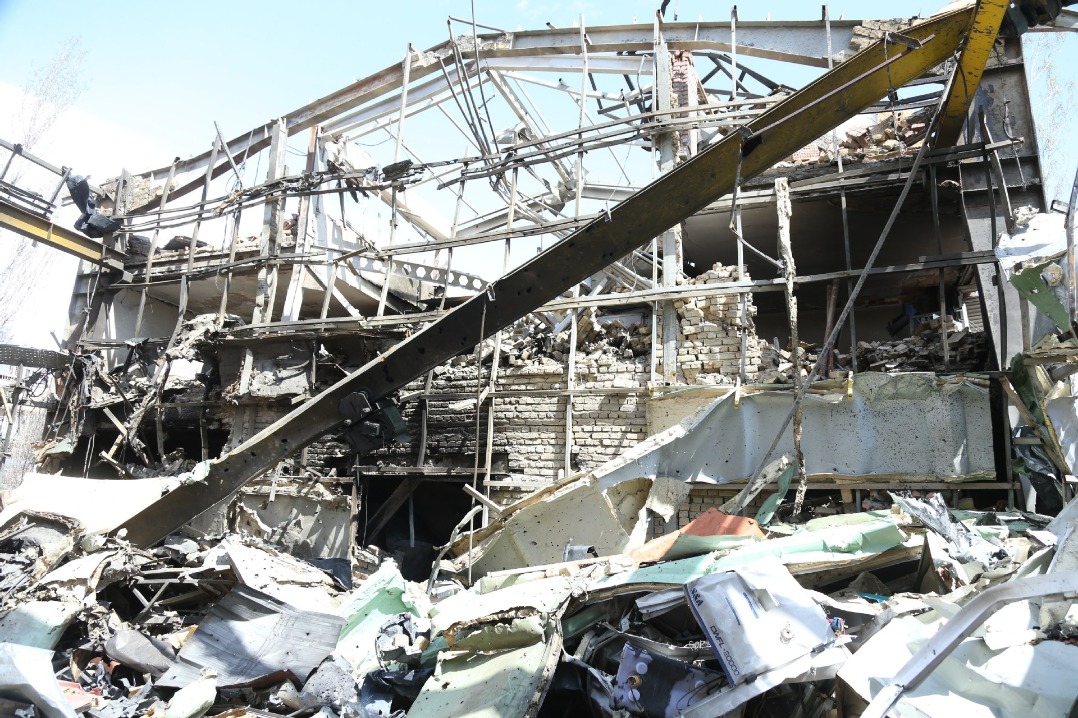
On Friday, warplanes targeted and destroyed a research facility affiliated with Shahid Beheshti University, one of Iran’s most prestigious higher education institutions, located in northern Tehran. The strike on the university’s Laser and Plasma Research Institute marks the latest in a growing pattern of civilian site targeting by U.S. and Israeli forces in their ongoing military campaign against Iran, which launched on February 28.
During an on-site press briefing Saturday, Iranian Minister of Science, Research and Technology Hossein Simaei Saraf confirmed that at least 30 Iranian universities have sustained damage from U.S. and Israeli strikes since the conflict began.
In Sunday’s most high-profile development, Trump announced on his Truth Social platform that U.S. military forces had completed what he called “one of the most daring search and rescue operations in U.S. history,” recovering a “highly respected colonel” whose plane was downed over Iranian territory. The colonel was the second of two crew members aboard an F-15E Strike Eagle fighter jet shot down Friday; the first service member was extracted earlier.
Iranian military officials pushed back sharply on the U.S. rescue claim hours later. A spokesperson for Iran’s Khatam al-Anbiya Central Headquarters announced that Iranian forces intercepted and destroyed multiple U.S. aircraft attempting to infiltrate southern Isfahan province to extract the downed aircrew, fully foiling the operation. According to the spokesperson, the destroyed aircraft included two Black Hawk helicopters and two C-130 military transport planes, all of which were left burning after the strike.
Al Jazeera reported Sunday that multiple civilian fatalities occurred during search operations for the downed F-15E crew in Iran’s southwestern Kohgiluyeh and Boyer-Ahmad Province. Iran’s state-run Fars News Agency confirmed the casualties: five people killed and eight wounded in an attack on the Koh Siah area of Kohgiluyeh County, with an additional four fatalities recorded in the Vazg and Kakan districts of Boyer-Ahmad County.
The previous day, the International Atomic Energy Agency (IAEA) confirmed one person was killed by projectile fragments after a U.S.-Israeli strike hit a site near Iran’s Bushehr nuclear power plant, the fourth strike near the facility to date.
The Israel Defense Forces (IDF) also released a statement confirming it had conducted airstrikes on more than 120 targets across central and western Iran over the weekend, with planned targets including ballistic missile stockpiles, drone production facilities and Iranian air defense installations.
Global and regional officials have raised urgent alarms over the growing humanitarian and nuclear risks of the escalating conflict. On April 4, Iranian Foreign Minister Abbas Araghchi took to X to warn that radioactive fallout from a strike on Bushehr would devastate capital cities across the GCC, not just Tehran. He also accused U.S. media of misrepresenting Iran’s negotiating position, reiterating that Iran’s core demand is a permanent end to what he called the “illegal war” imposed on the country.
World Health Organization Director-General Tedros Adhanom Ghebreyesus joined the IAEA in sounding the alarm on Sunday over nuclear facility safety in Iran. “The latest incident involving the Bushehr nuclear power plant is a stark reminder: a strike could trigger a nuclear accident, with health impacts that would devastate generations,” he wrote on X. “With every passing day of this escalating conflict, the stakes and threats are raised higher and higher. We must de-escalate now. Peace is the best medicine.”
Former IAEA Director General Mohamed ElBaradei also issued a public appeal, urging GCC member states and the United Nations to intervene to stop Trump from turning the entire region into an inferno.