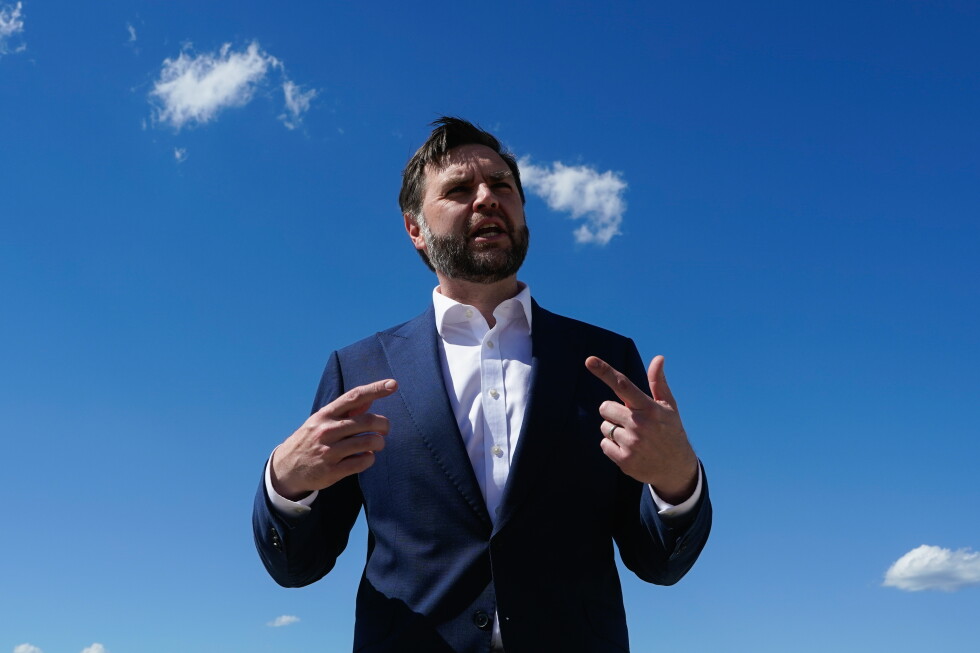
U.S. Vice President JD Vance touched down in Zurich on Sunday, kicking off a critical new phase of diplomatic efforts to formalize an agreement with Iran that would curb Tehran’s nuclear ambitions and solidify the fragile interim deal aimed at ending the ongoing war in the country. The foundational framework for the negotiations was signed just one week prior, setting negotiators from both sides on a tight 60-day deadline to hash out complex technical details that carry sweeping consequences for global energy markets and international security.
The opening days of this critical two-month negotiation window have already been thrown into chaos by renewed violent exchanges across the Lebanon-Israel border between the Israeli military and Iranian-backed Hezbollah. Escalating tensions there prompted an immediate announcement from Iran’s military that it had closed the Strait of Hormuz, the strategically vital global shipping chokepoint through which roughly one-fifth of the world’s traded oil and natural gas pass.
Vance’s arrival had originally been scheduled for Friday at the scenic Bürgenstock resort outside Lucerne, but his departure from the U.S. was pushed back after cross-border fighting intensified and Iranian officials initially canceled their delegation’s travel plans. His trip got underway only after Iranian state television confirmed that Tehran’s negotiating team had already reached Swiss soil. The Iranian delegation includes parliamentary speaker Mohammad Bagher Qalibaf, Foreign Minister Abbas Araghchi, and senior officials from Iran’s central bank and ministry of petroleum.
In a direct pushback against Tehran’s closure announcement, U.S. Central Command has disputed Iran’s claim that the strait is shuttered, noting that U.S. military assets remain deployed in the region to monitor activity and guarantee unimpeded passage for global shipping. Vance himself has pushed back on the closure narrative, confirming that millions of barrels of oil have continued transiting the waterway in recent days.
Once on the ground, Vance will join special envoy Steve Witkoff and Jared Kushner, President Donald Trump’s son-in-law, who have already begun preliminary work unpacking the technical parameters of the nuclear negotiations. The talks will also include Qatari mediators, alongside Pakistani Prime Minister Shehbaz Sharif and Pakistani Army Chief Field Marshal Asim Munir.
While Vance has stated he only intends to stay in Switzerland for “a day or two,” leaving the bulk of technical negotiations to be led by Witkoff and Kushner, his high-profile involvement has drawn intensified public and political scrutiny, coming as he openly considers a potential 2028 presidential campaign.
The interim deal itself, signed by Trump and Iranian President Masoud Pezeshkian, has already sparked fierce backlash from hard-line factions within Trump’s own Republican Party. Critics have drawn unfavorable comparisons to the 2015 Iran nuclear deal negotiated by the Obama administration, an agreement Trump and congressional Republicans have long argued failed to fully eliminate Iran’s ability to develop a nuclear weapon. Under the terms of the new interim agreement, Tehran immediately gains the right to resume open global oil sales and unlocks access to billions of dollars in overseas assets that have been frozen under international sanctions. It also requires Iran to dilute its existing stockpile of highly enriched uranium, material that was the target of U.S. military strikes on Iranian nuclear sites last summer.
The framework also guarantees free passage for commercial vessels through the Strait of Hormuz for the 60-day duration of negotiations, but does not rule out the imposition of transit fees by Iran at a later date. Over the weekend, Trump issued a counter-threat on social media, stating that if no permanent agreement is reached within the 60-day window, the U.S. will impose its own transit tolls on the strait, with proceeds going to what he called the U.S. “Guardian Angel” mission protecting Middle Eastern nations.
Regional instability continues to complicate the diplomatic push. Neither Israel nor Hezbollah are parties to the U.S.-Iran interim deal. Israeli Prime Minister Benjamin Netanyahu has pledged to keep Israeli forces deployed in southern Lebanon until all perceived threats to Israeli territory are eliminated, while Hezbollah has refused to halt cross-border attacks until Israel agrees to a full withdrawal from Lebanese territory. In the first days of fighting following the U.S.-Iran framework signing, clashes have left 47 people dead in Lebanon and four Israeli soldiers killed, raising fears that broader regional conflict could derail the nuclear negotiations entirely.