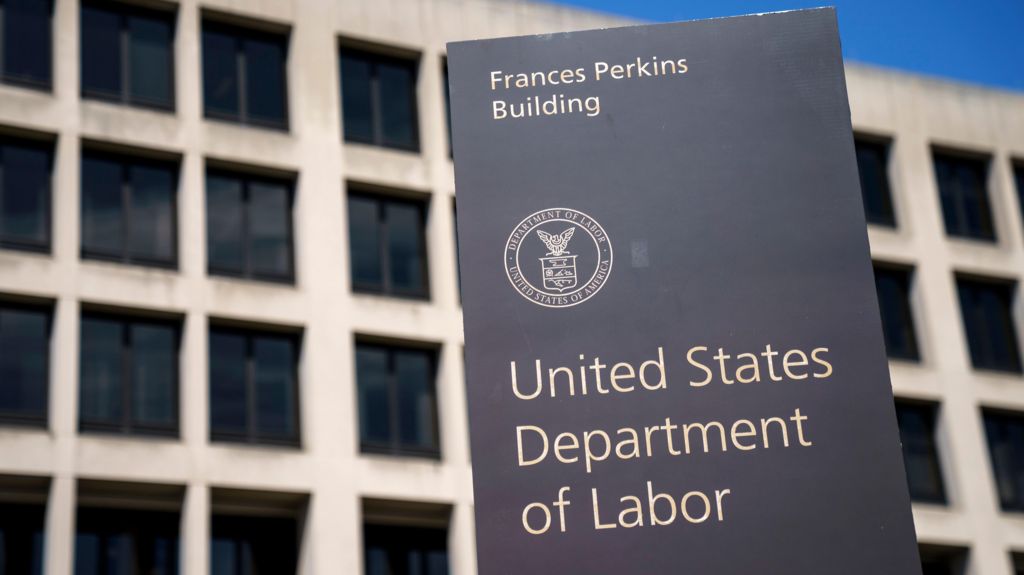
The United States labor market presented conflicting indicators in November as unemployment climbed to its highest level in four years while job additions surpassed economic forecasts. According to delayed data released by the Labor Department on Tuesday, the unemployment rate increased to 4.6% in November, marking a significant rise from September’s 4.4% rate.
Employers added 64,000 positions during the month, exceeding many economic projections and providing a partial recovery from October’s substantial loss of 105,000 jobs. The previous month’s decline was largely attributed to the elimination of 162,000 federal government roles following the Trump administration’s initiative to reduce government employment earlier this year.
This long-awaited report offered the first comprehensive view of labor market conditions since the resolution of the federal government shutdown. The data revealed additional downward revisions to previously reported job figures for September and August.
The contradictory nature of these employment metrics has complicated the Federal Reserve’s ongoing deliberations regarding monetary policy. Central bankers face the challenging task of balancing a softening labor market against persistent inflationary pressures that continue to exceed the Fed’s 2% target.
Last week, the Federal Reserve implemented its third quarter-point rate reduction of the year, attempting to stimulate economic activity. Official projections suggest most Fed officials anticipate only one additional rate cut in 2026, though deteriorating labor market conditions could potentially accelerate this timeline.
Financial experts noted the unusual complexity of interpreting November’s data. Chris Zaccarelli, Chief Investment Officer at Northlight Asset Management, observed that “for a data-dependent Fed, this morning’s data will only increase the internal debate” regarding the appropriate policy response.
The report’s reliability was further questioned due to methodological disruptions caused by the 43-day government shutdown, which forced statistical agencies to operate with reduced staffing and temporarily halted data collection operations. Principal Asset Management’s Chief Global Strategist Seema Shah noted that Fed Chair Jerome Powell would likely “view today’s jobs data with a fair degree of skepticism” due to data distortions and tighter immigration policies affecting payroll calculations.
Sector performance varied considerably in November. Healthcare demonstrated robust growth with 46,000 new positions, including 11,000 in nursing and residential care facilities. Construction employment increased by 28,000 jobs, maintaining its stability over the preceding year. Conversely, transportation and warehousing sectors lost 18,000 positions, while manufacturing employment declined by 5,000 jobs.