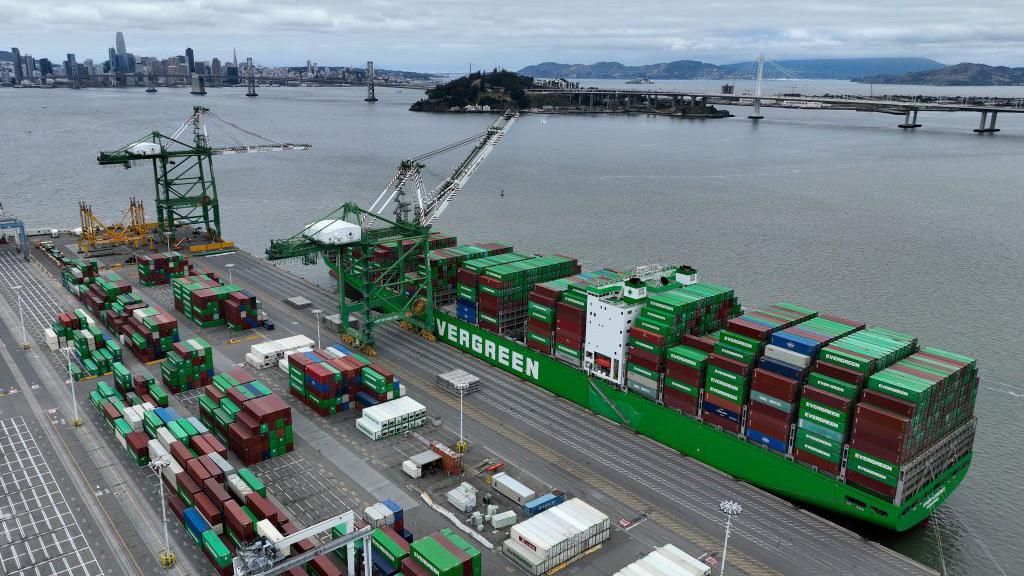
The United States witnessed its merchandise trade deficit surge to an unprecedented $1.2 trillion in the past fiscal year, marking a 2.1% increase from 2024 levels, according to official data from the Bureau of Economic Analysis. This record imbalance emerged despite the Trump administration’s comprehensive tariff strategy aimed at reshaping global trade dynamics.
President Trump’s sweeping tariffs, which imposed levies of at least 10% on imports from nearly every trading partner, failed to stem the tide of foreign goods entering American markets. Instead, imports reached a historic peak of $3.4 trillion, driven partially by artificial intelligence-related business investments that boosted demand for computer components and equipment.
The administration’s trade policy, which intended to revitalize domestic manufacturing and reduce reliance on overseas production, produced mixed results. While trade with China—an early target of the tariffs—declined significantly, reducing the bilateral deficit by approximately 30% to $202.1 billion (the smallest gap in two decades), the US simultaneously recorded record trade imbalances with Mexico, Vietnam, and Taiwan.
The broader goods and services deficit, which incorporates sectors such as travel and digital services, remained virtually unchanged at $901.5 billion compared to $903.5 billion in 2024. This persistent gap contradicts one of the White House’s primary economic objectives: reducing what officials characterize as a national security vulnerability caused by overdependence on foreign manufacturing.
Business communities have faced substantial turbulence due to frequent revisions to tariff policies and the administration’s use of trade threats as diplomatic leverage. Most recently, the president signed an executive order threatening additional taxes on nations maintaining trade relations with Iran.
The future of the tariff regime remains uncertain as the Supreme Court considers a legal challenge brought by businesses and states that could potentially invalidate most of last year’s tariffs. Administration officials have indicated they would pursue alternative mechanisms to reinstate the tariffs should the court rule against them.
Financial analysts at Wells Fargo project continued supply chain realignments but anticipate modest import growth regardless of tariff pressures in the coming year.