In a significant strategic shift, the United States military has commenced a large-scale operation to relocate up to 7,000 captured Islamic State (IS) fighters from detention facilities in northeastern Syria to secure locations within Iraq. This decisive action comes as Syrian government forces rapidly expand their control over territories previously held by Kurdish-led militias.
US Central Command confirmed the transfer of an initial contingent of 150 IS detainees from Syria’s Hassakeh province, citing imperative security concerns. Military officials emphasized that this preemptive measure aims to eliminate potential prison breaks that could ‘pose a direct threat to the United States and regional security interests.’
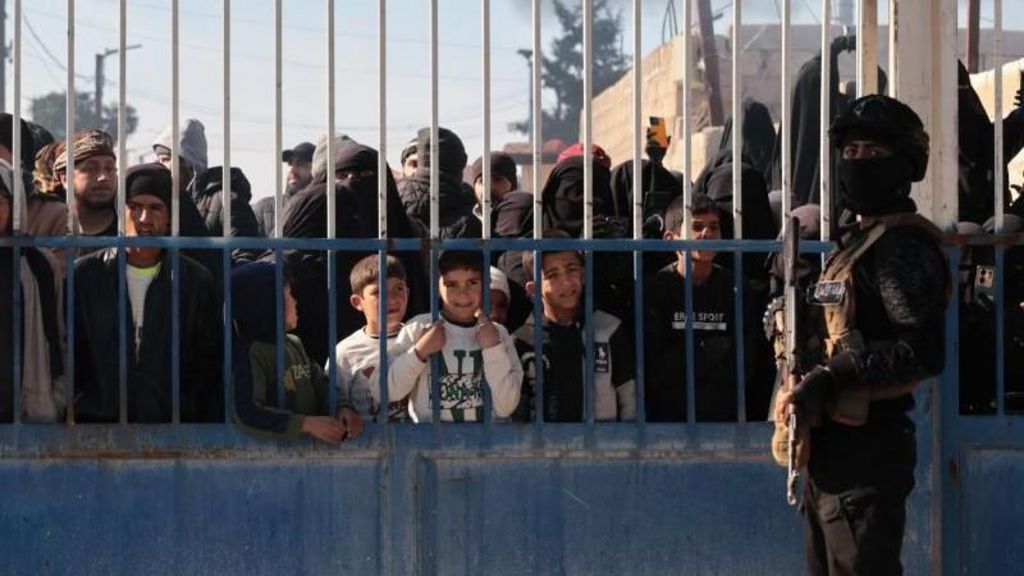
The geopolitical landscape shifted dramatically following Tuesday night’s announcement of a new ceasefire agreement between Damascus and the Kurdish-led Syrian Democratic Forces (SDF). This development occurred simultaneously with the SDF’s withdrawal from the contentious al-Hol camp, which houses thousands of IS family members.
Tensions escalated further on Wednesday when Syria’s defense ministry reported seven soldiers killed in a suspected Kurdish drone attack in Hasakah province. This incident followed mutual accusations between government forces and the SDF regarding a major security breach at Shaddadi prison, where approximately 120 IS militants escaped earlier this week.
Syrian interior ministry officials disclosed that security operations had successfully recaptured 81 fugitives, while SDF spokesman Farhad Shami claimed through Reuters that nearly 1,500 IS members had escaped during coordinated attacks by ‘Damascus-affiliated factions.’ The SDF additionally alleged government assaults on al-Aqtan prison near Raqqa, which holds high-value IS leadership.
Despite being militarily weakened, IS remains operationally active in 2025, primarily executing attacks against Kurdish forces in northeastern regions. The United States, previously the SDF’s primary ally, has detained over 300 IS operatives and eliminated more than 20 this year alone.
US Special Envoy Tom Barrack signaled a fundamental policy reevaluation, stating the rationale for US-SDF cooperation has ‘largely expired.’ Current American efforts focus on securing detention facilities and mediating negotiations between Kurdish forces and President Ahmed Sharaa’s government. Barrack characterized this moment as a potential pathway toward ‘full integration into a unified Syrian state with citizenship rights, cultural protections, and political participation.’