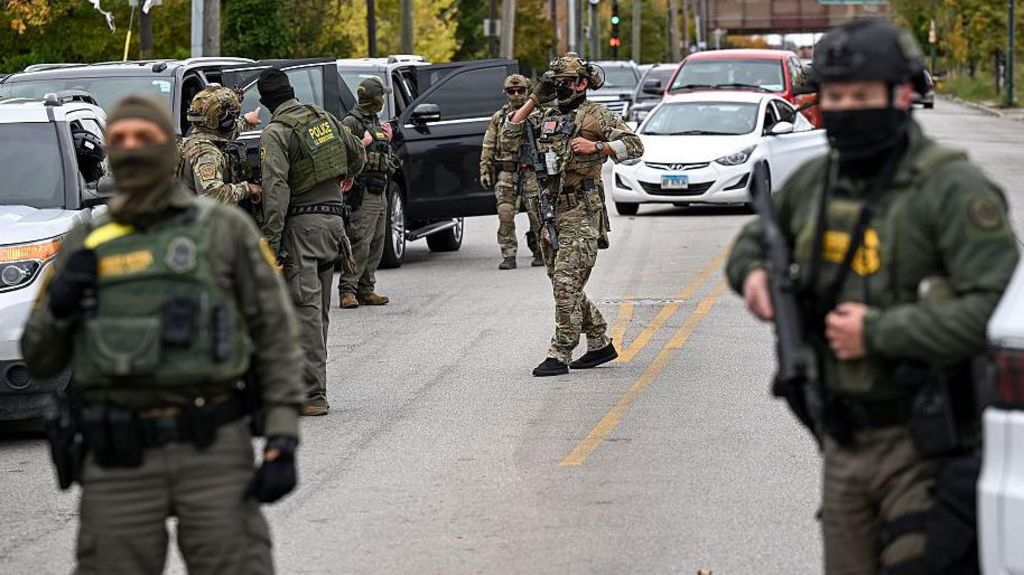
In a significant legal setback for the Trump administration, the U.S. Supreme Court has denied the president’s authority to deploy National Guard troops to the Chicago metropolitan area without consent from state and local officials. The court’s unsigned order establishes that presidential power to federalize state-based National Guard units likely applies only under “exceptional” circumstances, marking a notable departure from the conservative-majority court’s typical alignment with administration positions.
The ruling originated from the administration’s efforts to suppress protests against federal immigration raids in several Democrat-led cities, including Chicago, New Orleans, Portland, and Washington DC. President Trump had asserted that military presence was necessary to quell violence, combat crime, and support deportation initiatives in these urban centers.
Previous lower court decisions had already rejected the administration’s legal argument that Chicago-area protests constituted a “rebellion or danger of rebellion” against the United States. The administration appealed these rulings to the Supreme Court, maintaining that deployment decisions were not subject to judicial review.
The justices ultimately upheld the lower court decisions through a 6-3 ruling, with conservative justices Clarence Thomas, Samuel Alito, and Neil Gorsuch dissenting. The majority opinion stated that “the Government has failed to identify a source of authority that would allow the military to execute the laws in Illinois” at this preliminary stage.
This landmark decision maintains the status quo in one of America’s largest cities and represents the first Supreme Court ruling on the administration’s controversial practice of deploying troops to urban areas despite ongoing legal challenges. Illinois Governor JB Pritzker hailed the outcome as “a big win for Illinois and American democracy.”
The ruling clarifies the constitutional boundaries between federal and state authority regarding military deployment within U.S. borders, potentially affecting future administration efforts to utilize National Guard troops for domestic law enforcement purposes.