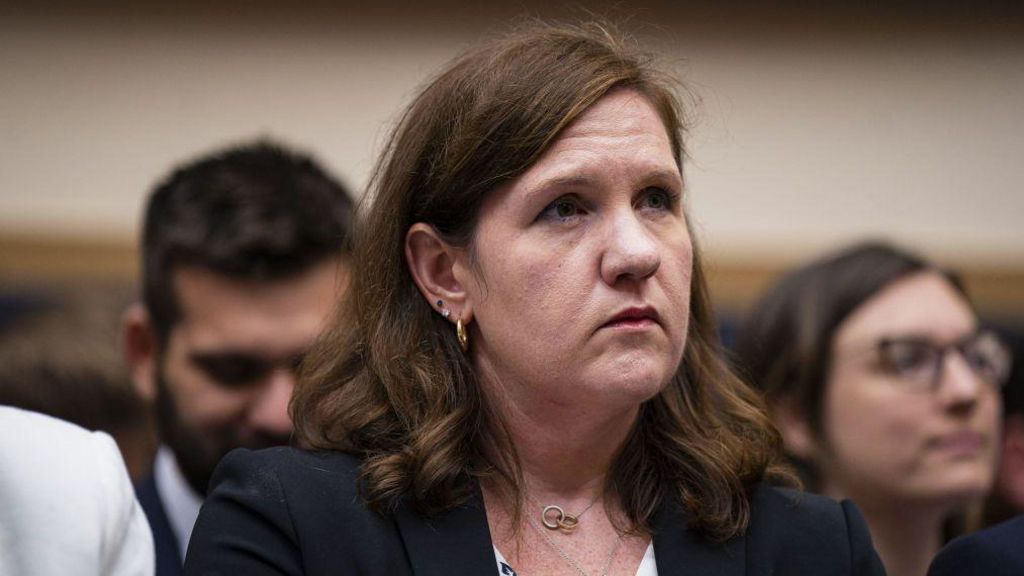
The U.S. Supreme Court commenced hearings on Monday in a pivotal case that challenges the traditional independence of federal regulatory agencies from presidential control. The litigation, formally designated as Trump v. Slaughter, originated from President Donald Trump’s March termination of Rebecca Kelly Slaughter, a Democratic commissioner of the Federal Trade Commission (FTC).
Central to the legal dispute is the interpretation of statutory provisions that restrict presidential removal of FTC commissioners solely to instances of ‘inefficiency, neglect of duty, or malfeasance in office.’ Trump dismissed Slaughter citing her stance as ‘inconsistent with [the] Administration’s priorities,’ prompting her to initiate legal action against the former president.
A lower court previously determined that Slaughter’s removal violated established law, a decision that the Trump administration subsequently appealed to the nation’s highest court. In a preliminary 6-3 ruling in September, the conservative-majority bench issued an emergency order sustaining Slaughter’s dismissal pending full judicial review.
The case represents a significant constitutional confrontation regarding the extent of presidential authority over independent agencies created by Congress to operate with limited executive interference. Established in 1914, the FTC was designed to protect consumers from deceptive business practices and anti-competitive behavior through bipartisan leadership—its five-member commission structure prohibits more than three commissioners belonging to the same political party.
This legal challenge revisits foundational administrative law principles established in Humphrey’s Executor v. United States (1935), wherein the Supreme Court affirmed that certain federal agencies exercise ‘quasi-judicial and quasi-legislative’ functions distinct from purely executive operations, thereby limiting presidential removal authority.
The Court’s decision could potentially reshape the operational independence of numerous federal agencies, including the National Labor Relations Board and others with similar statutory protections. Concurrently, the justices are preparing to review a related case concerning Trump’s removal of Lisa Cook from the Federal Reserve Board of Governors, indicating broader implications for administrative governance structures.