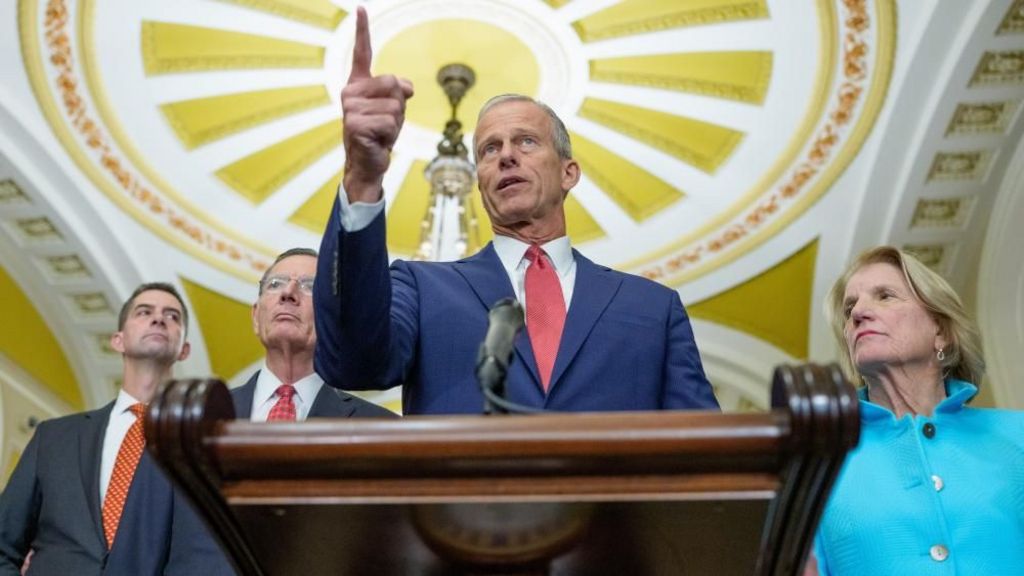
The US Senate has taken a significant step toward ending the longest government shutdown in American history, with a bipartisan deal passing procedural hurdles. After 40 days of political gridlock, a minority of Democrats joined Republicans to vote in favor of the agreement, which was negotiated by Senate Majority Leader John Thune and key Democratic senators. The deal aims to fund government operations and address critical issues such as healthcare subsidies and federal employee pay. However, it still faces challenges in the House of Representatives before it can be fully implemented. The shutdown, which began on October 1, has left 1.4 million federal employees either furloughed or working without pay, disrupted air travel, and threatened food benefits for 41 million low-income Americans. The agreement includes provisions for extending healthcare subsidies, funding essential agencies, and ensuring back pay for federal workers. Despite this progress, some Democrats have criticized the deal for lacking concrete guarantees on healthcare, with Senate Minority Leader Chuck Schumer vowing to vote against it. The measure also sets the stage for potential future budget battles, as it only funds the government until January 30.