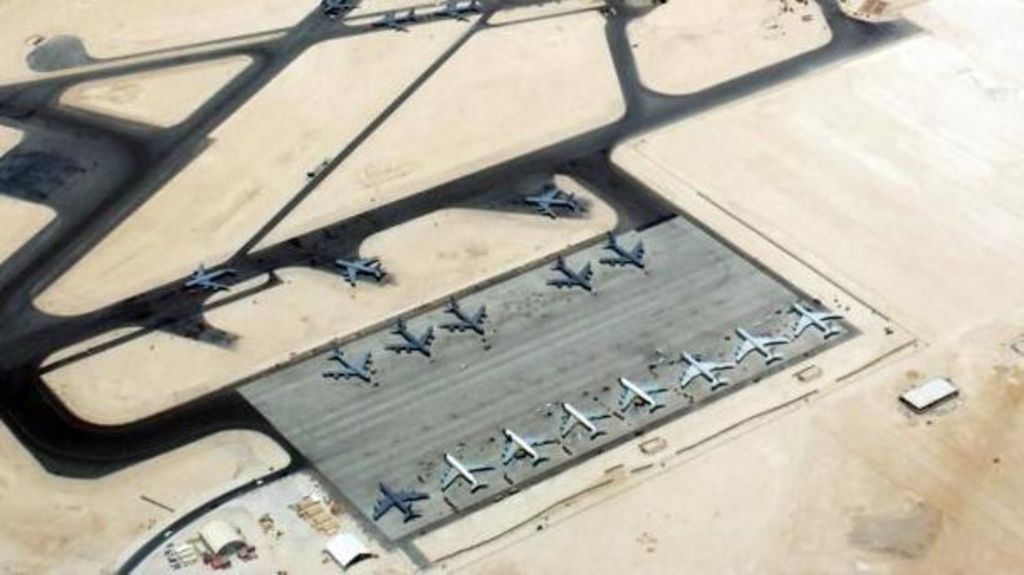
The United States has initiated a partial reduction of military personnel at its strategic Al-Udeid Air Base in Qatar, a move characterized by officials as a precautionary measure against escalating regional tensions. This development follows heightened rhetoric between Washington and Tehran regarding Iran’s internal crackdown on anti-government protesters.
Qatar’s government confirmed the troop repositioning in an official statement, noting the measures were being implemented “in response to the current regional tensions.” The Al-Udeid facility, spanning 24 hectares in the desert outside Doha, represents the largest U.S. military installation in the Middle East and serves as the headquarters for all American air operations in the region, typically housing approximately 10,000 personnel alongside rotating UK military forces.
The current tensions stem from President Donald Trump’s warning that Iran would face “very strong action” if authorities execute detained protesters. Trump amplified this threat on his Truth Social platform, stating Iranian leaders would “pay a big price” for the killings and encouraging continued demonstrations. Iranian officials have responded with counter-threats, with a senior adviser to Supreme Leader Ayatollah Ali Khamenei reminding Washington of Tehran’s demonstrated capability to respond to attacks, referencing Iran’s missile strike on Al-Udeid in June which was conducted in retaliation for U.S. strikes against Iranian nuclear sites.
According to human rights organizations, the Iranian government’s crackdown on protests has resulted in significant casualties, with the U.S.-based Human Rights Activists News Agency (HRANA) documenting 2,403 protester fatalities, including 12 children, alongside over 18,434 arrests despite widespread internet restrictions. The protests initially erupted in response to economic collapse and soaring living costs but rapidly evolved into demands for political reform, presenting the most serious challenge to Iran’s clerical establishment since the 1979 revolution.
While Reuters reports no immediate signs of large-scale troop movements resembling those preceding June’s Iranian strike, the U.S. Mission to Saudi Arabia has advised personnel and citizens to exercise increased caution and limit non-essential travel to military installations throughout the region. Iranian officials have accused the United States of attempting to “manufacture a pretext for military intervention,” with Parliament Speaker Mohammad Bagher Ghalibaf warning that both Israeli and U.S. military and shipping centers would become legitimate targets if attacked.