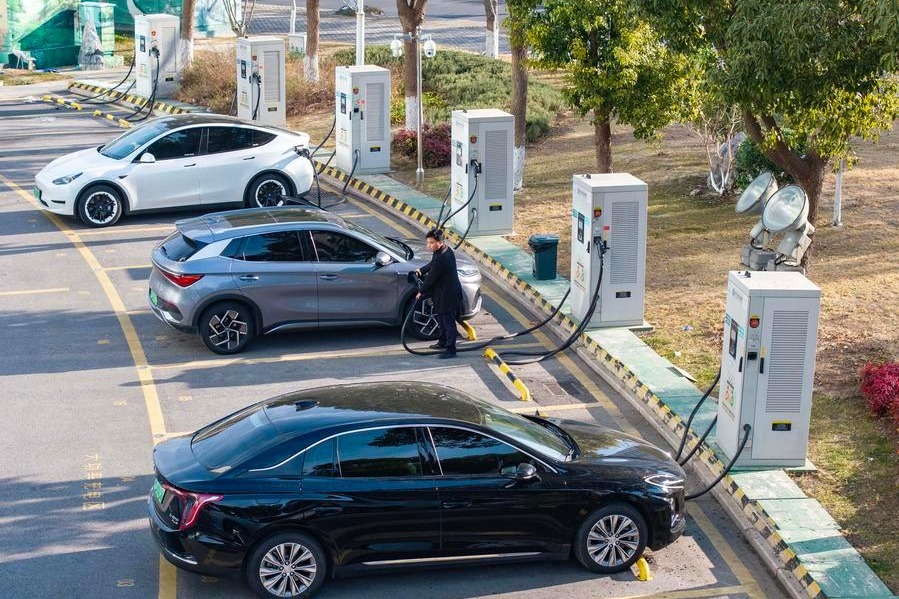
Despite steep tariffs and regulatory restrictions that currently bar Chinese-made electric vehicles from the mainstream US market, a new consumer survey reveals that a large and growing share of American drivers — particularly younger generations — are increasingly willing to consider purchasing these vehicles, drawn to their competitive pricing, innovative design and advanced digital features.
A poll conducted between December 29, 2025 and January 2, 2026 by Cox Automotive, a leading industry research and forecasting firm for new and used vehicle markets, found that 69 percent of Generation Z car shoppers (defined as those aged 14 to 29) said they are more likely to consider Chinese EV brands than competing international or domestic options. This growing positive perception has been fueled in large part by viral positive reviews of Chinese EVs on major social platforms including YouTube and TikTok, which have introduced American consumers to the vehicles’ attractive value proposition.
Shifting economic conditions have further amplified consumer interest: soaring fuel prices tied to regional tensions linked to the US-Israel-Iran conflict have boosted demand for electric alternatives, while the persistently high cost of domestic EVs has pushed shoppers to seek more affordable options. Data from Kelley Blue Book shows the average transaction price for a new electric vehicle in the US hit $57,245 by August 2025, pricing many middle-income buyers out of the market.
Sarano LaGrande, a 72-year-old New York resident, shared his positive outlook with China Daily, noting that he has seen Chinese EVs featured across social media and is attracted to their aesthetic design and potential fuel savings. “Why shouldn’t Americans have access to these cars? They’re beautiful, reasonably priced, and offer something new for city driving. American-made cars often start at $30,000 and up — that’s far too expensive for many buyers,” LaGrande said.
Bill Russo, founder and CEO of Shanghai-based automotive investment advisory firm Automobility Limited, broke down the key competitive advantages that set Chinese EVs apart from global competitors. “Chinese electric vehicles differentiate themselves primarily through rapid development cycles, unrivaled cost competitiveness, and seamless integration of cutting-edge digital technologies,” Russo explained. “Major brands each have unique strengths: BYD stands out for its vertical integration and massive production scale, Geely (including its premium brand Zeekr) for its global strategic positioning, Xiaomi for its integrated consumer digital ecosystem, and NIO for its premium user experience and after-sales services.”
Russo added that while Chinese EVs are technically competitive enough to capture significant market share in the US, near-term large-scale market entry remains out of reach due to steep geopolitical and regulatory hurdles. The Biden administration previously imposed a punitive tariff of over 100 percent on Chinese-made EVs, a policy designed to effectively price the vehicles out of the market under the guise of protecting American manufacturing jobs. Additional federal restrictions also block Chinese vehicle technology from the US market.
The Cox Automotive survey confirms that openness to Chinese EV brands splits sharply along demographic lines, with age being a key dividing factor. While younger, EV-curious shoppers demonstrate clear willingness to purchase Chinese brands, older consumers and buyers loyal to domestic automakers remain largely reluctant.
China’s EV industry has expanded rapidly over the past decades, backed by significant sustained investment, with more than 100 domestic manufacturers competing for market share at home. As the world’s largest producer and exporter of motor vehicles, China has already successfully built a strong foothold for its EVs in European and Latin American markets, and most recently gained access to Canada, which cut tariffs to 6.1 percent for an initial annual quota of 49,000 Chinese-made EVs.
In the US, where Tesla dominates the domestic EV market, established domestic auto trade groups have pushed for continued restrictions. In a March 12 letter, the groups called on the second Trump administration to maintain barriers blocking Chinese automakers from entering the US market. Still, President Donald Trump has signaled potential flexibility: during a January speech at the Detroit Economic Club, he hinted that he would be open to allowing Chinese automakers to enter the US market within the next two years, on the condition that they manufacture vehicles in US factories using American workers.
Another New York resident, 68-year-old Tony Jackson who originally hails from Missouri, echoed the view that the US should open its market to Chinese EVs that meet consumer quality standards. “For me, the top priorities are build quality, strong structural safety features, and adequate charging infrastructure. If Chinese vehicles deliver on these points and come at a fair price, that’s a win for American consumers,” Jackson said.
Among US auto dealerships, the Cox survey found that 15 percent of respondents already support allowing Chinese auto brands to enter the domestic market. Russo reiterated that policy constraints will almost certainly keep Chinese EVs from widespread availability at US dealerships in the near term. “That said, if regulatory and tariff barriers were reduced, Chinese EVs would almost certainly be well received by American consumers thanks to their clear value: a long list of premium features offered at highly competitive price points,” he noted.