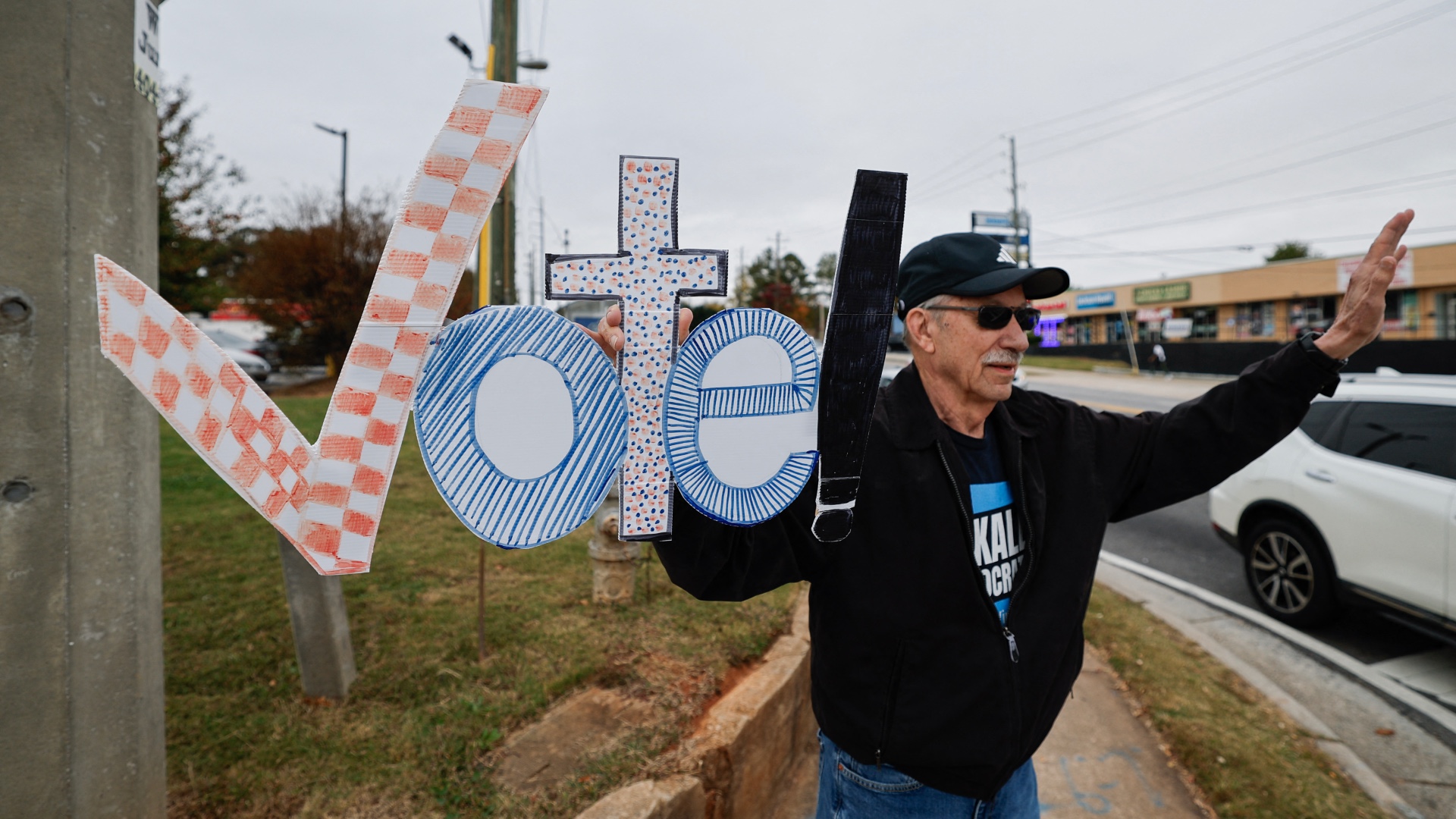
In a landmark electoral upheaval that delivered a stinging public rebuke of sitting President Donald Trump’s policy agenda, Democratic candidates have wrested full control of the U.S. Senate and are on track to claim a comfortable majority in the House of Representatives, flipping long-held Republican strongholds and shattering decades of partisan voting patterns across the country. As vote tallies continued to roll in after polling stations closed, Democratic leaders confirmed the party had secured a minimum of six flipped Senate seats to lock in a 52-seat majority, with additional projected gains poised to expand that margin as remaining ballots are counted. The chamber’s new Democratic majority will carry sweeping legislative and oversight power, granting the party authority to block Trump’s judicial nominees and cut off federal funding for the U.S.-backed Israeli military campaign against Iran, a policy that has driven steep spikes in domestic fuel prices and widespread public frustration over the administration’s foreign policy priorities. In the House, Democrats have already notched a minimum of seven flipped seats, putting them on a clear path to hand the gavel of House Speaker to New York Congressman Hakeem Jeffries, the first Black lawmaker in U.S. history to hold the top House post. In a victory address framed as a unifying national milestone, Jeffries hailed the night’s results as a “red, white and blue moment” rather than a narrow partisan win, emphasizing that Democrats would prioritize urgent action on household affordability, rising living costs, and public corruption allegations targeting Trump’s inner circle and family members, though he notably omitted any direct reference to the ongoing U.S.-Israeli conflict with Iran in his public remarks. The historic midterm cycle stands as the most expensive U.S. congressional election in history, with total campaign spending surging to $11.6 billion according to campaign finance tracker Ad Impact. Pro-Israel lobbying groups alone poured an estimated $40 million into primary and general election efforts to unseat progressive Democratic candidate Abdul El-Sayed, who ultimately held a narrow lead too close to call late on election night even as other Democratic upsets locked in the party’s Senate control earlier than projected. A string of unprecedented, high-profile upsets underscored the scale of the Democratic sweep: in South Carolina, Democrat Annie Andrews defeated Darline Graham – the Trump-endorsed sister of the late longtime Republican Senator Lindsey Graham, who was a vocal champion of military support for both the Iran conflict and U.S. aid to Ukraine – to flip the Senate seat once held by Graham. In Kansas, Democrat Adam Hamilton ousted incumbent Republican Roger Marshall to claim the state’s Senate seat, marking the first time a Democrat has won that Kansas Senate post in nearly 100 years. In deep-red Texas, a state long considered an unassailable Republican bastion, scandal-plagued Trump-backed incumbent Attorney General Ken Paxton – who previously faced fraud indictments and a corruption impeachment, and led efforts to criminalize the nation’s largest Muslim civil rights organization – lost his seat to Democrat James Talarico, flipping a district Republicans have held for more than 30 years. Talarico built broad cross-partisan support by centering his Christian faith, voicing qualified support for U.S. aid to Israel with conditions on weapons use, and prioritizing working-class economic issues. The Democratic wave also swept in a historic cohort of young, first-time progressive candidates who ran on platforms focused on working-class affordability and Palestinian human rights, and refused all corporate campaign donations – a high-stakes choice in a U.S. electoral system where fundraising totals often determine race outcomes. This incoming progressive bloc includes Egyptian-American surgeon Adam Hamawy, who rose to national prominence for his 2024 volunteer medical mission to Gaza, winning New Jersey’s 12th district; a trio of New York progressive candidates including Democratic Socialist Darializa Avila Chevalier, state legislator Claire Valdez, and former New York City Comptroller Brad Lander, all set to represent New York districts in Congress; 29-year-old Ethiopian immigrant Melat Kiros, who won Colorado’s 1st District; and Pennsylvania state legislator Chris Rabb, who claimed Pennsylvania’s 3rd District. The size of the progressive contingent is large enough to potentially delay or derail centrist Democratic leadership priorities in the new House, creating internal policy tensions within the caucus. Even in districts that were considered safe toss-ups going into election night, Democrats delivered decisive upsets: New York Republican Congressman Mike Lawler, who represented a district former Democratic presidential nominee Kamala Harris won in 2024, conceded his race after Trump made an unusual last-minute push to court anti-Zionist Jewish leaders in the district to rally support for Lawler. In Colorado’s 8th District, Democrat Manny Rutinel defeated incumbent Republican Gabe Evans, per CBS election projections. The most shocking upset of the night came in Texas, where Democrat Gina Hinojosa ousted three-term incumbent Republican Governor Greg Abbott to claim the top office of the nation’s most populous GOP stronghold. In Ohio, Democrat Amy Acton defeated Republican contender Vivek Ramaswamy to win the governorship, marking the first time a Democrat has held that Ohio statehouse seat since 2006. As the scope of his party’s losses became clear, Trump took to social media platform X to distance himself from underperforming Republican candidates, writing, “I wasn’t on the Ballot and if I was, we would have won IN A LANDSLIDE! Thank you for your attention to this matter.” In a subsequent Wall Street Journal interview, Trump acknowledged the unpopular Iran conflict was a contributing factor to the sweeping Democratic victories, noting “Iran was a piece of it.” Voter turnout data painted a clear picture of the electoral dynamic: per Politico, turnout rose 15% in counties that Harris won by 70% or more in 2024, compared to just 7% in counties that Trump won by a 70% margin, reflecting deep disappointment within the traditional Republican base and unprecedented enthusiasm among Democratic and independent voters. Pew Research data released the month before the election showed only 30% of U.S. voters approved of Trump’s performance during his first two years in office. For Arab, Muslim, and immigrant communities across the country, the election carried uniquely high stakes, as the Trump administration had implemented sweeping crackdowns on non-citizens, targeted pro-Palestine and anti-war speech, and deployed openly anti-Muslim rhetoric that reshaped daily life for millions of minority residents. Even as powerful pro-Israel lobbying group AIPAC poured unprecedented resources into competitive races, their electoral influence appeared diminished: early exit polling in Michigan showed El-Sayed captured 60% of votes cast by Jewish American voters during early voting periods. The newly elected 120th Congress will be formally sworn into office on January 3, 2027.
US midterm elections 2026: Democrats flip Senate and on track to take House in major rebuke of Trump agenda