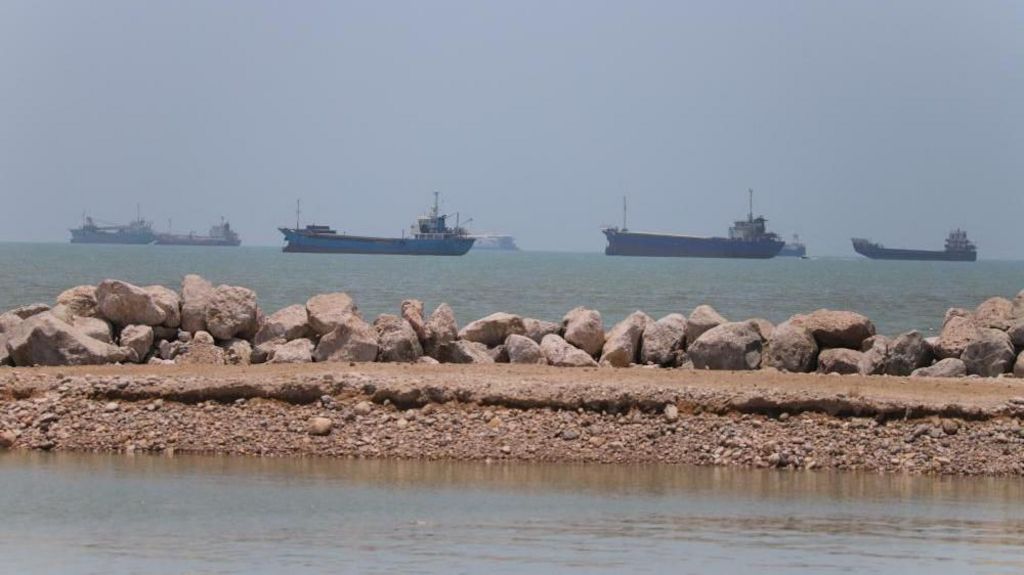
In a landmark shift that aims to end a months-long regional war ignited by a February US-Israeli strike on Iran, the United States has formally ended its naval blockade of Iran following the signing of a bilateral ceasefire memorandum of understanding (MoU) between the two nations. The development comes against a backdrop of fractured internal opinions on both sides, as well as sharp pushback from key regional actors.
US Central Command publicly confirmed the end of blockade enforcement on the social platform X, noting the action was carried out “in accordance with the President’s direction”. The terms of the framework agreement lay out an immediate full ceasefire across all active conflict fronts, the full reopening of the strategic Strait of Hormuz — a critical chokepoint for global oil supplies — and a requirement for Iran to eliminate its entire stockpile of enriched uranium to verifiably commit to never pursuing a nuclear weapon.
In his first public remarks on the agreement since it was signed, Iran’s Supreme Leader Mojtaba Khamenei acknowledged that he holds a “different view” of the deal, saying former US President Donald Trump pushed the agreement through “out of desperation”. Khamenei, who took office in March after his father Ali Khamenei was killed in the February strike that sparked the full-scale war, added that he allowed the MoU to move forward after receiving assurances from Iranian President Masoud Pezeshkian. He stressed that future in-person negotiations between Tehran and Washington do not equate to Iran accepting the US’s position, while acknowledging that the Iranian negotiating team acted out of “sincere concern and goodwill”.
US Vice President JD Vance, who defended the agreement in a White House press briefing Thursday, outlined strict conditions for any concessions to Iran, emphasizing that Tehran will not receive sanctions relief or financial benefits until it fully complies with all obligations laid out in the MoU. “The memorandum does not give Iran any benefits until the country proves it will comply fully and change their behaviour, including following through on its commitment to destroy its enriched uranium stockpile and end support for regional proxy militant groups,” Vance told reporters.
The MoU has triggered a 60-day window for detailed technical negotiations, which Vance confirmed he will likely lead in Switzerland, though he declined to set a firm timeline for the visit, noting “Iran is not an easy country” and scheduling requires further coordination. What was originally planned as an official public signing ceremony in Switzerland on Friday was canceled by mediator Pakistan, which confirmed the deal had already been finalized via remote signing. US and Iranian negotiators will still convene in Switzerland for the next phase of talks as planned.
The agreement has already sparked division within Israel’s ruling coalition, with Prime Minister Benjamin Netanyahu releasing a statement reaffirming the strength of the US-Israel alliance, noting Washington had stood “shoulder to shoulder” with Israel throughout the conflict. Vance pushed back against criticism from two far-right Israeli cabinet ministers — National Security Minister Itamar Ben Gvir and Finance Minister Bezalel Smotrich — who have publicly opposed the deal. In remarks to reporters Thursday, Vance said critics of the agreement should “wake up and smell the reality”, adding, “If I was in the cabinet of the Israeli government, I might not be attacking the only powerful ally that I have anywhere left in the entire world.” He later challenged the critics to present a viable alternative, noting “You’re a country of nine million people. You can’t just kill your way out of solving every single national security problem that you have.”
The 14-point framework also includes a provision for a $300 billion fund for post-conflict Iranian reconstruction and economic development, though the US is not required to contribute to the pool. Despite the formal announcement of the ceasefire, violence has continued between Israel and Iran-backed Hezbollah in Lebanon, with three people killed in mutual strikes reported Thursday. Israel has argued its conflict with Hezbollah is separate from its confrontation with Iran, while Hezbollah has outright rejected the terms of the US-Iran deal. Trump has not directly responded to Khamenei’s critical statement, but wrote on his social platform Truth Social that he expects the ceasefire to hold across all fronts, including the Israel-Heidelberg front, and called on all regional states to uphold their commitments to the negotiated process.