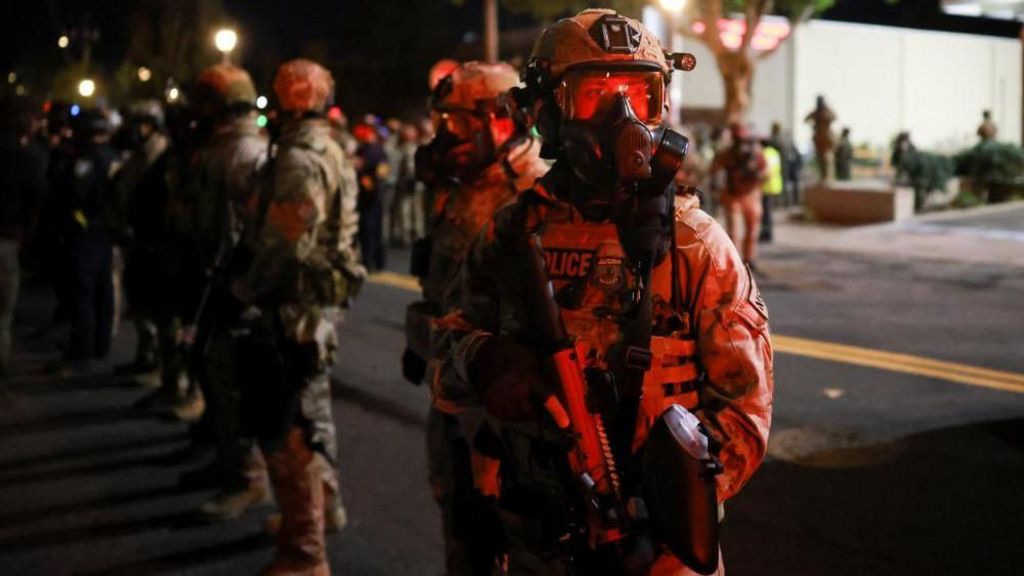
In a landmark decision, U.S. District Judge Karin Immergut has permanently barred President Donald Trump from deploying National Guard troops to Portland, Oregon. This ruling marks the first instance where the Trump administration has been definitively prevented from sending military personnel to U.S. cities. The decision follows a protracted legal battle over whether Trump violated federal law by dispatching troops despite objections from local officials.
Judge Immergut, a Trump appointee, emphasized that the president lacked a lawful basis to federalize the National Guard in Portland. She clarified that her ruling does not preclude the president from ever using National Guard forces but stressed that in this specific case, there was neither a rebellion nor an imminent threat justifying such action. She also noted that Trump had overstepped his authority under the 10th Amendment, which reserves powers not explicitly granted to the federal government for the states.
The ruling comes amid a broader effort by Trump to quell protests against federal immigration policies in Democrat-led cities, including Chicago, Los Angeles, and Washington, D.C. Earlier this month, Judge Immergut issued temporary restraining orders to halt the deployment of troops from Oregon, California, and Texas. In her 106-page decision, she stated that the administration failed to meet the legal threshold for deploying military forces in American cities.
The Trump administration is expected to appeal the decision, potentially escalating the issue to the Supreme Court. The case has highlighted the ongoing tension between federal and local authorities, with Portland officials and residents disputing the administration’s characterization of the city as ‘war-ravaged.’ Local leaders argue that the violence is limited and effectively managed by Portland police.
Portland’s attorney, Caroline Turco, framed the case as a pivotal test of constitutional governance, stating, ‘This case is about whether we are a nation of constitutional law or martial law.’ The ruling underscores the broader debate over federal overreach and the balance of power between state and federal governments.