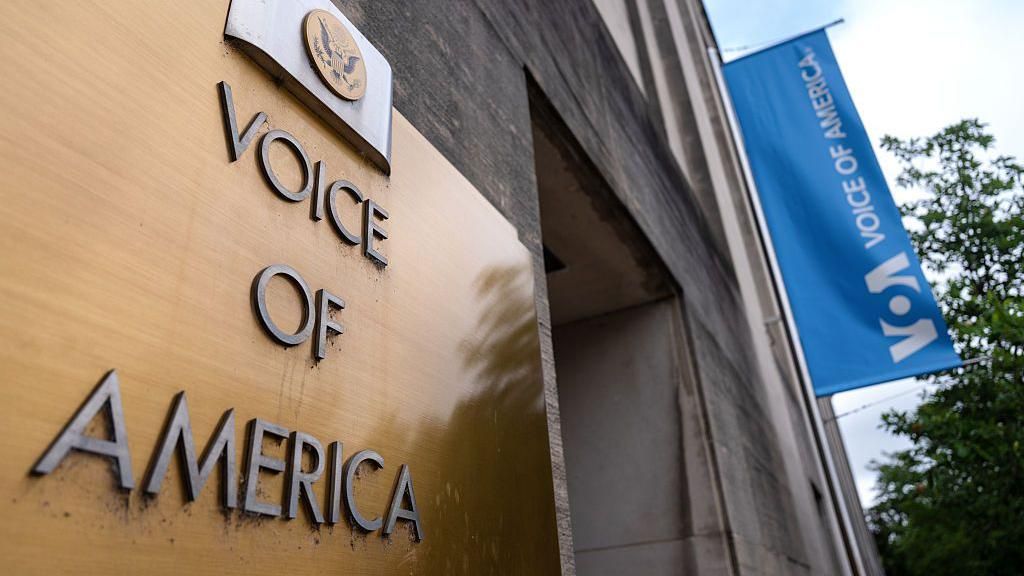
In a landmark judicial decision, U.S. District Court Judge Royce Lamberth has declared the Trump administration’s effective shutdown of Voice of America (VOA) unlawful, ordering federal authorities to restore the international broadcaster’s operations within one week. The ruling mandates the reinstatement of hundreds of journalists who were abruptly terminated in what the court characterized as an “arbitrary and capricious” personnel purge.
The legal confrontation stems from executive actions taken shortly after Donald Trump’s return to office, when he issued orders targeting VOA and affiliated networks including Radio Free Europe and Radio Free Asia. The administration justified these measures by alleging systemic left-wing bias within the broadcasters. Trump appointee Kari Lake, installed as head of the U.S. Agency for Global Media (USAGM) without Senate confirmation, executed the president’s directive by dismissing over 85% of the agency’s workforce—more than 1,000 VOA employees alone.
Judge Lamberth’s twin rulings determined that Lake lacked constitutional authority to order mass suspensions without Senate confirmation and that the government ignored legislative mandates defining VOA’s linguistic and regional service requirements. “Defendants have provided nothing approaching a principled basis for their decision,” the judge noted in his sharply worded opinion.
The case was brought by three VOA journalists, including plaintiff Patsy Widakuswara who expressed profound gratitude for the verdict. “We hope the American people will continue to support our mission to produce journalism, not propaganda,” she told Associated Press. The future course remains uncertain as Trump’s newly nominated USAGM head, Sarah Rogers—requiring Senate confirmation—must decide whether to appeal the decision.
Established during World War II to counter Nazi propaganda, VOA had been broadcasting in nearly 50 languages through television, radio, and digital platforms prior to its dismantling. This legal battle reflects broader tensions between the previous administration and U.S. media institutions, with research indicating increasingly polarized perceptions of news media among American audiences.