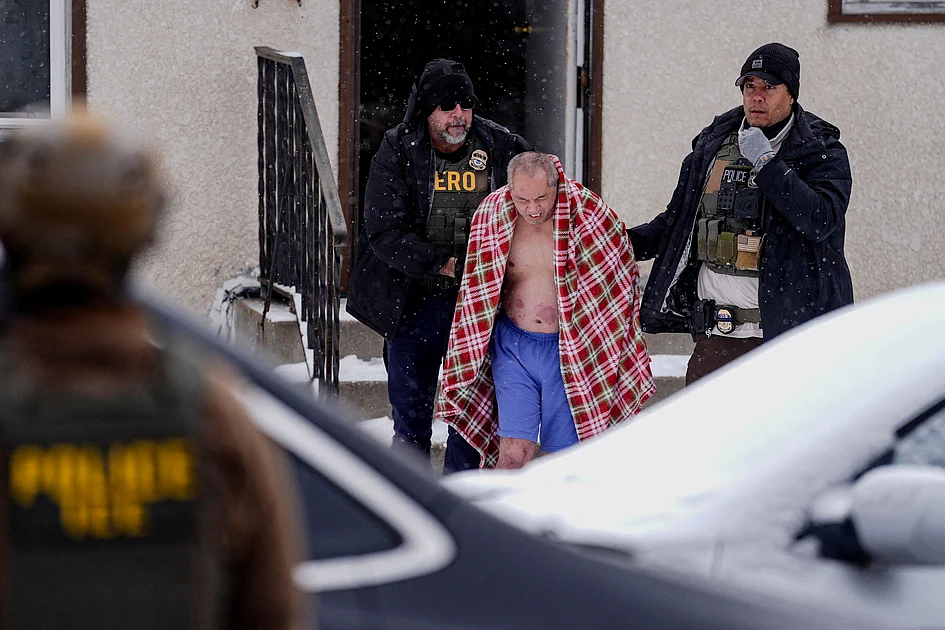
A controversial immigration enforcement operation in Minnesota has drawn sharp criticism after federal officers forcibly entered a residential property and detained a naturalized U.S. citizen under extreme circumstances. The incident, which occurred on Sunday, involved Immigration and Customs Enforcement (ICE) personnel breaking down the door of ChongLy ‘Scott’ Thao’s home with drawn weapons, handcuffing the minimally clad 56-year-old, and escorting him into subzero temperatures.
Thao, a Hmong immigrant from Laos who obtained U.S. citizenship in 1991, described the experience as profoundly traumatic. ‘I was praying. I was like, God, please help me; I didn’t do anything wrong,’ he recounted to reporters from his residence, where neighbors were subsequently repairing the damaged entrance. Despite freezing conditions of 14°F (-10°C), officers reportedly denied Thao the opportunity to dress appropriately, forcing him to cover himself with his grandson’s blanket during the detention.
The Department of Homeland Security justified the operation as targeting two convicted sex offenders with deportation orders who were believed to be at the address. Agency spokeswoman Tricia McLaughlin stated that Thao was detained because he ‘matched the description of the targets’ and refused standard identification procedures, necessitating temporary custody ‘for the safety of the public and law enforcement.’
However, relatives clarified that one of the wanted individuals had previously resided at the location but had since moved out, describing him as the former spouse of a family member. Photographs of the incident circulated widely on social media, amplifying concerns about potential overreach in federal immigration enforcement practices under the Trump administration’s intensified crackdown, which has deployed approximately 3,000 officers in the Minneapolis region.
The family’s official statement condemned the operation as ‘unnecessary, degrading, and deeply traumatizing,’ sentiments echoed by immigrant advocacy groups. This event coincides with ongoing legal challenges to the administration’s enforcement methods, including a recent injunction issued by a U.S. District Judge in Minnesota blocking certain aggressive tactics that could inhibit constitutional rights.
After fingerprinting and photographic identification in a vehicle, Thao was released without explanation or apology. The emotional impact remains profound, with Thao questioning the fundamental promise of American safety that originally motivated his family’s immigration from Laos in 1974 when he was four years old.