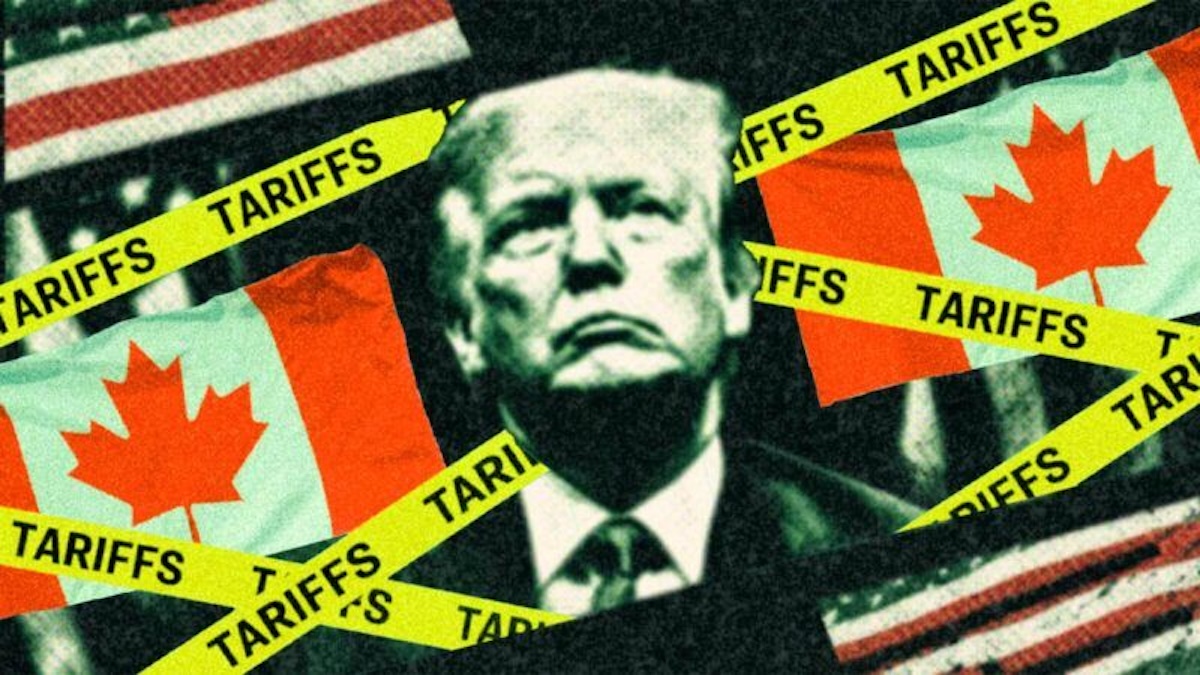
In a significant bipartisan rebuke of former President Donald Trump’s trade policies, the House of Representatives voted 219-211 to terminate the national emergency declaration at the northern border that had authorized tariffs on Canadian goods. The resolution revokes Trump’s February 1, 2025 executive order that imposed these tariffs under an unprecedented application of the International Emergency Economic Powers Act (IEEPA).
Six Republican representatives—Don Bacon (Nebraska), Brian Fitzpatrick (Pennsylvania), Jeff Hurd (Colorado), Kevin Kiley (California), Thomas Massie (Kentucky), and Dan Newhouse (Washington)—crossed party lines to support the Democratic-led measure. Only one Democrat, Jared Golden of Maine, voted against the resolution, while two Republicans abstained from voting.
The vote occurred amid ongoing legal scrutiny at the Supreme Court regarding whether presidents possess the authority to impose tariffs under the 1970s-era emergency powers law. The Court heard arguments in November but has yet to issue a ruling.
The debate revealed sharp divisions over the justification for the tariffs. Representative Gregory Meeks (D-NY), the resolution’s lead sponsor, criticized what he called a “manufactured emergency,” emphasizing that “Canada isn’t a threat. Canada is our friend. Canada is our ally.” Meeks cited analyses indicating tariffs cost American households between $1,300 and $1,750 annually.
Counterarguments focused on fentanyl trafficking, with Representative Brian Mast (R-FL) asserting that the emergency declaration addressed the opioid crisis. However, Customs and Border Protection data shows fentanyl seizures at the northern border remain substantially lower than those at the southwest border.
This congressional action follows previous bipartisan efforts to check Trump’s tariff authority, including a Senate vote in October that overturned tariffs on Brazilian goods. The development signals growing legislative resistance to executive trade actions that critics argue overstep presidential authority and harm American consumers.