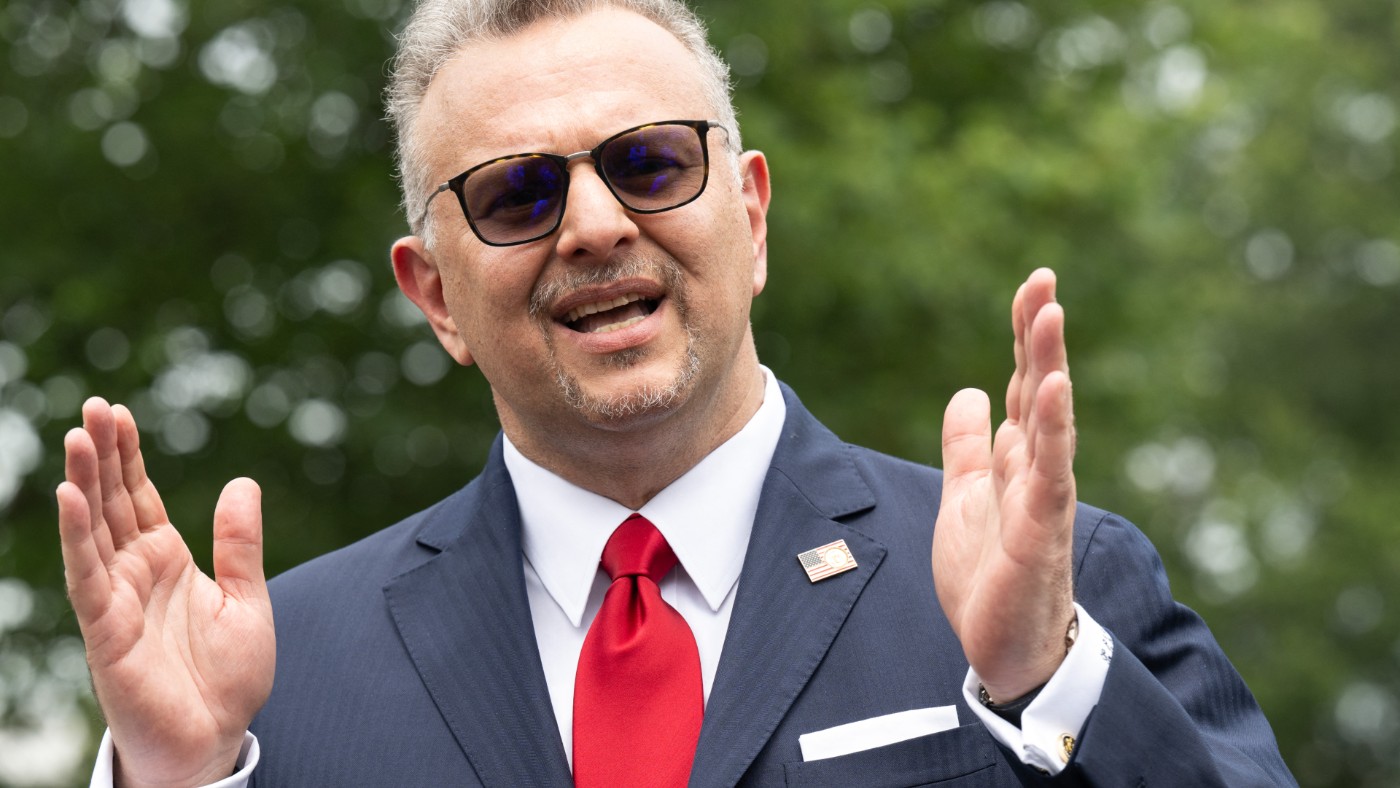
The ongoing civil conflict in Sudan, which erupted in April 2023 and has already spawned the world’s most severe humanitarian catastrophe, has drawn direct or indirect military involvement from at least a dozen foreign nations, a senior White House advisor for African and Arab affairs has revealed. Massad Boulos, a Lebanese-born American diplomat whose son is married to former President Donald Trump’s daughter Tiffany, laid out the widespread regional meddling in an exclusive interview with the BBC’s *Focus on Africa* program, though he declined to publicly name the intervening states.
In his comments, Boulos emphasized that nearly every neighboring country in the Northeast African region has taken on some level of participation in the conflict, whether that means deploying military resources directly to one of the warring parties or enabling weapons transfers and militia movements across shared borders. “As for the military support, this is done currently by all the neighbouring countries in addition to some other regional actors. This is really very sad,” Boulos told the program. He went on to confirm that the total number of countries providing military backing to either the Sudanese Armed Forces (SAF) or the paramilitary Rapid Support Forces (RSF) stands at roughly 12, adding that the identities of these backers are already an open secret in international diplomatic circles. “We are not going to go into names at this time, but I think they are well known,” he said.
When pressed on why the U.S. has declined to publicly name the external backers of Sudan’s warring factions, Boulos deflected the question and refocused on Washington’s core diplomatic push: a push to impose a full, nationwide arms embargo on Sudan that would cut off all weapons flows to both sides of the conflict.
Right now, only a limited UN arms embargo is in place, restricted solely to Sudan’s vast western Darfur region – the historic stronghold of the RSF and its predecessor militia, the Janjaweed, which carried out a genocidal campaign that killed hundreds of thousands of civilians in the early 2000s. That 20-year-old targeted embargo is set to expire on September 12, creating a narrow window for UN diplomats to craft a broader, more effective regulatory framework.
According to reporting from Middle East Eye (MEE), the UN Panel of Experts tasked with monitoring the existing Darfur embargo submitted its final assessment report to the UN Security Council on July 13, and the document includes substantial new evidence confirming repeated violations of the embargo by the United Arab Emirates (UAE). The UAE has repeatedly and publicly denied providing any support to the RSF throughout the 16-month-long conflict. However, multiple independent sources – including UN experts, international human rights organizations, and MEE’s own on-the-ground reporting – have documented consistent Emirati military backing for the RSF, which is led by former Janjaweed commander Mohamed Hamdan Dagalo and has been formally accused of genocide in Darfur by multiple international bodies.
Weapons serial numbers traced from battlefield recovered hardware, public flight tracking logs, and testimony from dozens of regional sources all confirm that the UAE routes military supplies to the RSF through third-party transit points in Libya, Chad, Ethiopia, and the self-declared independent state of Somaliland. The latest Panel of Experts report also adds new granular detail to longstanding public accusations that the UAE contracted Colombian mercenaries to fight alongside RSF forces on the ground in Sudan, MEE has learned.
When asked directly about the accusations against the UAE during his BBC interview, Boulos confirmed he holds regular diplomatic meetings with Emirati officials, including talks held just one week prior to the interview. He added that Emirati officials “deny any direct involvement” in arming the RSF, suggesting that any weapons transfers that do occur are the unapproved actions of independent traders rather than official state policy. “There might be some traders or whatever that are doing these sorts of supplies, providing supplies to both sides, but again we are not here to go into these details,” Boulos said.
While the UAE backs the RSF, public reporting confirms that other foreign powers have aligned with the opposing SAF. Egypt and Turkey are the two largest military backers of the Sudanese regular army, with Turkish diplomatic and military sources confirming to MEE that Ankara supplies the SAF with unmanned combat drones, artillery ammunition, and advanced air defense systems. Turkish drone operators have also deployed directly to Sudanese territory to carry out offensive operations, and both Turkey and Egypt have launched airstrikes against RSF weapons convoys operating in the remote desert border triangle where Sudan, Libya, and Egypt meet.
Boulos told the BBC that a full nationwide arms embargo would impose a complete ban on the sale, transfer, and delivery of all weapons and military equipment to any party in the Sudanese conflict. “We have to act, we have to do something about it and that’s why I talked to the members of the Security Council about it,” he said, though he acknowledged that the proposal faces major barriers to passage at the UN Security Council. Russia has already used its veto power to block similar embargo proposals in recent months, leaving the diplomatic effort on uncertain ground.
Boulos framed the push for a full embargo as an urgent response to a sharp recent escalation in external military support for both warring sides. “This call came in the context of the increasing levels of military support that we have seen to both warring parties in the recent weeks and months. There’s a tremendous increase to both sides,” he explained.
The conflict between the SAF and RSF, which broke out over a disputed plan to integrate the two forces into a unified national military ahead of a planned transition to civilian rule, has displaced more than 10 million Sudanese and left millions more on the brink of famine, making it the world’s worst humanitarian disaster in decades.