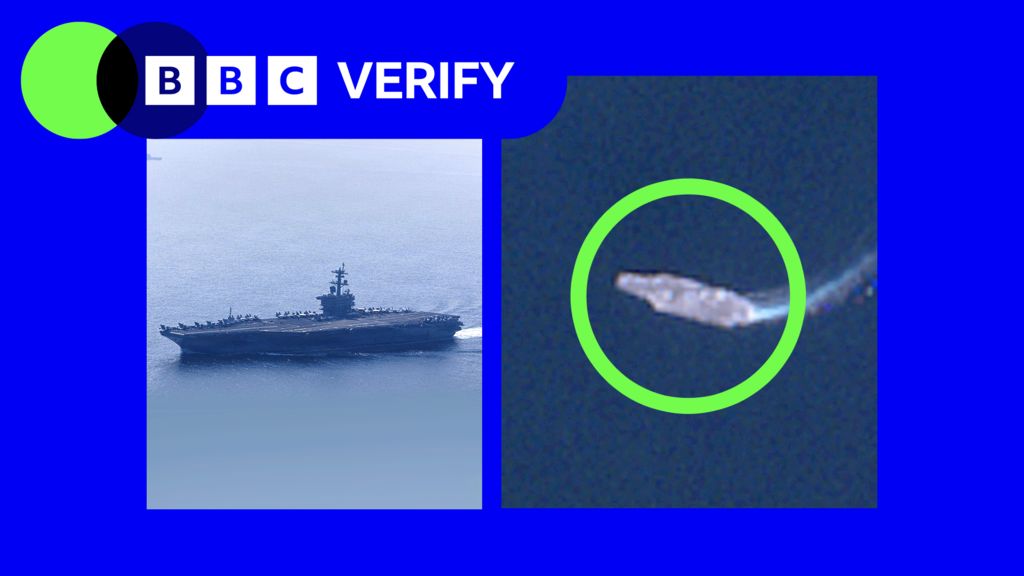
BBC Verify has geolocated the USS Abraham Lincoln aircraft carrier strike group approximately 240 kilometers off the coast of Oman through analysis of European Sentinel-2 satellite imagery, confirming its strategic positioning about 700 kilometers from Iranian territory. This verification comes as the United States demonstrates sustained military presence in the Middle East amid ongoing diplomatic engagements.
The nuclear-powered Nimitz-class carrier, accompanied by three Arleigh Burke-class guided missile destroyers, represents one component of an expanded US naval presence in the region. Satellite analysis has identified a total of twelve US warships currently deployed across Middle Eastern waters, including additional destroyers capable of long-range missile strikes and specialized combat vessels stationed at Bahrain’s naval facility.
This military buildup coincides with scheduled US-Iran talks in Switzerland, where Iranian officials indicate focus will center on nuclear program negotiations and potential sanctions relief. Washington has previously expressed intention to broaden the discussion agenda beyond nuclear matters.
Parallel to naval movements, BBC Verify has tracked increased US air force activity with additional F-15 and EA-18 fighter jets deployed to Jordan’s Muwaffaq Salti Air Base, alongside heightened transit of cargo, refueling, and communications aircraft from US and European bases toward the Middle East.
Iran has responded with demonstrative military exercises conducted by the Islamic Revolutionary Guard Corps (IRGC) in the strategically vital Strait of Hormuz. This waterway facilitates approximately 20% of global oil and gas shipments, with Iran’s primary oil export terminal located on Kharg Island. The IRGC exercises featured missile launches and high-level inspections, signaling Tehran’s readiness to counter US military presence.
Military analyst Justin Crump of Sibylline risk assessment firm characterizes the current US deployment as demonstrating ‘more depth and sustainability’ than previous operations targeting Venezuela or Iran’s nuclear facilities. The present configuration enables potential strike capabilities of approximately 800 sorties daily while maintaining defensive postures to protect regional US assets and allied interests.
Further complicating the regional balance, the USS Gerald R. Ford—the world’s largest warship—is reportedly en route to the Middle East and expected to arrive within the next three weeks, potentially marking the most substantial US naval presence in the region in recent years.