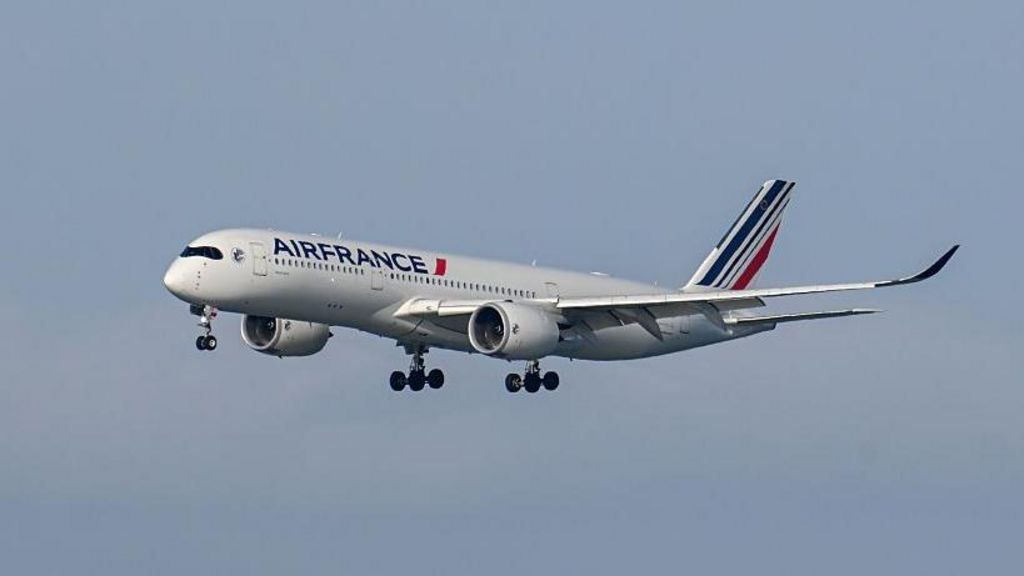
A transatlantic commercial flight traveling from Paris to Detroit was forced to make an unscheduled diversion to Montreal, Canada, after airline staff incorrectly allowed a passenger who had recently traveled from the Ebola-stricken Democratic Republic of Congo (DRC) to board the aircraft, according to official statements. U.S. Customs and Border Protection (CBP), the agency that oversees U.S. border entry rules, confirmed to the BBC that the passenger should never have been allowed onto the Air France jet under current public health entry restrictions designed to curb the spread of the deadly virus. The ongoing Ebola outbreak across central Africa has already claimed nearly 140 lives, with health officials documenting more than 600 suspected infections across affected regions. As of the report’s release, authorities have not released key details about the passenger, including whether they were displaying visible Ebola symptoms, or the exact date of their most recent stay in the DRC. Air France later verified the diversion to U.S. media outlets, confirming that the plane was rerouted to Montreal Pierre Elliott Trudeau International Airport at the explicit request of U.S. public health and border authorities, after the Congolese passenger was formally denied entry to the United States. “Air France boarded a passenger from the Democratic Republic of Congo in error on a flight to the United States,” CBP said in an official statement. The agency added that it acted quickly to block the flight from landing at its intended destination, Detroit Metropolitan Wayne County Airport, prompting the 500-mile (800-kilometer) diversion north to Canadian soil. To reduce the risk of Ebola importation, the U.S. currently enforces strict entry rules: non-U.S. passport holders who have visited the DRC, South Sudan, or Uganda in the 21 days prior to travel are barred from entering the country. U.S. citizens and legal permanent residents who have traveled to these three countries are only allowed to enter through Washington-Dulles International Airport in Virginia, where they undergo mandatory enhanced public health screening. The World Health Organization (WHO) has already designated this current Ebola outbreak a Public Health Emergency of International Concern, the highest global alert level for infectious disease events. The U.S. Centers for Disease Control and Prevention (CDC) has noted that the overall risk of Ebola spreading widely within the U.S. remains relatively low, but the agency has still moved to implement layered precautionary measures to stop the virus from crossing U.S. borders. To date, one American has tested positive for Ebola in this outbreak: a physician who was working with a medical missionary organization in the DRC. He is currently receiving treatment in a specialized isolation ward at a hospital in Germany. On Wednesday, WHO officials added another layer of context to the outbreak, confirming that the specific variant driving the current outbreak—the Bundibugyo strain—does not currently have a licensed vaccine available for widespread use. According to the agency’s timeline, it could take as long as nine months before a targeted vaccine for this strain is developed and cleared for deployment. The incident has drawn attention to the challenges of enforcing cross-border public health measures during a global infectious disease emergency, highlighting how even a single administrative error can trigger major disruptions to international air travel.
US-bound plane diverts to Canada after person from Ebola-hit region boards ‘in error’