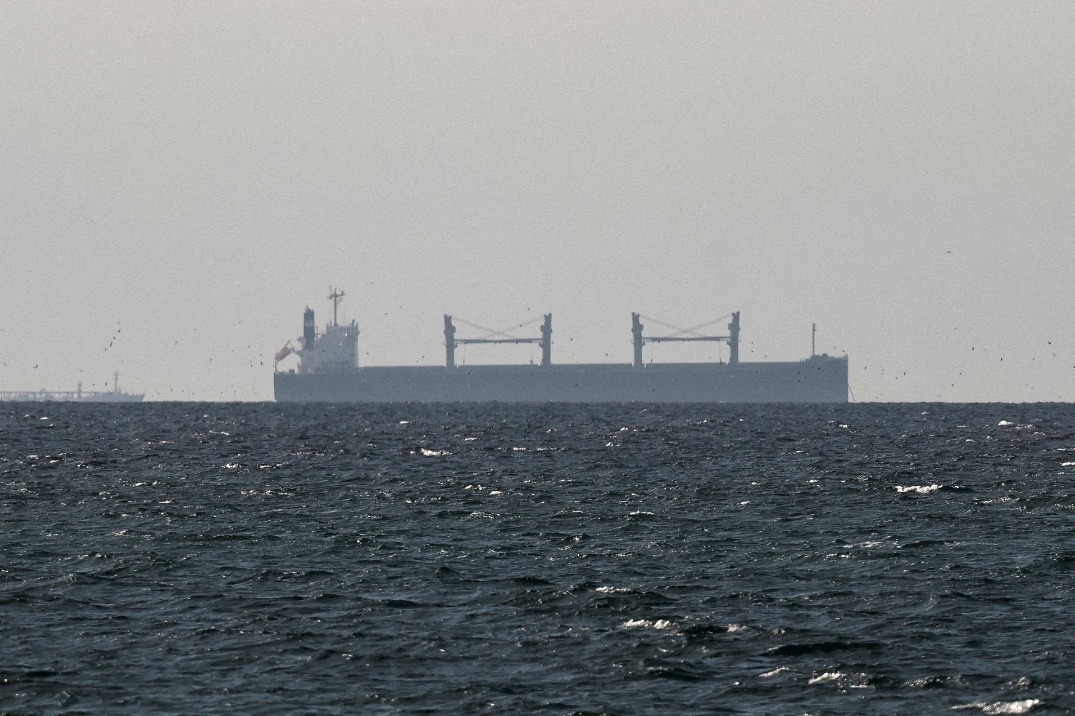
On April 13, 2026, the United States launched a planned naval blockade of all maritime traffic entering and exiting Iranian ports, a dramatic escalation that came just days after high-stakes peace negotiations between Washington and Tehran in Islamabad, Pakistan, ended without any breakthrough agreement. The order to implement the blockade came directly from US President Donald Trump, who announced the move via a post on his Truth Social platform over the weekend.
Trump’s announcement confirmed the blockade would officially enter into force at 10:00 a.m. Eastern Time on April 13, targeting all vessels bound for or departing from Iranian coastal facilities across both the Persian Gulf and Gulf of Oman. In an official statement released shortly after the president’s social media post, US Central Command (CENTCOM) confirmed it had begun executing the blockade per presidential direction. The command clarified that its operations would not interfere with commercial shipping transiting the Strait of Hormuz en route to or from non-Iranian ports, and noted that additional navigational guidance would be distributed to commercial mariners via official maritime alerts ahead of full enforcement. CENTCOM also urged all vessels operating in the Gulf of Oman and approaches to the Strait of Hormuz to monitor regular Notice to Mariners broadcasts and maintain contact with US naval forces via bridge-to-bridge radio Channel 16.
Tehran swiftly rejected the US move as a violation of international law, with the Iranian armed forces’ unified command issuing a forceful counterstatement carried by Iranian state broadcaster IRIB and reported by Al Jazeera. The Iranian statement framed the Strait of Hormuz, one of the world’s most critical global oil chokepoints, as a waterway that must remain open to all vessels or closed to none. It specified that what it labeled “enemy-affiliated vessels” would be blocked from passage, while other ships would be permitted to transit only under Iranian regulatory oversight. The statement labeled Washington’s imposition of maritime restrictions in international waters an unlawful act that equates to state-sponsored piracy.
Even as he announced the blockade, Trump offered conflicting framing of the current state of tensions, claiming that a two-week ceasefire between the US and Iran, set to remain in effect through April 22, “is holding well.” He added that he does “not care” whether Iran agrees to return to the negotiating table, a comment that analysts have interpreted as a contradictory negotiating tactic.
Regional policy experts have broken down the strategic logic behind the US’ limited blockade, which explicitly exempts shipping connected to non-Iranian ports. Rasha Al Joundy, a senior researcher at the Dubai Public Policy Research Centre, noted the restricted scope of the measure reveals two core US objectives. First, the blockade is designed to exert tactical diplomatic pressure on Tehran after negotiations stalled following 21 hours of talks in Pakistan. Second, it positions US naval forces to deter potential Iranian strikes against member states of the Gulf Cooperation Council.
Other analysts have flagged a fundamental contradiction in the US’ simultaneous announcements: confirming a full naval blockade while insisting the existing ceasefire remains intact. Abdolreza Alami, a senior lecturer in communication and media studies at Universiti Teknologi Mara in Malaysia, told China Daily that the dual messaging undermines US credibility on the global stage. Under the United Nations Convention on the Law of the Sea (UNCLOS), a naval blockade is defined as an act of military coercion that is fundamentally incompatible with an active ceasefire, Alami explained. He added that Trump’s claim he does not care if Iran returns to negotiations is a clear tell that the White House is desperate for a renewed diplomatic process, a signal Tehran has already recognized as a negotiating tactic rather than fixed policy. “Iran’s strategic patience has outlasted far greater pressures. Time, in this configuration, favors Tehran,” Alami said.
Iranian Foreign Minister Seyed Abbas Araghchi emphasized that his country had entered negotiations with Washington in good faith, marking the highest level of diplomatic engagement between the two nations in 47 years, with the goal of ending ongoing hostilities. In a post on X, Araghchi wrote that the talks had been on the cusp of securing a preliminary memorandum of understanding in Islamabad before the US backed away with excessive demands, shifted negotiating positions, and moved forward with the blockade. “Zero lessons earned,” he wrote, adding that “goodwill begets goodwill while enmity begets enmity.”
The Association of Southeast Asian Nations (ASEAN), which held a second special foreign ministers’ meeting on the Middle East crisis on April 10, issued an official statement on April 13 calling for de-escalation. The bloc reaffirmed its earlier welcome of the two-week US-Iran ceasefire and urged both parties to resume negotiations to reach a permanent end to hostilities that can deliver lasting stability to the region. ASEAN commended Pakistan’s mediation efforts and the work of all parties working toward a diplomatic solution. In its statement, the grouping called for the full restoration of “safe, unimpeded, and continuous transit passage” for all vessels and aircraft through the Strait of Hormuz, in line with the 1982 UNCLOS, and urged all parties to uphold the safety of seafarers and commercial shipping as required by the International Convention for the Safety of Life at Sea (SOLAS).