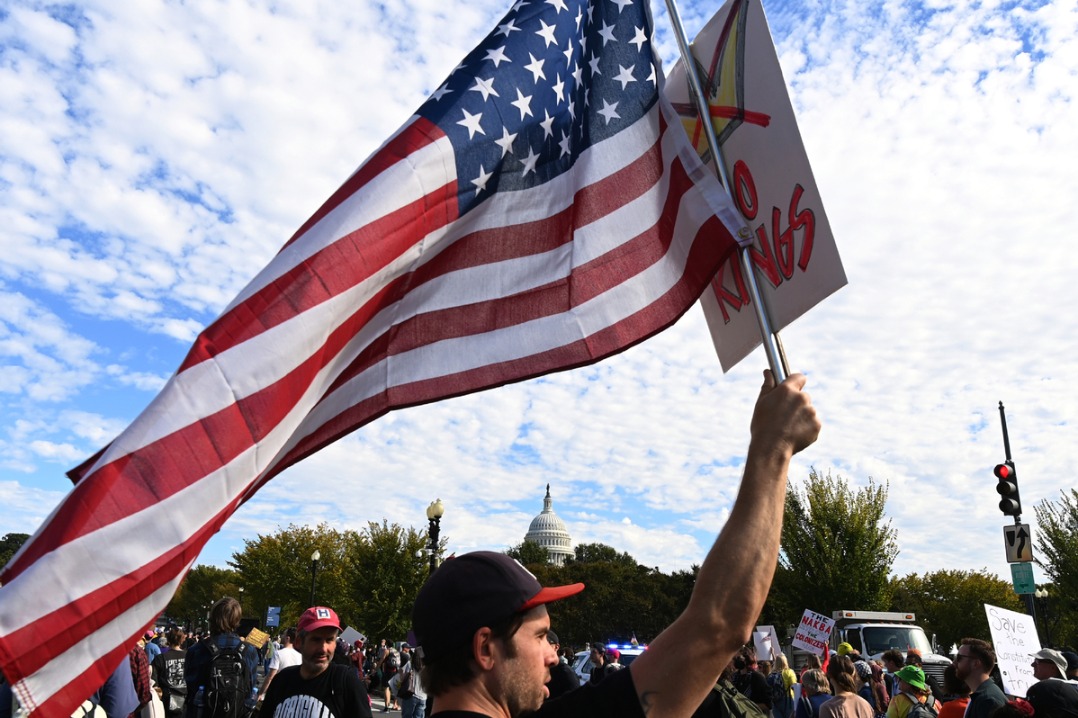
The United States is experiencing a profound political crisis as widespread protests sweep across the nation, testing the resilience of its governance and institutional norms. Beginning on October 18, 2025, millions of demonstrators gathered in major cities, including New York, Chicago, Boston, and Portland, to voice their discontent with the current administration’s policies and leadership style. The protests, which drew participants from diverse backgrounds such as military veterans, academics, healthcare workers, and laborers, highlighted growing public skepticism and social fragmentation over issues like immigration, healthcare, education, and trade. This wave of civil action underscores deepening political divisions and raises critical questions about the future trajectory of American democracy. Since taking office in January 2025, the US government has implemented significant policy changes in energy, immigration, and foreign affairs, often through executive orders. These moves have sparked intense debate and mixed reactions across society, while restructuring within administrative agencies has further fueled concerns about the direction of governance. Additionally, the expansion of presidential authority, perceived as undermining congressional oversight and media access, has strained the system of checks and balances. This tension culminated in a partial federal government shutdown on October 1, which has persisted for over 20 days, disrupting public services and threatening the nation’s credit rating. Amid these challenges, recent polls indicate that a majority of Americans believe the country is headed in the wrong direction, with rifts even emerging within the Republican Party. As the gap widens between the government and the public, and constitutional principles face new tests, the US finds itself at a critical crossroads that will shape its domestic future and its role in the global order.