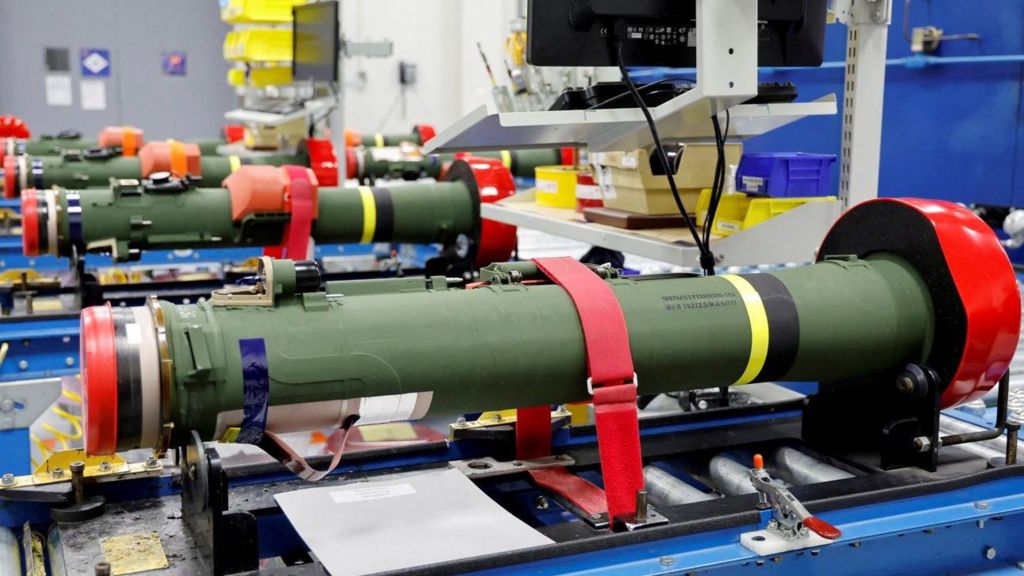
The United States has greenlit two significant arms sales to India, totaling $92.8 million, as announced by the US State Department. The deals include the provision of Javelin anti-tank missiles and Excalibur precision artillery projectiles. This decision follows a meeting nine months prior between Indian Prime Minister Narendra Modi and former US President Donald Trump in Washington, where both leaders pledged to enhance defense collaboration. In October, this commitment culminated in the signing of a 10-year framework agreement aimed at bolstering defense cooperation. The move aligns with India’s strategy to diversify its arms procurement away from Russia, spurred by reports that Trump encouraged India to increase its purchases of US-manufactured weaponry. While Russia has historically been India’s primary arms supplier, its market share has significantly decreased from 62% in 2017 to 34% in 2023. Conversely, India’s defense trade with the US has skyrocketed from nearly zero to $20 billion, positioning the US as India’s third-largest arms supplier, trailing only Russia and France. The Defense Security Cooperation Agency (DSCA) emphasized that these arms sales would enhance India’s ability to address current and future security threats. The $45.7 million Javelin Missile System package includes 100 FGM-148 Javelin rounds, one ‘fly-to-buy’ missile, and 25 lightweight command launch units, along with simulation rounds, trainers, spare parts, and technical support. A separate $47.1 million deal covers up to 216 M982A1 Excalibur tactical projectiles, fire-control systems, primers, propellant charges, technical data, and repair services. The DSCA highlighted that these sales would bolster the US’s foreign policy and national security objectives by strengthening its strategic alliance with India, which it described as a pivotal force for political stability, peace, and economic progress in the Indo-Pacific and South Asia. The DSCA also noted that India would seamlessly integrate the new equipment into its armed forces. This development occurs as the US and India work to finalize a trade agreement and mitigate tensions following Trump’s imposition of 50% tariffs on Indian imports, including a 25% levy on purchases of Russian oil and arms. However, these tensions appear to be easing after months of uncertainty.