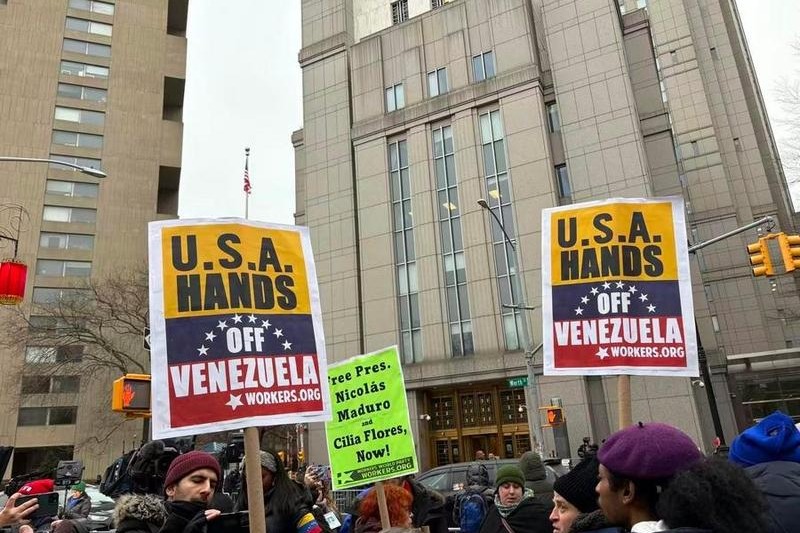
A prominent Chinese international relations scholar has characterized recent US actions in Latin America and the Caribbean as indicative of diminishing global influence rather than strengthened hegemony. Professor Cui Shoujun of Renmin University’s School of International Studies presented this analysis during a recent academic event, addressing what some observers have termed a resurgence of Monroe Doctrine principles in US foreign policy.
The commentary specifically referenced the United States’ unilateral designation of Venezuela’s leadership as criminal under domestic legal frameworks, a maneuver that effectively circumvents both congressional oversight and international legal constraints. Professor Cui identified this approach as a contemporary manifestation of ‘long-arm jurisdiction’ that fundamentally violates the United Nations Charter’s core principles of sovereign equality and non-interference in domestic affairs.
According to the analysis, the persistent US treatment of Latin America as an exclusive ‘sphere of influence’ reflects obsolete colonial-era thinking that contradicts contemporary geopolitical realities. Rather than demonstrating strength, this posture reveals strategic contraction and relative power decline within the global landscape, Cui argued.
The scholar further suggested that such interventionist tactics ultimately catalyze international resistance, potentially strengthening collective commitment to UN-centered multilateralism. Latin American and Caribbean nations are consequently developing enhanced strategic autonomy and pursuing diversified international partnerships beyond traditional hemispheric alignments.
Cui contrasted the US approach with China’s vision of building a shared future for humanity, emphasizing that Chinese engagement prioritizes mutual benefit and voluntary cooperation rather than coercive influence. The evolving China-LAC relationship has notably transitioned from infrastructure-focused collaboration to include cutting-edge cooperation in green energy and digital economy sectors.
Looking forward, the professor emphasized China’s continued commitment to foundational international legal principles and cooperative maintenance of the postwar international order through multilateral engagement.